Yellowstone Supervolcano: Catastrophe Unlikely for Millennia, Scientists Assure
Introduction
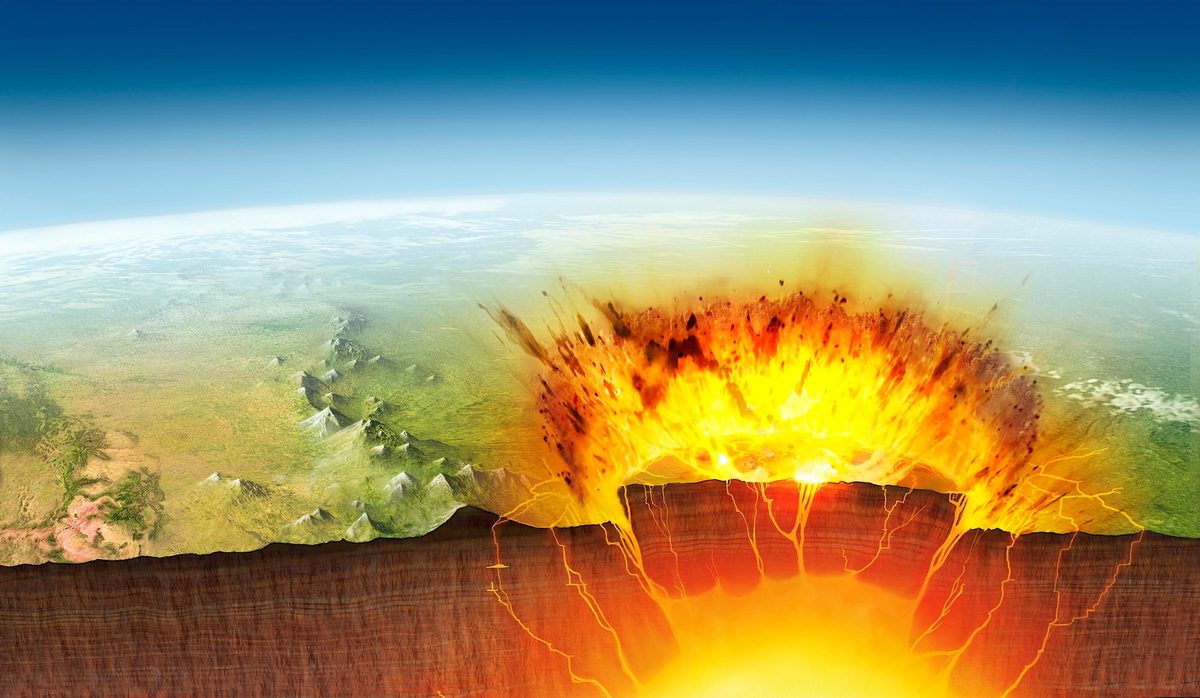
The idea of Yellowstone National Park erupting as a supervolcano conjures images of widespread devastation, capable of reshaping continents. While such catastrophic events have occurred in the park's deep past, the likelihood of another supereruption happening in the near future is exceedingly low, according to experts. Recent discussions, particularly from Popular Science's podcast "Ask Us Anything," aim to demystify the risks associated with the Yellowstone caldera, distinguishing between the dramatic, albeit rare, supereruptions and more common, less destructive volcanic activity.
Key Details
- Low Probability of Supereruption: Scientists estimate the chance of a massive Yellowstone supereruption on a human timescale is virtually zero.
- Magma State: The magma beneath Yellowstone is currently mostly solid, lacking the liquid volume required to fuel a supervolcano eruption.
- Likely Events: Smaller hydrothermal explosions (steam and water) or slow-moving lava flows are far more probable than a supereruption.
- Warning Signs: In the event of a potential supereruption, scientists would likely detect precursor signs weeks to months in advance through seismic and heat monitoring.
- Human Survival: While a supereruption would be catastrophic, historical and scientific data suggest it would not cause human extinction.
- Recent Activity: Recent geological events, such as ground uplift and a small hydrothermal explosion, are noted but considered normal activity for the active caldera, not precursors to a supereruption.
Background
Yellowstone sits atop one of the world's largest volcanic systems, known as the Yellowstone Caldera. This system has experienced three massive caldera-forming eruptions in its history, the most recent occurring approximately 631,000 years ago. These past events were colossal, spewing trillions of gallons of rock and ash, dwarfing eruptions like Mount St. Helens. The park's iconic geothermal features—geysers, hot springs, and fumaroles—are direct evidence of the immense heat source simmering beneath the surface.
Impact Analysis
Should a supereruption, however unlikely, occur, the immediate impact would be devastating for the surrounding regions of Wyoming, Montana, and Idaho, with pyroclastic flows incinerating everything in their path. Further afield, a thick layer of ash could blanket much of the United States and parts of Canada, disrupting agriculture, contaminating water supplies, and crippling electrical grids. Globally, the injection of vast amounts of ash and gas into the atmosphere could block sunlight, leading to a significant drop in global temperatures and potentially causing widespread crop failures and famine, similar to the effects of the 1815 Mount Tambora eruption, which triggered the “year without a summer.” Scientists estimate such climate effects could persist for five to ten years.
Broader Context
The term “supervolcano” itself can be misleading, creating an “apocalypse or nothing” perception. Yellowstone is a complex and active volcanic system, and its activity manifests in various ways. While the dramatic supereruptions are etched in geological history, the day-to-day reality involves more subtle processes. The Yellowstone Volcano Observatory continuously monitors seismic activity, ground deformation, and thermal emissions to understand and predict the caldera's behavior. This constant vigilance allows scientists to differentiate between normal, albeit sometimes dramatic, geological processes and genuine precursors to a major event.
“Experts say a giant Yellowstone eruption probably will happen again someday. The good news is the someday part. A major eruption likely won’t happen for thousands, potentially even millions of years.”
Future Outlook
The future of Yellowstone's volcanic activity is expected to follow patterns observed over millennia. While the possibility of another supereruption remains a distant geological prospect, the caldera will continue to exhibit signs of life. Ground uplift, seismic swarms, and hydrothermal explosions are likely to occur periodically. For instance, recent ground uplift and a small hydrothermal explosion at Biscuit Basin, while attention-grabbing, are consistent with the expected behavior of such an active system. These events serve as reminders of the dynamic forces at play beneath the park, but they do not indicate an imminent catastrophic eruption. The focus remains on monitoring and understanding these processes rather than fearing an immediate apocalypse.
Conclusion
The fear of a Yellowstone supervolcano eruption is largely unfounded in the immediate future. While the geological potential for such an event exists, the probability of it occurring within human lifetimes is negligible. Current scientific understanding, based on the state of the magma and continuous monitoring, indicates that the risks are minimal. Residents and tourists can continue to enjoy Yellowstone National Park, appreciating its geothermal wonders with the assurance that any signs of a major eruption would likely be detected well in advance. The real story of Yellowstone is not one of impending doom, but of a dynamic, active geological system with a long and complex history.
Source: popsci.com