Mathematicians Pursue the Frontier Number Defining the Limits of Mathematical Infinity
Introduction
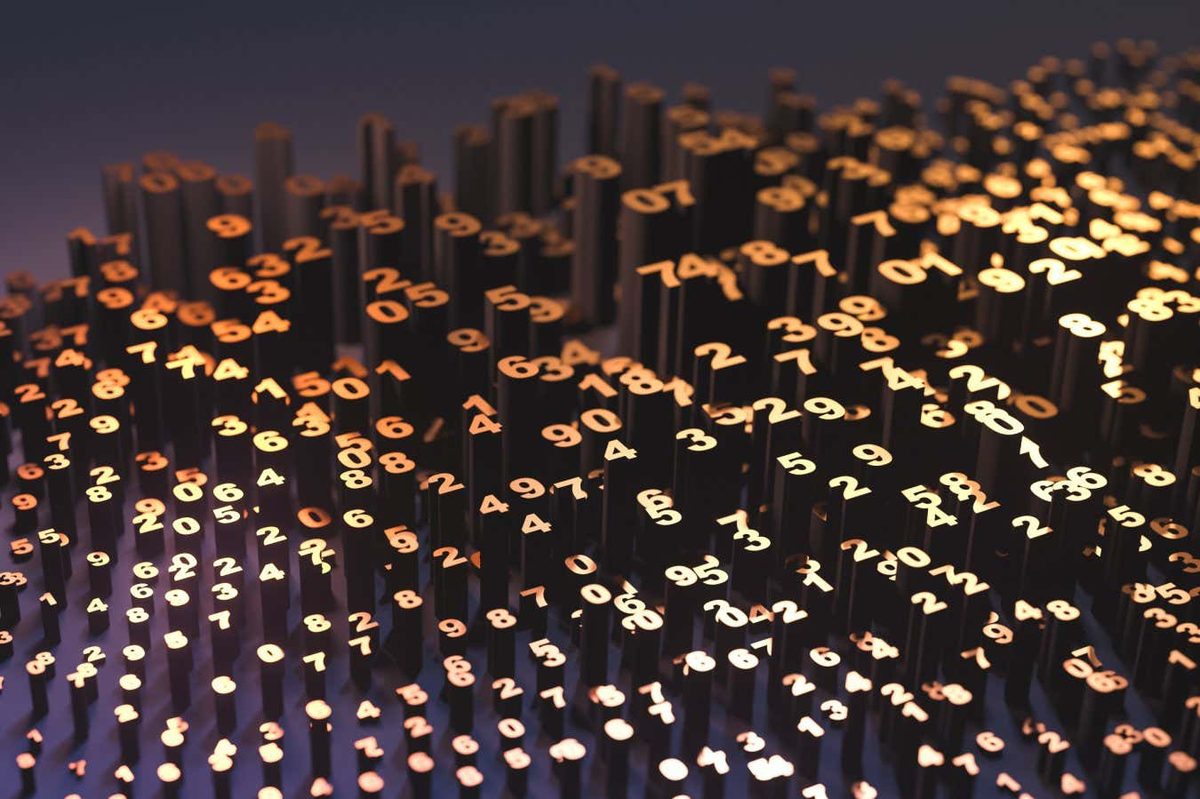
In the realm of mathematics, numbers often stretch beyond everyday comprehension, extending into sizes so vast they challenge the limits of human imagination. Recent developments indicate that researchers are now closing in on identifying a particular number that could signify the ultimate boundary within the mathematical universe — a number so immense it may define the edge where traditional mathematics gives way to the abstract world of infinities and beyond.
Key Details
- Unimaginably large numbers: These numbers far exceed ordinary large quantities such as a googol or even Graham’s number, which are already incomprehensibly vast.
- Mathematical significance: The targeted number is believed to potentially represent the threshold between finite mathematics and concepts that verge on the infinite.
- Research context: The pursuit involves advanced branches of mathematics including combinatorics, set theory, and computational theory, fields that explore the structure and size of infinite sets and extremely large finite numbers.
- Implications: Discovering or defining such a number would not only deepen our understanding of large numbers but could also shed light on the foundations of mathematics itself.
Background
The fascination with large numbers has a rich history in mathematics. While everyday life deals with numbers within a manageable scale, mathematicians have long been intrigued by quantities that surpass typical scales by unimaginable margins. Numbers like a googol (10100), a googolplex (10 to the power of a googol), and Graham’s number demonstrate the progression of large number concepts.
Graham’s number, for example, once held a place in the Guinness World Records as one of the largest numbers ever used in a mathematical proof. It arises in an area of combinatorics related to hypercube coloring and is so large that it cannot be expressed using conventional notation or even exponentials beyond a certain point.
Despite these enormous numbers, the mathematical community has recognized that there exist conceptual boundaries — numbers that are not only vast but also serve as markers of the limits of what current mathematical frameworks can handle. The current research effort aims to identify or better understand such numbers that delineate the frontier of mathematical infinity and finite large values.
Analysis
The quest for this boundary number touches on profound philosophical and practical questions in mathematics. On one hand, it challenges the way mathematicians conceive of infinity and the finite universe of numbers. On the other, it has bearings on how certain problems, particularly in theoretical computer science and logic, can be approached or solved.
For instance, the existence of a number that defines a ceiling beyond which traditional arithmetic or combinatorial methods fail could influence how proofs are constructed or how computational limits are understood. It also raises questions about the nature of mathematical reality: whether numbers exist independently of human thought or are constructs constrained by our logical frameworks.
Methodologies employed in this pursuit include exploring fast-growing hierarchies of functions, ordinal numbers, and large cardinal numbers, which are concepts from set theory used to describe sizes and orders extending beyond the infinite countable sets familiar from basic mathematics.
Some mathematicians suggest that such a boundary number might illuminate connections between different areas of mathematics, including logic, number theory, and even physics, where concepts of scale and infinity also play critical roles.
Conclusion
While the exact nature and form of this boundary number remain elusive, the fact that mathematicians are actively pursuing it underscores the dynamic and ever-expanding frontier of mathematical knowledge. Understanding this number may not only redefine how we view the universe of numbers but also enhance the foundational principles of mathematics itself. As research continues, it promises to open new avenues of inquiry into the infinite, the finite, and the mysterious space where they converge.