NASA’s Roman Space Telescope to Unveil 100,000 Cosmic Explosions, Expanding Our View of the Universe
Introduction
NASA’s next-generation observatory, the Nancy Grace Roman Space Telescope (Roman), promises to revolutionize our understanding of the cosmos by detecting an unprecedented number of cosmic explosions—approximately 100,000—over its mission lifetime. Scheduled for launch in 2027, Roman is designed to complement and exceed the capabilities of its predecessors, such as the Hubble and James Webb Space Telescopes, with a field of view at least 100 times larger than Hubble’s.
Key Details
- The Roman Space Telescope’s High-Latitude Time-Domain Survey will scan a vast swath of the sky every five days for two years.
- Estimated detections include about 27,000 Type Ia supernovae, over 10 times the number previously recorded by all surveys combined.
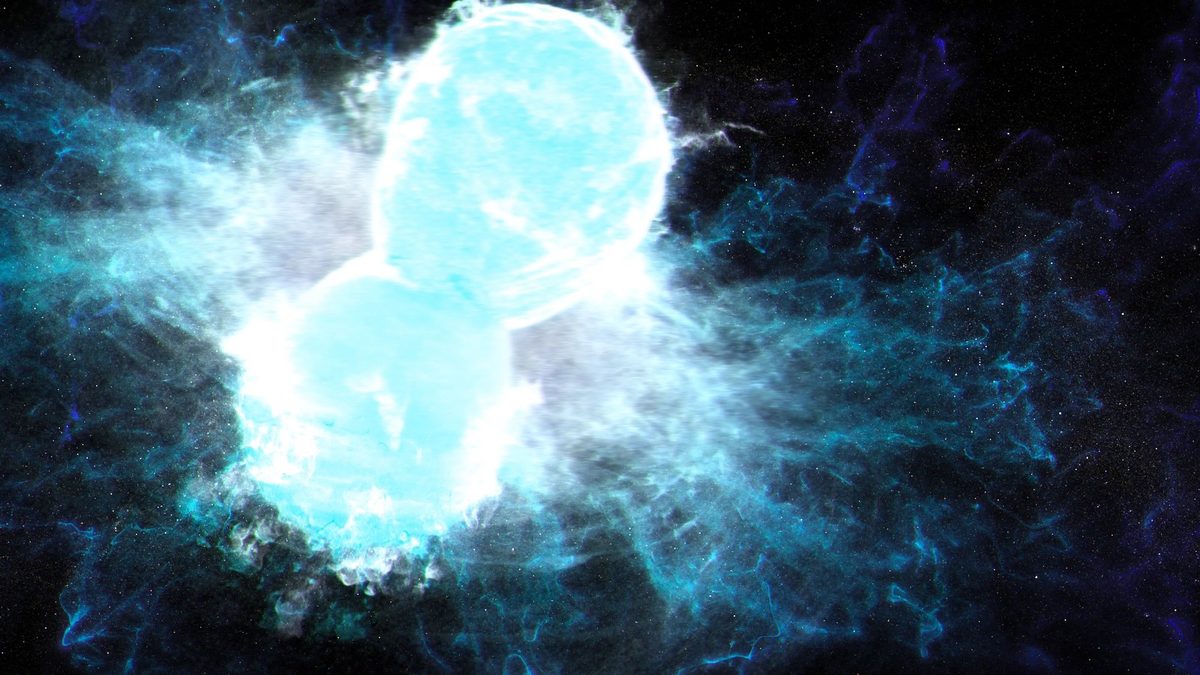
- Roman may identify rare kilonovae, neutron star collisions producing heavy elements and powerful energy bursts, potentially five or more events.
- The telescope’s wide field and time-lapse imaging will allow astronomers to create detailed "cosmic movies" tracking the evolution of explosive events.
- The mission is poised to capture phenomena reaching back more than 10 billion years, possibly up to 11.5 billion years, enabling a view of the early universe.
Background
Roman’s advanced instrumentation and survey design represent a leap forward in infrared astrophysics and time-domain astronomy. The telescope’s ability to track light changes over time and analyze spectral data will enable precise classification of explosive events, distinguishing between different types of supernovae, black hole activity, and other transient phenomena. Benjamin Rose, a physicist at Baylor University and lead author of the study published in The Astrophysical Journal, describes the mission as a "gold mine" for exploring dark energy, dying stars, and galactic powerhouses.
This mission builds on the successes and limitations of prior telescopes. While Hubble and James Webb have offered deep, detailed views of select cosmic targets, their narrower fields of view limit their ability to conduct large-scale time-domain surveys. Roman’s ability to capture light from over a billion galaxies will provide a vast dataset for studying the universe’s expansion, dark matter, and the life cycles of stars.
Impact Analysis
Detecting tens of thousands of Type Ia supernovae is particularly significant because these events serve as cosmic distance markers, used to measure the universe’s expansion rate and probe dark energy’s behavior over time. Current research suggests dark energy may have evolved throughout cosmic history, and Roman’s observations could fill critical data gaps, improving our understanding of the universe’s fate.
Moreover, Roman’s potential to detect kilonovae—rare explosive events from neutron star collisions—could illuminate the origins of heavy elements and gravitational wave sources. To date, only a single kilonova event has been conclusively observed. Roman’s expected detection of several such events could deepen our understanding of these dramatic collisions and their role in cosmic evolution.
The mission’s vast data output will also benefit the broader scientific community. Researchers can apply machine learning algorithms to Roman’s dataset to uncover additional transient phenomena, including previously unknown types of cosmic explosions. This ability to collect "cosmic bycatch"—unexpected discoveries outside initial mission goals—may lead to groundbreaking findings.
Broader Context
Roman’s mission occurs amid ongoing challenges in space exploration funding and policy. Despite being ahead of schedule and under budget, the telescope faces potential jeopardy from proposed multibillion-dollar NASA budget cuts under the Trump administration. Former Roman science co-chair David Spergel criticized these cuts as wasteful, emphasizing the lost potential if the telescope is not fully completed and launched.
“You’ve built it, and you’re not going to do the final step to finish it? That is such a waste of taxpayers’ money.” — David Spergel, former co-chair of Roman’s science team
As of mid-2025, however, there is optimism as Congress has moved to reject most of the proposed budget reductions, raising hopes that Roman’s mission will proceed uninterrupted. This political tug-of-war highlights the complexities of funding large-scale scientific projects with transformative potential.
Future Outlook
Once operational, Roman will open new observational windows into the universe’s dynamic processes. Its ability to peer back over 10 billion years in time allows astronomers to study the formation of the earliest stars and the evolution of cosmic structures. The mission’s combination of wide coverage and rapid cadence is uniquely suited to detect and characterize transient events that shape galactic environments.
The telescope will also contribute significantly to exoplanet studies and infrared astrophysics, further broadening its scientific reach. The resulting data trove promises to fuel research for decades, enabling both targeted investigations and serendipitous discoveries.
Conclusion
The Nancy Grace Roman Space Telescope stands poised to transform astronomy by delivering a comprehensive survey of cosmic explosions and other transient phenomena on an unprecedented scale. Its launch and successful operation will provide critical insights into dark energy, stellar evolution, and the early universe, far exceeding the achievements of earlier space telescopes. Despite political and funding challenges, the mission represents a bold step into the future of astrophysics, promising to deepen humanity’s understanding of the cosmos.