Largest Martian Meteorite Ever Found on Earth Sells for $5.3 Million
Introduction
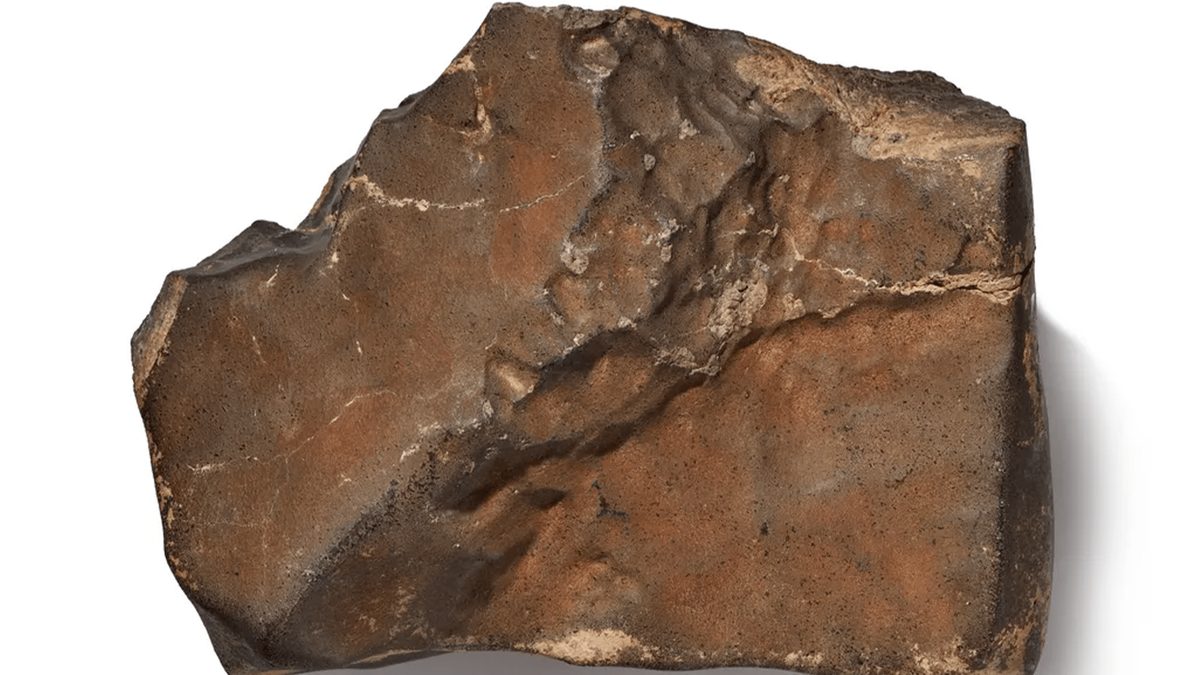
In a remarkable auction event, the largest known Martian meteorite ever found on Earth was sold at Sotheby’s natural history auction for an astounding $5.3 million. Weighing 54 pounds (approximately 24.5 kilograms) and measuring roughly 15 by 11 by 6 inches, this rare space rock represents a significant portion of all Martian material currently known to have landed on our planet. Its sale not only captivated collectors but also reignited scientific interest in extraterrestrial geology.
Key Details
- The meteorite sold for $5,296,000 at Sotheby’s.
- It weighs 54 pounds and measures about 15 x 11 x 6 inches.
- Discovered in the Sahara desert in Niger in November 2023 by a meteorite hunter.
- Believed to have been blasted off Mars by an asteroid impact, traveling 140 million miles before landing on Earth.
- It is approximately 70% larger than the next biggest Martian meteorite found on Earth.
- Accounts for nearly 7% of all Martian meteorite material on Earth.
- Classified as an olivine-microgabbroic shergottite, formed from slowly cooled magma on Mars.
- Contains minerals such as pyroxene and olivine, with a coarse-grained texture.
- Previously exhibited by the Italian Space Agency in Rome.
- Martian origin confirmed through specialized laboratory analysis comparing its chemical makeup with meteorites collected since 1967.
- Only around 400 Martian meteorites are known among more than 77,000 meteorites found on Earth.
Background
Meteorites originating from Mars are exceptionally rare and valuable both scientifically and monetarily. They are thought to be ejected from Mars’ surface during large asteroid impacts, which propel rock fragments into space. These fragments then traverse millions of miles through the solar system, often taking thousands or even millions of years before intersecting Earth's orbit and landing on our planet’s surface.
This particular meteorite’s journey began on Mars, likely launched into space by a significant cratering event. After traveling an estimated 140 million miles, it eventually landed in the harsh environment of the Sahara desert, where it was discovered only recently. The fragment has been studied extensively and was even displayed at the Italian Space Agency prior to its auction sale.
Martian meteorites are scientifically invaluable as they provide direct physical samples from another planet without the need for costly and complex space missions. The Viking space probes in 1967 provided the first in situ data on Mars, but meteorites like this one allow scientists to analyze Mars’ composition in Earth-based laboratories.
Impact Analysis
The sale of this Martian meteorite highlights the growing market and fascination with extraterrestrial materials. Beyond its auction price, it serves as a potent reminder of the scientific treasure these space rocks represent. Ralph Harvey, a geochemist at Case Western Reserve University, emphasizes that Martian meteorites offer a unique form of "ground truth" for understanding Mars, given the limitations and cost of direct sample return missions.
"There’s a big, orbital donut full of battered bits of Mars, launched by cratering events, and the Earth clearly intercepts that stream all the time." — Ralph Harvey
Recovering samples from Mars through robotic missions or eventual human exploration remains technically challenging and financially demanding, with actual sample return missions having been attempted only about a dozen times. Consequently, studying naturally delivered Martian meteorites is our best and most cost-effective method of gaining insights into the Red Planet’s geological history.
Moreover, the meteorite’s size and composition make it an exceptional specimen. Its coarse-grained olivine-microgabbroic texture points to slow cooling of magma on Mars, enabling scientists to study planetary processes such as volcanic activity and crust formation in great detail. This contributes to our broader understanding of Mars’ past and its potential habitability.
Broader Context
The presence of meteorites from Mars on Earth is part of a larger cosmic phenomenon where Earth continuously intercepts debris from space. Annually, tens of thousands of tons of meteoritic material fall on Earth’s surface, though only a fraction reaches the ground as intact rocks.
According to Harvey, about 10,000 to 20,000 meteorites hit the Earth’s surface each year, but Martian meteorites are exceedingly rare among them. With only around 400 known Martian meteorites out of more than 77,000 meteorites discovered worldwide, each find carries immense value for planetary science.
Cassandra Hatton, Sotheby’s vice chairman for science and natural history, noted that the meteorite’s Martian origin was authenticated through rigorous lab comparisons with meteorites discovered since the 1960s. This confirms the vital role that advanced scientific techniques play in verifying and studying such specimens.
Future Outlook
As interest in Mars exploration intensifies with ongoing robotic missions and ambitious plans for human landings, Martian meteorites on Earth will remain crucial for research. These natural samples offer a complementary resource to mission-returned materials, helping scientists decode the Red Planet’s geological and climatic evolution.
The auction success also signals a sustained fascination with space artifacts among collectors and institutions, potentially encouraging further investment in the preservation and study of such objects. Scientific institutions may increasingly collaborate with private entities to balance research access with commercial interests.
Looking forward, improved detection and recovery methods for meteorites on Earth, especially in deserts and polar regions, could uncover more Martian samples, enriching our understanding of planetary processes beyond Earth.
Conclusion
The sale of the largest Martian meteorite ever found on Earth for $5.3 million underscores the profound scientific and cultural value of extraterrestrial rocks. Beyond the headline price, this meteorite represents a rare tangible connection to another planet, offering unique insights into Mars’ geology and history. As space exploration advances, such rocks will continue to play a pivotal role in expanding humanity’s knowledge of our solar system.