Measuring the Infinite: How Scientists Map the Expanding Universe
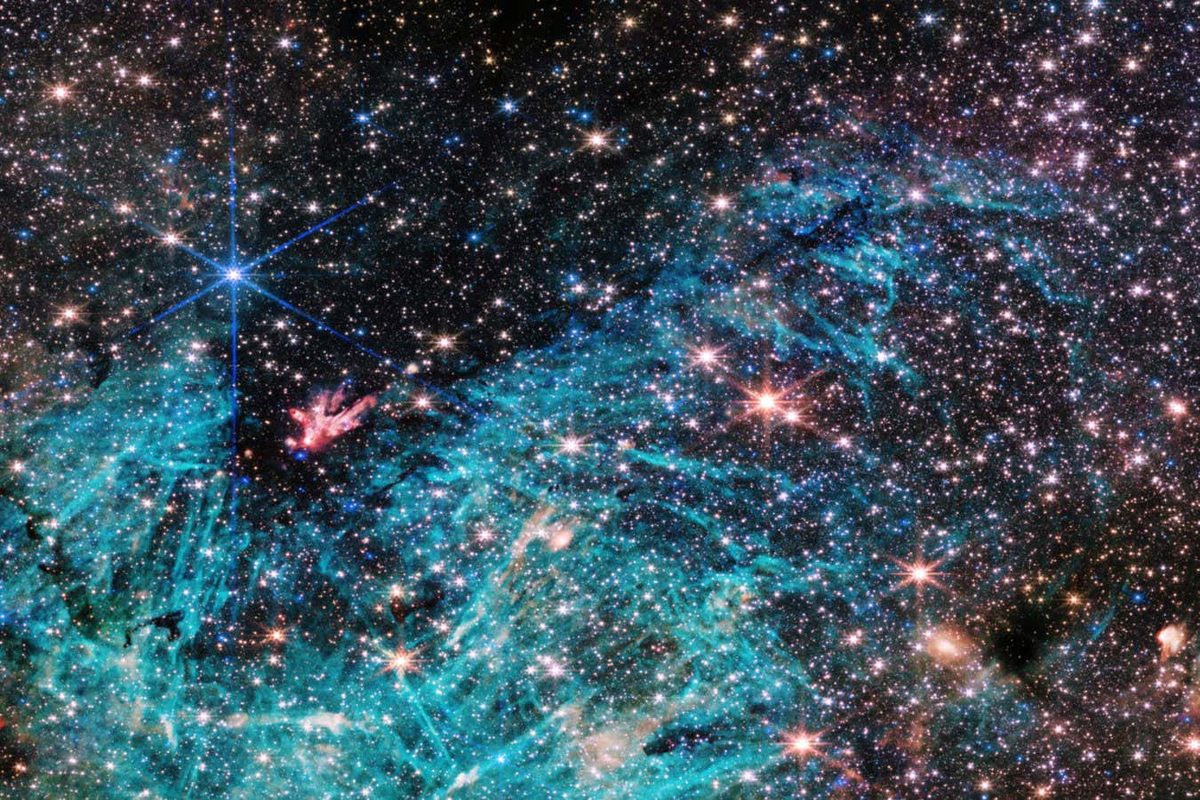
Measuring the Infinite: How Scientists Map the Expanding Universe
Introduction
The universe is unimaginably vast—so vast, in fact, that human intuition struggles to grasp the sheer scale of interstellar and intergalactic distances. When we look up at the night sky, we see stars that are light-years away, galaxies millions or even billions of light-years distant. But how do astronomers actually measure these immense distances? And how can they be certain their calculations are accurate? These questions lie at the heart of modern cosmology, and physicist Chanda Prescod-Weinstein has been at the forefront of explaining how scientists navigate this cosmic challenge.
Key Details
The measurement of cosmic distances relies on a carefully constructed framework known as the cosmic distance ladder. This ladder is not a physical object but a series of interconnected methods, each building upon the previous one to reach farther into space. The primary techniques include:
- Parallax: Used for nearby stars, measuring apparent shifts in position as Earth orbits the Sun.
- Cepheid Variables: Pulsating stars with a known relationship between brightness and pulsation period, enabling distance calculations.
- Type Ia Supernovae: Exploding stars with consistent peak brightness, serving as "standard candles" for measuring distant galaxies.
- Redshift: Observing how light from distant galaxies stretches due to the expansion of the universe, linked to Hubble’s Law.
Each method cross-validates the next, creating a robust system for estimating distances across billions of light-years.
Background
Historically, measuring the cosmos was limited to geometry and naked-eye observations. The ancient Greeks estimated Earth’s size and the distance to the Moon using simple trigonometry. But it wasn’t until the 19th century that stellar parallax was successfully measured, confirming distances to nearby stars. In the early 20th century, Henrietta Swan Leavitt discovered the period-luminosity relationship in Cepheid variables, a breakthrough that allowed Edwin Hubble to prove the existence of galaxies beyond the Milky Way and later demonstrate the expansion of the universe.
This expansion, first observed by Hubble in 1929, underpins much of modern cosmology. The farther a galaxy is, the faster it appears to recede from us—a phenomenon measured through redshift. By combining redshift data with distance measurements from standard candles, scientists can calculate the Hubble constant, a key value describing the rate of cosmic expansion.
Analysis
Despite these sophisticated tools, measuring cosmic distances is not without controversy. One of the most pressing issues in contemporary astrophysics is the Hubble Tension—a discrepancy between measurements of the Hubble constant derived from the early universe (using the cosmic microwave background) versus those from the late universe (using supernovae and Cepheids). This gap suggests either systematic errors in measurement or the need for new physics, such as unknown forms of dark energy or modifications to general relativity.
Chanda Prescod-Weinstein emphasizes that these measurements are not just technical exercises—they are deeply tied to our understanding of the universe’s origin, structure, and fate. She also highlights the importance of inclusivity in science, noting that diverse perspectives strengthen the scientific process, especially when tackling complex problems like cosmic measurement.
Furthermore, upcoming missions like the James Webb Space Telescope and the Vera C. Rubin Observatory are poised to refine these measurements with unprecedented precision, potentially resolving existing tensions or revealing new mysteries.
Conclusion
Measuring the cosmos is a testament to human ingenuity and collaboration across generations. From ancient stargazers to modern astrophysicists, the quest to map the universe continues to push the boundaries of knowledge. As tools improve and data accumulates, our cosmic address book grows ever more detailed—reminding us not only of how far we’ve come, but how much further there is to explore.