Indigenous Calendars Improve Solar Power Forecasting Accuracy by 14.6%
Introduction
Maximizing the efficiency of solar power remains a critical challenge in the global transition to sustainable energy. Unlike fossil fuels, solar energy production fluctuates due to complex environmental and atmospheric factors, making reliable forecasting difficult. Recent research from Australia's Charles Darwin University (CDU) offers a groundbreaking approach: incorporating Indigenous seasonal calendars into solar power forecasting models to significantly improve their accuracy.
Key Details
- The study utilized seasonal calendars from First Nations communities in Australia, including the Tiwi Islands, Gulumoerrgin (Larrakia), Kunwinjku, and Ngurrungurrudjba peoples.
- Researchers created a First Nations Seasonal Metrics (FNS-Metrics) dataset and inputted it into a novel machine learning model designed to detect large-scale environmental patterns.
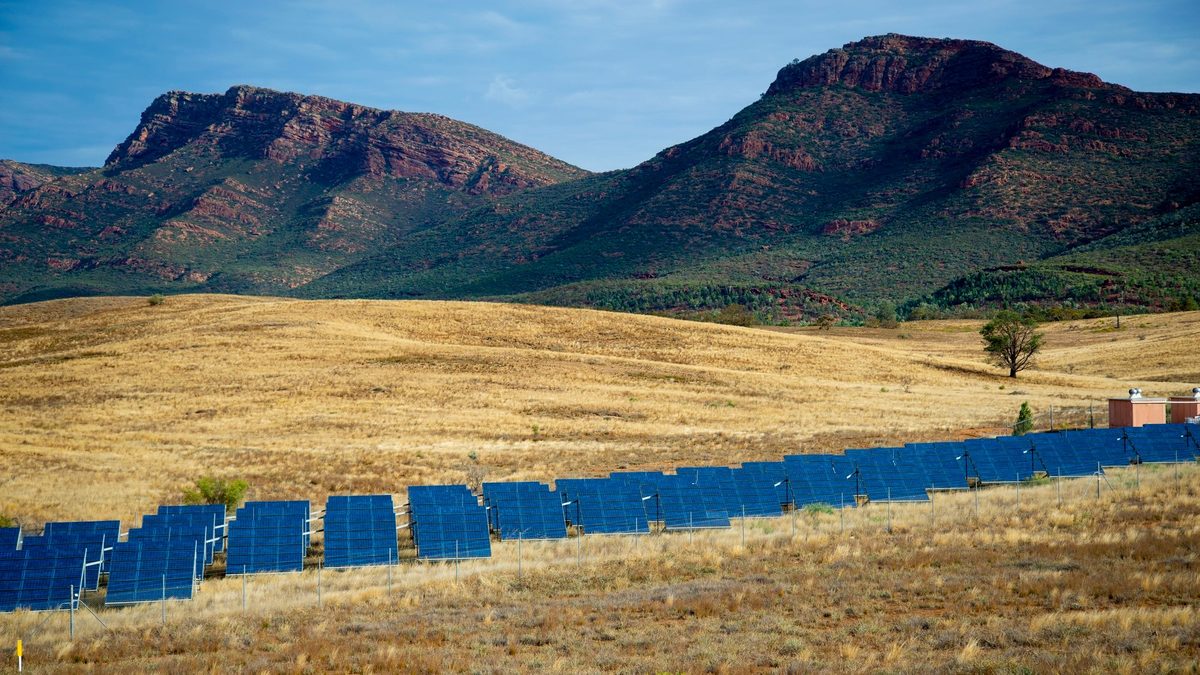
- The model was tested against historical solar power and weather data from the Desert Knowledge Australia Solar Centre in Alice Springs.
- Results showed a 14.6% increase in forecasting accuracy and a 26.2% reduction in error rates compared to existing models.
- The study was published in the IEEE Open Journal of the Computer Society.
Background
Traditional non-Indigenous calendars typically divide the year into four seasons, a system often misaligned with local ecological realities. In contrast, many Indigenous cultures categorize the year using multiple seasons based on nuanced environmental indicators such as animal behaviors, plant flowering, and weather patterns, reflecting a deep, localized climatic knowledge. For example, the Tiwi Islands community employs a three-season calendar, while the Gulumoerrgin (Larrakia) recognize seven distinct seasons. This ecological awareness has historically guided sustainable farming and resource management, crucial for Indigenous peoples’ survival over millennia.
Such Indigenous knowledge systems have remained largely untapped in modern scientific applications, particularly in renewable energy forecasting. By incorporating these rich data sources into AI models, scientists aim to enhance predictive capabilities that adapt to localized environmental variations.
Impact Analysis
The integration of First Nations seasonal data into solar forecasting models reveals several vital benefits. The 14.6% improvement in accuracy and a 26.2% reduction in forecasting errors highlight how Indigenous ecological knowledge provides a more precise understanding of solar patterns influenced by local climate nuances. This improved forecasting enhances solar farm efficiency, potentially leading to more reliable energy supply and optimized grid management.
Co-author Luke Hamlin, a CDU Ph.D. candidate and Bundjulang nation member, emphasized the significance of aligning predictions with natural cycles observed for thousands of years:
“Incorporating First Nations seasonal knowledge into solar power generation predictions can significantly enhance accuracy by aligning forecasts with natural cycles that have been observed and understood for thousands of years.”
Moreover, culturally informed forecasting respects Indigenous knowledge systems and promotes inclusion in technological innovation, fostering collaborative approaches toward sustainability.
Broader Context
Climate change is altering weather patterns globally, complicating forecasting models that rely on historical data. Indigenous calendars offer adaptive frameworks that reflect real-time ecological cues rather than fixed calendar dates, making them particularly valuable amid increasing climatic variability. This approach also addresses broader calls for integrating traditional ecological knowledge (TEK) into environmental management and scientific research.
In Australia and beyond, rural and remote communities—many with significant Indigenous populations—stand to benefit most from improved solar energy reliability. Enhanced forecasting can aid local energy planning, reduce reliance on fossil fuels, and support sustainable development goals in underserved areas.
Future Outlook
The research team at CDU plans to expand their work by applying the First Nations Seasonal Metrics model to other regions and renewable energy sources, such as wind power. Lecturer and co-author Thuseethan Selvarajah highlighted the model's versatility:
“In future work we’ll explore the applications of the model to other regions and renewable energy sources.”
This promises a new paradigm in which Indigenous ecological wisdom contributes broadly to renewable energy optimization and climate adaptation strategies worldwide.
Conclusion
The study published in the IEEE Open Journal of the Computer Society demonstrates that blending Indigenous ecological knowledge with cutting-edge AI can transform solar energy forecasting. This integration not only improves technical performance by 14.6% in accuracy but also honors and leverages millennia of Indigenous environmental stewardship. As climate unpredictability grows, such interdisciplinary and culturally inclusive solutions are essential for achieving sustainable, resilient energy systems globally.
These findings open pathways for further collaborations between scientific institutions and Indigenous communities, fostering mutual respect and practical benefits in the transition toward a clean energy future.