Kissing's Evolutionary Origins Traced Back Over 20 Million Years
Introduction
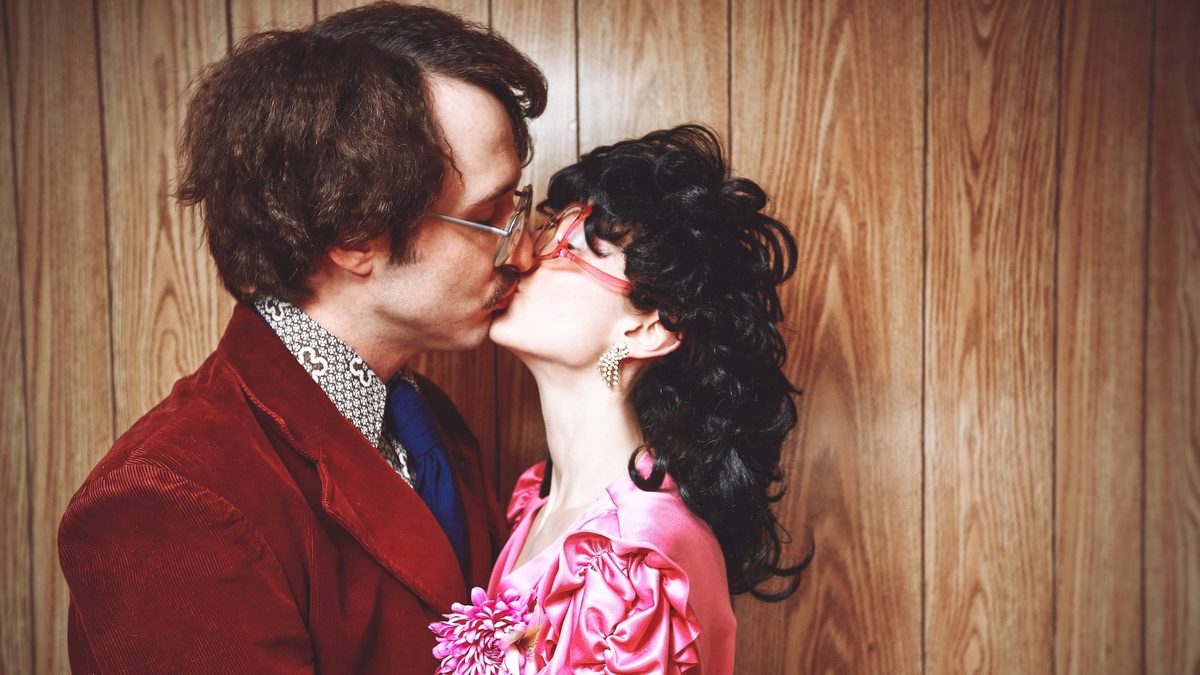
The seemingly simple act of kissing, a common expression of affection and intimacy in human culture, has long puzzled scientists regarding its evolutionary purpose. While often taken for granted, understanding its origins requires a rigorous scientific approach, including a precise definition of what constitutes a kiss. This challenge was recently undertaken by researchers who, in their quest to understand the evolution of kissing, were awarded this year’s Ig Nobel Prize in biomechanics.
Key Details
- Defining a Kiss: The researchers established a specific definition for kissing to differentiate it from other oral interactions: “non-agonistic interactions involving directed, intraspecific, oral-oral contact with some movement of the lips/mouthparts and no food transfer.” This definition was crucial for excluding behaviours like ants feeding their young, birds regurgitating food, or fish engaging in jaw-locking combat.
- Evolutionary Timeline: By applying this definition and analyzing primate behaviour, the researchers mapped the appearance of kissing as an evolutionary adaptation. Their findings suggest that the behaviour could have evolved as far back as 20 million years ago.
- Ig Nobel Prize: The research into the definition and evolutionary history of kissing was recognized with this year’s Ig Nobel Prize in biomechanics, highlighting the often unusual yet scientifically valid questions that researchers explore.
Background
The quest to understand why humans kiss is not merely an academic curiosity; it delves into the complex world of social bonding, mate selection, and the evolution of complex behaviours. For decades, scientists have proposed various theories, ranging from the idea that kissing helps assess a potential mate’s genetic compatibility through taste and smell, to its role in strengthening social bonds and fostering trust. However, without a clear, quantifiable definition, it has been difficult to systematically study its presence and development across different species and throughout evolutionary history. The Ig Nobel Prize-winning work addresses this fundamental challenge by providing a framework for identifying and studying kissing behaviour objectively.
Impact Analysis
The primary impact of this research lies in its ability to provide a scientific basis for studying the evolution of a behaviour deeply ingrained in human social interaction. By establishing a clear definition and estimating an evolutionary timeline of over 20 million years, scientists can now:
- Compare across species: The defined criteria allow for more accurate comparisons of oral contact behaviours across various primate species and potentially other animals, helping to identify convergent evolution or shared ancestry.
- Investigate functional significance: With a clearer understanding of when kissing emerged, researchers can better investigate its potential functions at different evolutionary stages. Was it initially related to parental care, social grooming, or directly to sexual selection?
- Understand human uniqueness: While the study focuses on primate behaviour, it implicitly raises questions about the specific forms and functions of kissing in humans compared to our closest relatives.
Broader Context
This research on kissing fits into a larger scientific endeavor to understand the evolutionary roots of human social behaviours. Many aspects of human interaction, from laughter to altruism, have been scrutinized for their adaptive value. Kissing, with its intimate nature, likely plays a significant role in pair-bonding, infant care, and social cohesion. Its deep evolutionary history suggests it is not a superficial cultural construct but rather a behaviour with ancient biological underpinnings. The Ig Nobel Prize, while often humorous, serves to draw attention to research that might otherwise be overlooked, encouraging a broader appreciation for the diverse avenues of scientific inquiry.
Future Outlook
The definition and estimated age of kissing behaviour open up new avenues for research. Future studies could involve detailed comparative analyses of primate social interactions, employing the established criteria to quantify kissing frequency and context. Genetic and neurobiological research could also explore the underlying mechanisms that facilitate kissing and its role in releasing bonding hormones like oxytocin. Furthermore, anthropologists and ethologists can use this framework to re-examine existing data on primate and human social behaviours, potentially uncovering new insights into the development of intimacy and social structures.
Conclusion
The question of why humans kiss, once seemingly unanswerable, is now on a firmer scientific footing thanks to a precise definition and an estimated evolutionary timeline of over 20 million years. This research, recognized by the Ig Nobel Prize, not only provides a framework for future scientific investigation but also underscores the complex evolutionary journey of even our most intimate behaviours. It reminds us that many aspects of human nature have deep roots, shaped by millions of years of adaptation and social evolution.
Source: popsci.com