Global Climate Monitoring Faces Uncertain Future as US Budget Cuts Threaten CO2 Data Collection
Introduction
Climate scientists worldwide rely on accurate and continuous carbon dioxide (CO2) measurements to understand the progression of global warming and to inform environmental policies. Recently, alarming news has emerged that proposed budget reductions in the United States could severely disrupt these crucial monitoring efforts. The US has been a leader in atmospheric CO2 tracking, and these cuts threaten to create significant data gaps at a time when reliable information is more important than ever.
Key Details
- The US government is considering substantial cuts to funding for CO2 monitoring programs, including the National Oceanic and Atmospheric Administration (NOAA) and NASA’s atmospheric research projects.
- These programs provide continuous, high-precision measurements of atmospheric CO2 levels, forming a backbone of global climate data.
- Scientists warn that no other country currently possesses the capacity or plans to scale up monitoring efforts to compensate for potential losses.
- Loss of these data streams could hinder the ability of policymakers and scientists to track emissions trends and verify international climate commitments.
- The timing coincides with increased global urgency to meet targets set by agreements such as the Paris Accord.
Background
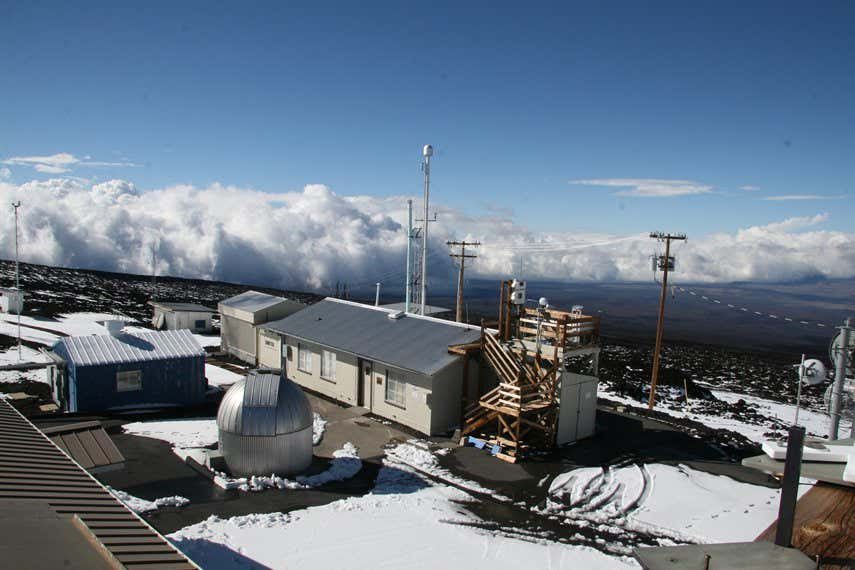
The United States has been at the forefront of CO2 monitoring since the mid-20th century, with pioneering work starting at the Mauna Loa Observatory in Hawaii. The continuous record from Mauna Loa is one of the longest and most reliable measures of atmospheric CO2, documenting the steady rise from pre-industrial levels to today’s record highs. This data is critical for climate models, policy formulation, and international negotiations.
Beyond Mauna Loa, US agencies operate a network of measurement stations worldwide, employing satellites and ground-based sensors to monitor greenhouse gases. These comprehensive efforts enable a better understanding of sources and sinks of carbon emissions and support verification of national reporting under global climate frameworks.
Analysis
The potential budget cuts come at a precarious moment. Climate change impacts are intensifying, prompting calls for transparent and verifiable emissions data to ensure countries adhere to their climate commitments. The absence of US data could create a blind spot, complicating global efforts to track progress and hold nations accountable.
Moreover, the US has historically set a standard for scientific rigor and openness in climate data, contributing to international cooperation. A reduction in funding could undermine this leadership and create uncertainty in the global scientific community.
While other nations, including members of the European Union, Japan, and China, have expanded their climate monitoring capacities, none currently have the extensive infrastructure or data continuity to offset the loss of US contributions. This lack of redundancy highlights a vulnerability in the global climate monitoring system.
Experts stress that sustained investment in monitoring is not merely a scientific concern but a fundamental component of effective climate policy. Without reliable data, it becomes difficult to measure the success of mitigation efforts or to adjust strategies as conditions change.
Conclusion
The prospective budget cuts to CO2 monitoring programs in the US present a significant risk to the global effort to combat climate change. As the world seeks to limit warming to safe levels, the importance of precise and comprehensive data cannot be overstated. Scientists urge policymakers to recognize the critical nature of these programs and to prioritize their funding. The international community must also consider collaborative approaches to ensure continuity and resilience in climate monitoring, safeguarding the scientific foundation upon which climate action depends.