Great Barrier Reef Faces Climate Crisis: Cooling Interventions Urged After Shipping Emission Drop
Great Barrier Reef Faces Climate Crisis: Cooling Interventions Urged After Shipping Emission Drop
Introduction
The Great Barrier Reef, one of the world’s most iconic marine ecosystems, is under renewed threat as scientists report a sudden spike in sea temperatures. This unexpected warming surge has been linked to a recent drop in shipping emissions, particularly sulfur dioxide (SO₂), which plays a complex role in atmospheric cooling. As global efforts to reduce air pollution inadvertently expose the ocean to more solar radiation, experts are calling for urgent, large-scale interventions—including artificial cooling techniques—to safeguard the reef from catastrophic coral bleaching.
Key Details
- Recent reductions in shipping emissions, due to new International Maritime Organization (IMO) regulations, have decreased the presence of sulfur aerosols over the ocean.
- Sulfur dioxide from ship fuel historically contributed to the formation of reflective cloud layers, a phenomenon known as 'ship tracks.'
- With fewer aerosols, cloud reflectivity has diminished, allowing more solar radiation to reach the ocean surface, particularly in sensitive areas like the Great Barrier Reef.
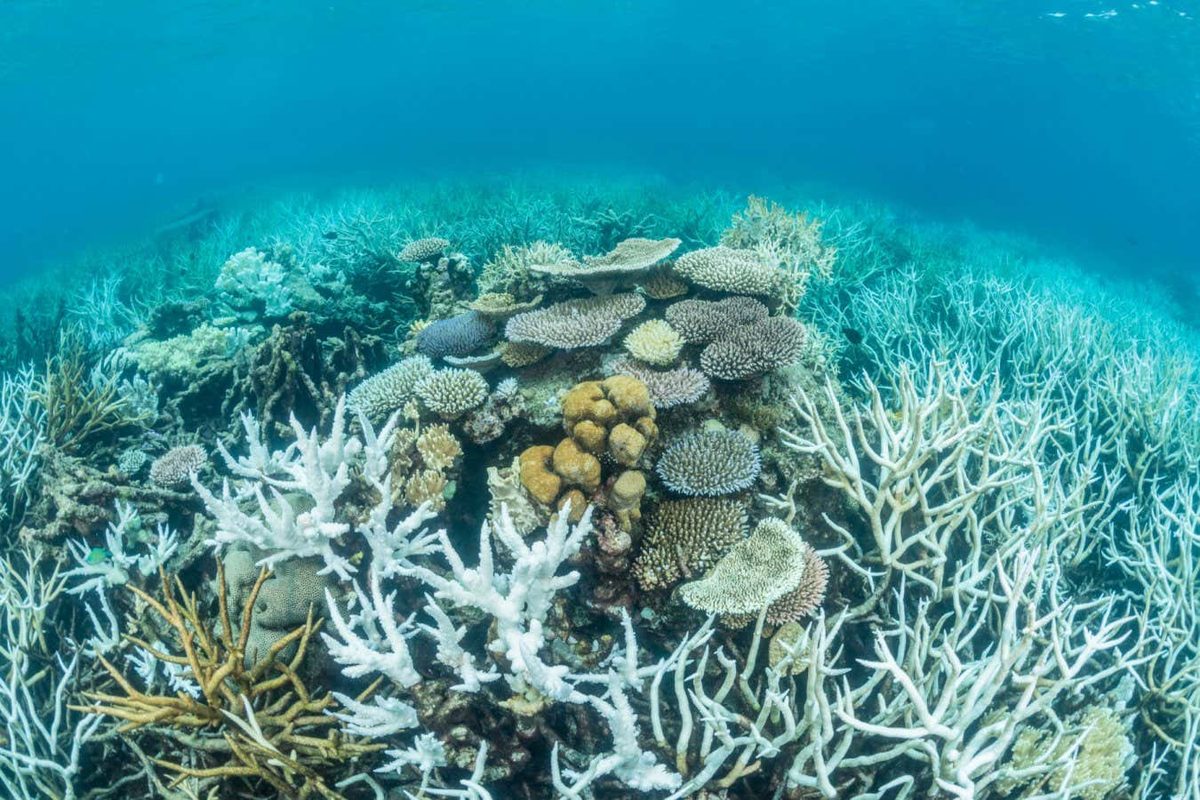
- Sea surface temperatures in the region have risen above average, increasing the risk of coral bleaching events.
- Scientists are now testing and advocating for marine cloud brightening (MCB)—a geoengineering technique that involves spraying seawater into the atmosphere to enhance cloud reflectivity and cool waters.
- Field trials for MCB were conducted near Queensland in recent years, showing preliminary success in increasing cloud albedo.
Background
The Great Barrier Reef, stretching over 2,300 kilometers along Australia’s northeast coast, is the world’s largest coral reef system and a UNESCO World Heritage site. It supports thousands of marine species and contributes significantly to the Australian economy through tourism and fisheries. However, it has been increasingly vulnerable to climate change. Since the 1980s, the reef has endured multiple mass bleaching events, particularly in 2016, 2017, and 2020, driven by rising ocean temperatures due to global warming.
The irony lies in the unintended consequences of environmental regulations. In 2020, the IMO implemented stricter rules limiting sulfur content in marine fuels from 3.5% to 0.5%. While this has dramatically improved air quality and reduced acid rain and respiratory illnesses, it has also removed a key source of cloud-seeding particles. These particles previously helped form brighter, more reflective clouds over shipping lanes, a side effect that unintentionally provided a form of 'global dimming'—slightly offsetting warming.
Analysis
The current situation underscores the complex interplay between pollution control and climate feedback loops. Reducing harmful emissions is essential for long-term planetary health, but it reveals how dependent some ecosystems have become on the side effects of pollution. As the atmosphere clears, more sunlight penetrates to the ocean surface, accelerating warming in biologically sensitive zones.
Marine cloud brightening emerges as a controversial but potentially critical tool. By mimicking natural aerosol effects using saltwater sprays, scientists aim to restore some of the lost reflectivity. However, critics warn of unknown ecological consequences and the moral hazard of relying on technological fixes instead of cutting greenhouse gases at the source. There are also geopolitical concerns—manipulating weather patterns could have downstream effects on rainfall and storm systems.
Still, for Australia, the stakes are high. The reef generates over $6 billion annually and supports 64,000 jobs. Without immediate action, models predict that even under moderate warming scenarios, the reef could lose most of its coral cover by 2050.
Conclusion
The Great Barrier Reef stands at a crossroads. While the reduction in shipping emissions is a public health victory, its climatic side effects highlight the need for proactive, science-based adaptation strategies. Artificial cooling methods like marine cloud brightening may soon move from experimental concepts to emergency measures. Ultimately, long-term salvation for the reef depends on global efforts to reduce carbon emissions, but in the short term, innovative interventions could buy the time nature desperately needs.