Galactic Mysteries Unveiled: Immortal Stars and Their Dark Matter Diet
Galactic Mysteries Unveiled: Immortal Stars and Their Dark Matter Diet
Introduction
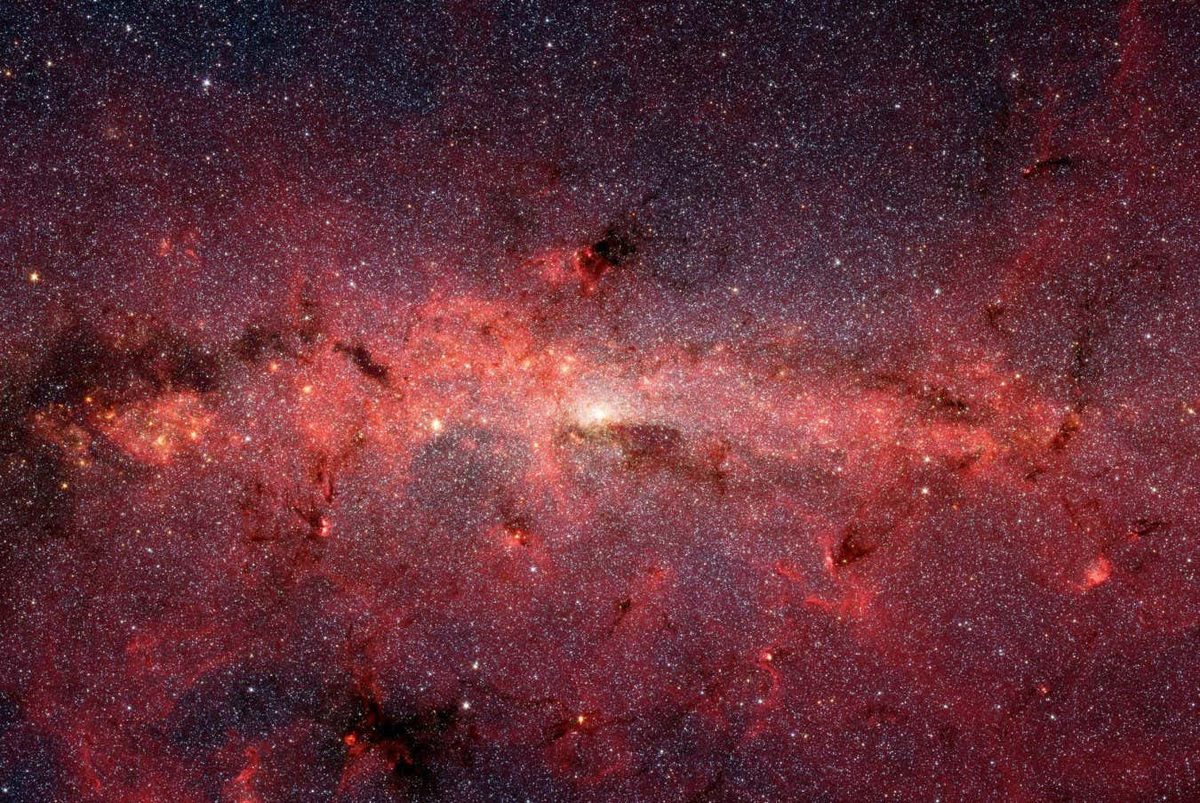
Recent advances in astrophysics have unveiled astonishing insights into the life cycles of stars, particularly those located in the heart of our Milky Way galaxy. A groundbreaking computer simulation suggests that some of these stars may be maintaining their youthful glow by 'feeding' on dark matter, a mysterious substance that constitutes a significant portion of the universe's mass yet remains largely undetectable by conventional means. This revelation not only challenges our understanding of stellar evolution but also opens new avenues for research in cosmology and dark matter physics.
Key Details
- The simulation focuses on stars located in the dense core region of the Milky Way.
- These stars exhibit unusually young characteristics, puzzling astronomers who study stellar life cycles.
- Dark matter, which makes up approximately 27% of the universe, does not emit light or energy, making it difficult to observe directly.
- Researchers propose that the absorption of dark matter could provide these stars with an additional source of energy.
- This discovery might help explain the long-standing mystery of why certain stars appear to defy the typical aging process.
Background
The concept of dark matter has intrigued scientists since the 1930s, when astronomers first noted discrepancies in the motion of galaxies that could not be explained by visible matter alone. Despite its elusive nature, dark matter is believed to play a crucial role in the formation and stability of galaxies. Traditional theories of stellar evolution suggest that stars undergo predictable life cycles, from birth in stellar nurseries to death as white dwarfs, neutron stars, or black holes. However, the unique properties observed in certain stars at the galactic center pose a challenge to these established theories.
Analysis
The idea that stars could sustain themselves indefinitely by absorbing dark matter raises profound questions about the processes governing stellar life. Most stars rely on nuclear fusion, a process that converts hydrogen into helium while releasing immense energy. However, if stars can also capture dark matter, they might be tapping into a virtually inexhaustible source of energy. This could explain why some stars near the galactic center appear much younger than their counterparts elsewhere in the galaxy.
Moreover, these findings could have broader implications for our understanding of the universe. If dark matter can be harnessed by stars, it suggests a dynamic relationship between visible and invisible matter in cosmic evolution. This could lead to an entirely new framework for studying the formation of stars and galaxies, influencing everything from galactic dynamics to the ultimate fate of the universe.
Furthermore, the research highlights the power of computer simulations in modern astrophysics. Simulations allow scientists to model complex interactions in ways that are not feasible through observation alone. As computational techniques evolve, they will undoubtedly continue to shed light on the intricate workings of the cosmos.
Conclusion
The potential for stars to 'eat' dark matter to prolong their lives fundamentally alters our understanding of stellar evolution and the nature of the universe. This research invites further investigation into the interactions between dark matter and stellar life cycles, potentially reshaping our cosmological models. As we delve deeper into the mysteries of dark matter, one thing is clear: the universe is far more complex than we previously imagined, and these immortal stars are at the forefront of this cosmic enigma.