Whalefall: A Gruesome Premise Undermined by Sentimental Detours
Introduction
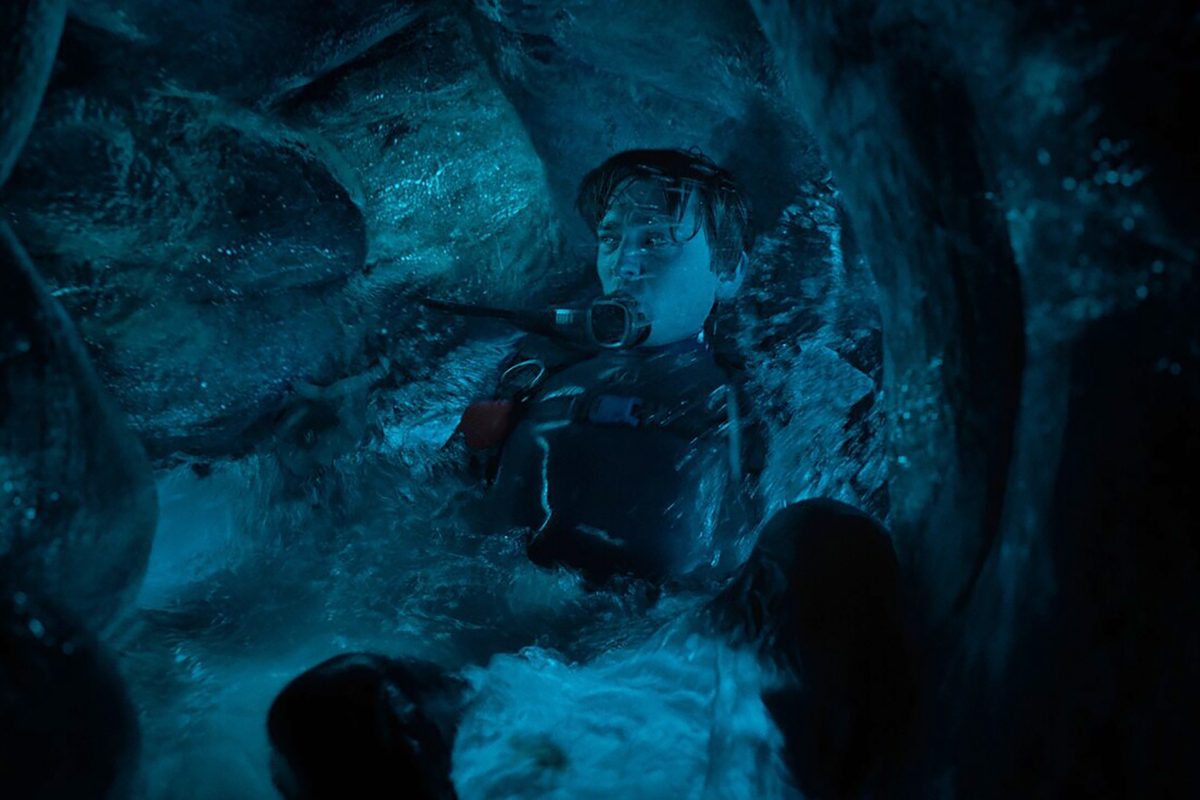
The cinematic landscape is often punctuated by high-concept premises, some so outlandish they verge on the absurd, yet possess an undeniable allure. Whalefall, directed by Brian Duffield and co-written with novelist Daniel Kraus, plunges headfirst into such a concept: a young diver, Jay, is swallowed whole by a sperm whale and must find a way to escape within an hour. While the film undeniably shines when plumbing the depths of this nightmarish scenario, its excursions beyond the whale’s belly prove to be a significant detraction, ultimately diluting the visceral horror it so effectively establishes.
Key Details
- Premise: A diver is swallowed by a sperm whale and has one hour to escape.
- Source Material: Based on the novel of the same name by Daniel Kraus.
- Director/Co-writer: Brian Duffield.
- Protagonist: Jay, played by Austin Abrams.
- Antagonist (of sorts): Jay’s estranged father, Mitt (Josh Brolin), whose past actions and teachings drive Jay’s present predicament.
- Key Plot Points: Jay’s strained relationship with his father, his father’s suicide by drowning, Jay’s attempt to find his father’s remains, and his subsequent accidental ingestion by a sperm whale.
- Internal Conflict: Jay must rely on his diving gear, scavenged items within the whale, and memories of his father’s survival lessons to escape.
- Genre Blend: Attempts to merge survival horror, father-son drama, and quasi-mystical reflection.
Background
The narrative is rooted in the complex and ultimately tragic relationship between Jay and his father, Mitt. Mitt, a grizzled and somewhat spiritual figure, harbors an obsession with the sea and whales, forcing his reluctant son into diving from a young age. This paternal pressure, coupled with Mitt’s declining health and eventual suicide by drowning, creates a chasm between father and son. Jay’s decision to dive on the anniversary of his father’s death, ostensibly to find his lost remains, serves as the catalyst for his terrifying ordeal. This backstory, while intended to provide emotional weight, feels somewhat conventional and underdeveloped, serving primarily as a narrative device to place Jay in the whale’s path.
Impact Analysis
The film’s greatest strength lies in its unflinching depiction of life inside the sperm whale. The claustrophobia is palpable, the gore is effectively gruesome, and the sheer terror of Jay’s situation is rendered with chilling efficacy. The description of the whale’s digestive tract as a “peristaltic horror” is apt, as the audience experiences the crushing, suffocating reality of Jay’s confinement. However, the film’s narrative choices outside this core scenario significantly undermine its impact. The reliance on Jay’s internal monologue, spoken aloud, often feels artless and detracts from the raw terror. Furthermore, the exploration of the father-son trauma, while a central theme, is handled with a sentimentalism that becomes “truly unbearable” in the final act, clashing jarringly with the preceding grisly tone. The film’s attempt to weave a quasi-mystical narrative around parental flaws feels less like profound meditation and more like an awkward detour.
Broader Context
Whalefall taps into primal fears: the vastness of the ocean, the unknown depths, and the vulnerability of the human body against overwhelming natural forces. The premise also invites contemplation on survival, resourcefulness, and the psychological toll of extreme isolation. The film’s exploration of father-son dynamics, particularly within a context of inherited trauma and strained communication, resonates with broader societal narratives about masculinity and emotional expression. However, the film’s handling of these themes is uneven, at times leaning into a “masculinist impulse” that sidelines female characters and simplifies complex emotional landscapes. The narrative could have benefited from a more nuanced exploration of these issues, rather than relying on familiar tropes.
Future Outlook
As a standalone horror experience, Whalefall is a missed opportunity. Its most compelling sequences are those that fully embrace the absurdity and terror of its premise. The decision to dilute this with a conventional, and ultimately sentimental, family drama prevents it from achieving its full potential as a genre-defining horror film. It is a film that would likely have been more effective as a pure, unadulterated horror experience, or perhaps a darkly comedic survival thriller, rather than a quasi-mystical exploration of familial discord. The film leaves the audience with a lingering sense of what could have been, a testament to the power of its central, albeit underdeveloped, scenario.
Conclusion
Whalefall presents a truly captivating and horrifying premise that is executed with visceral intensity in its most crucial moments. The scenes within the sperm whale are a masterclass in claustrophobic horror. Yet, the film’s narrative is ultimately hobbled by its reliance on underdeveloped subplots and a jarring shift towards sentimentality in its latter half. While the performances, particularly Josh Brolin’s, add a layer of gravitas, they cannot fully salvage the film from its structural weaknesses. It remains a film worth watching for its unique, stomach-churning core concept, but viewers should be prepared for a journey that, much like Jay’s predicament, takes some unfortunate and less-than-thrilling detours.
If you or someone you know is struggling with difficult emotions, please reach out for help. In the UK, you can contact the Samaritans at 116123. In the US, the Suicide & Crisis Lifeline is available at 988. Many other countries also have dedicated crisis hotlines.
Source: newscientist.com