Nobel Prizes 2023: Optogenetics, Neutrino Astronomy, and Chirality Breakthroughs
Introduction
The announcement of the Nobel Prizes each year marks a moment of global recognition for scientific endeavors that push the boundaries of human knowledge. This year, the prizes in Physiology or Medicine, Physics, and Chemistry celebrate three distinct yet equally profound achievements: the development of optogenetics, the detection of high-energy neutrinos from astrophysical sources, and a breakthrough in understanding molecular chirality. These discoveries not only represent pinnacles of scientific inquiry but also hold immense potential for future technological advancements and a deeper comprehension of life and the cosmos.
Key Details
- Physiology or Medicine: Awarded to biophysicists Peter Hegemann and Georg Nagel, and neuroscientist Karl Deisseroth for their foundational contributions to optogenetics. This technology uses light to precisely control specific neurons, enabling detailed study of brain circuits and behavior.
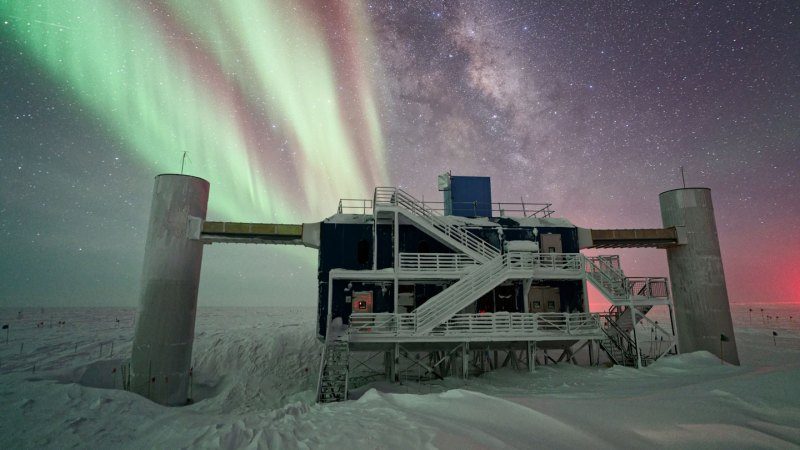
- Physics: Awarded to physicist Francis Halzen for his decisive role in the IceCube Neutrino Observatory and the discovery of high-energy neutrinos of astrophysical origin. IceCube, located at the South Pole, is a unique instrument for detecting these elusive particles and tracing them back to their cosmic sources.
- Chemistry: Awarded to Henri Kagan and Kenso Soai for their work on chiral molecules. They developed chemical reactions that can spontaneously produce only one of two mirror-image forms of a molecule, solving a long-standing puzzle in chemistry and paving the way for more precise drug development.
Background
The human brain, a network of nearly 90 billion neurons, operates through trillions of connections. Understanding how specific behaviors emerge from this complexity has been a central challenge in neuroscience. For decades, researchers sought a precise method to manipulate neural activity. Optogenetics, born from the study of light-sensitive proteins in algae, provided this crucial tool. The discovery of channelrhodopsin by Hegemann and Nagel, and its subsequent application by Deisseroth to control neurons in the brain, transformed the field. Similarly, the quest to understand the universe’s most energetic phenomena led to the development of the IceCube observatory. Neutrinos, weakly interacting particles, offer a unique window into extreme cosmic events. Francis Halzen’s vision and leadership were instrumental in building IceCube and enabling the detection of these cosmic messengers. In chemistry, the phenomenon of chirality—molecules existing in left- and right-handed forms—is fundamental to life. However, replicating nature’s preference for one form (homochirality) in the lab had been a persistent challenge, with implications ranging from the origin of life to the efficacy and safety of pharmaceuticals.
Impact Analysis
Optogenetics has revolutionized neuroscience, allowing researchers to precisely link neural circuits to specific behaviors. This has not only deepened our understanding of healthy brain function but also provided insights into neurological and psychiatric disorders, with potential applications in treating conditions like blindness, depression, and dementia. The development of therapies, such as improving vision in patients with retinitis pigmentosa, highlights its clinical promise. The IceCube Neutrino Observatory has opened a new era in astronomy, enabling scientists to study the universe’s most energetic particle accelerators. By tracing high-energy neutrinos back to their sources, such as blazars, researchers are gaining unprecedented insights into the extreme environments of the cosmos. This work is crucial for understanding fundamental physics and the evolution of galaxies. In chemistry, the ability to selectively synthesize one enantiomer of a chiral molecule has profound implications for the pharmaceutical industry. Many drugs are chiral, and one form can be therapeutic while the other is inactive or even toxic, as tragically demonstrated by the thalidomide disaster. Kagan and Soai’s work offers a pathway to producing safer and more effective drugs, addressing a critical need in medicine.
“The technology, which soon became known as optogenetics, transformed neuroscience,” said Abdel El Manira, a neuroscientist at the Karolinska Institute. “In addition to exposing the inner workings of healthy brains, it has also helped reveal how brain circuits are disrupted, with implications for conditions such as blindness, depression and dementia.”
Broader Context
These Nobel Prizes underscore the interconnectedness of scientific disciplines and the power of interdisciplinary collaboration. The development of optogenetics, for instance, draws from biophysics and neuroscience, while neutrino astronomy relies on particle physics, engineering, and geology. The solution to the chirality puzzle has implications for organic chemistry, biochemistry, and medicine. The prizes also highlight the importance of long-term, fundamental research. The discoveries leading to optogenetics began with studying simple algae, neutrino detection with understanding fundamental particles, and chirality research with basic chemical principles. These foundational pursuits, often lacking immediate practical application, ultimately yield transformative technologies and insights.
Future Outlook
The future implications of these discoveries are vast. Optogenetics is expected to continue advancing our understanding of the brain and lead to novel therapeutic strategies for neurological and psychiatric disorders. The ongoing expansion of neutrino observatories, including plans for a global network, promises even more detailed insights into the high-energy universe. Scientists anticipate mapping more cosmic accelerators and understanding the origins of cosmic rays. In chemistry, the focus will likely shift towards refining these asymmetric synthesis methods for industrial applications, particularly in drug manufacturing, ensuring the production of safer and more effective medications. The study of chirality itself continues to be a vibrant area, with potential applications in materials science and beyond.
Conclusion
The 2023 Nobel Prizes in science celebrate monumental achievements that have reshaped our understanding of the brain, the universe, and the fundamental building blocks of matter. Optogenetics, neutrino astronomy, and breakthroughs in chirality represent triumphs of human curiosity and ingenuity. These discoveries not only honor the laureates but also inspire future generations of scientists to tackle complex challenges and continue the pursuit of knowledge for the betterment of humanity.
Source: sciencenews.org