Motor Neurons Actively Direct Movement, Not Just Relay Commands, New Study Reveals
Introduction
For decades, neuroscience textbooks have described motor neurons as simple conduits, relaying signals from the brain to muscles to initiate and execute movement. Their role was understood as predominantly passive – carrying out instructions. However, a groundbreaking study published in Nature Neuroscience challenges this long-held view, presenting compelling evidence that motor neurons may play a far more active and directive role in orchestrating the very movements they control.
Key Details
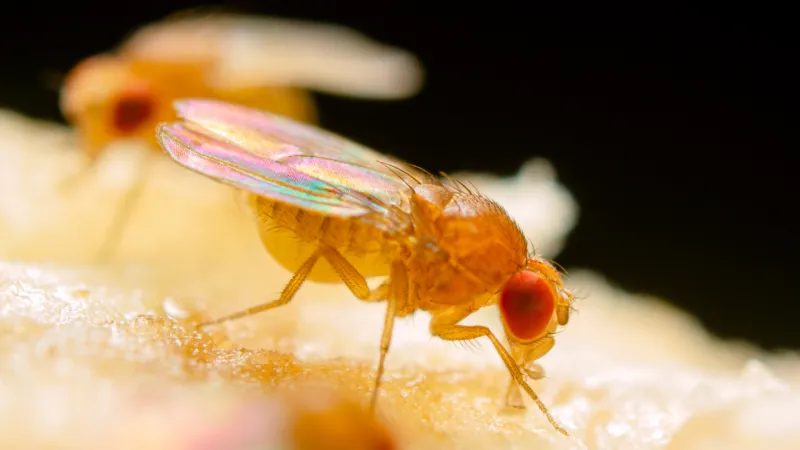
- Research Focus: The study investigated the feeding behavior of fruit flies (Drosophila melanogaster), specifically the complex sucking motion required to ingest food.
- Traditional View: Motor neurons were traditionally considered passive messengers executing brain commands.
- New Findings: Researchers observed that some motor neurons not only activate muscles but also send signals back to the brain.
- Mechanism: These feedback signals appear to regulate the timing and activation of subsequent motor neurons in a sequence, akin to releasing a brake.
- Experimental Model: The research utilized fruit flies due to the precise, yet complex, muscle coordination involved in their feeding behavior.
- Publication: The findings were published on August 24 in the journal Nature Neuroscience.
- Lead Researchers: The study was led by Dong-Gen Luo and Xiu-Wen Sui from Peking University.
Background
The generation of coordinated movement sequences has remained a complex puzzle for neuroscientists. Even when the neural pathways and muscles involved are well-mapped, understanding how the nervous system orchestrates precise, rhythmic actions is challenging. The feeding behavior of fruit flies offers a compelling model for studying this complexity. Their sucking motion relies on the coordinated contraction of seven pairs of mouth muscles, each controlled by a dedicated pair of motor neurons. This intricate dance of muscle activation creates rapid pressure changes necessary for feeding, a process remarkably similar to infant suckling.
The initial discovery stemmed from an accidental observation by Xiu-Wen Sui, then a Ph.D. student in Dong-Gen Luo's lab at Peking University. While studying taste perception, Sui inadvertently triggered repetitive sucking behavior in the flies. This unexpected finding sparked the team's curiosity, leading them to pivot their research focus towards understanding the motor control behind this seemingly simple action.
Impact Analysis
The study’s most significant implication is the redefinition of the motor neuron's role. Instead of being mere executors of commands, motor neurons are now implicated as active participants in the control loop. By sending signals back to the brain, they can influence the progression of movement sequences. This suggests a sophisticated feedback mechanism where motor neurons assess the state of muscle activation and environmental conditions, and subsequently modulate the brain's output. This allows for greater precision and stability in movement, as the system can adapt and adjust in real-time.
“It closely resembles the way an infant suckles,” says Dong-Gen Luo, a neuroscientist at Peking University in Beijing, highlighting the biological relevance of the observed motor control.
The researchers liken this feedback process to a chain of dominoes, but with an intelligent trigger. Each set of motor neurons not only activates its corresponding muscles but also signals the brain to disengage the “brake” for the next set in the sequence. This ensures that the next muscle group is activated only when appropriate, preventing premature or uncoordinated contractions. This finding challenges the traditional hierarchical model of motor control, where the brain is seen as the sole director and motor neurons as mere performers.
Broader Context
This research bridges two previously distinct areas of neuroscience: the study of motor output pathways and the study of neural feedback mechanisms. Maarten Zwart, a neuroscientist at the University of St. Andrews, who was not involved in the study, likens the motor neurons to soldiers on a battlefield. While it was known that commanders (the brain) directed soldiers (motor neurons) and that soldiers could report back to commanders, this study reveals that the soldiers' reports can actively influence the commanders' subsequent orders, specifically dictating when the next soldier can act.
This finding has profound implications for understanding motor control not just in insects but potentially in more complex organisms. While the specific neural circuitry might differ between fruit flies and vertebrates, the principle of active feedback from motor neurons could be a conserved mechanism for achieving robust and adaptive movements.
Future Outlook
The potential applications of this research extend beyond fundamental neuroscience. Dong-Gen Luo suggests that the principle of motor neurons actively regulating movement sequences could be harnessed to improve robotic control systems. Robots equipped with similar feedback mechanisms could achieve smoother, more adaptive, and more precise movements, mimicking the efficiency and adaptability of biological systems. Further research will be needed to elucidate the precise neural mechanisms involved and to determine the extent to which these principles apply to human motor control.
Conclusion
This study represents a significant paradigm shift in our understanding of motor neuron function. By demonstrating that these nerve cells are not just passive relays but active directors of movement, the research opens new avenues for exploring the intricacies of the nervous system. The findings in fruit flies challenge established models and hint at a more dynamic and interactive control system than previously imagined, with potential implications for both basic science and technological innovation.
Source: sciencenews.org