Urban Trees Exacerbate City Air Pollution by 52%, New Study Reveals
Introduction
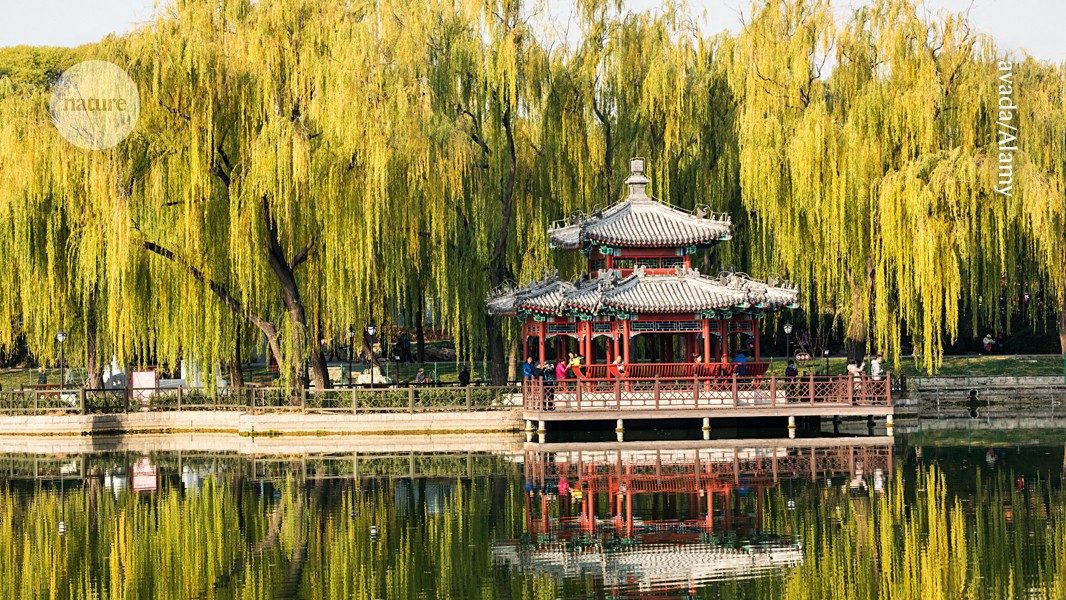
The ubiquitous presence of trees in urban landscapes is often celebrated as a cornerstone of environmental well-being, a natural antidote to the concrete jungles and industrial emissions that define modern metropolises. Cities worldwide invest heavily in greening initiatives, planting millions of trees to enhance aesthetics, mitigate the urban heat island effect, and, crucially, improve air quality. However, a recent study published in the prestigious journal Science Advances presents a counterintuitive and concerning finding: certain tree species, widely adopted for their resilience and rapid growth, are inadvertently exacerbating air pollution in urban environments. The research, focusing initially on Beijing but with implications for numerous other global cities, suggests that these leafy contributors are playing a far more significant role in the formation of ground-level ozone than previously understood, a phenomenon that could be amplified by the escalating impacts of climate change.
Key Details
- Significant Ozone Precursor: The study identified that vegetation, particularly isoprene-emitting trees like willows and poplars, accounts for approximately 52% of the chemical precursors that lead to the formation of ground-level ozone in Beijing.
- Isoprene as a Major Culprit: Isoprene, a volatile organic compound (VOC) released by these trees as a byproduct of photosynthesis, is the dominant contributor to this ozone-forming potential. Around 35% of Beijing's urban trees are estimated to be isoprene emitters.
- Comparative Contribution: While human activities (vehicle emissions, industrial chemicals) contribute a larger volume of total VOCs, their contribution to ozone formation was found to be substantially less than that of vegetation due to the specific reactivity of isoprene.
- Global Relevance: The research extended its analysis to 24 megacities, predicting that many, including Sydney and Melbourne, could have even higher isoprene emission potentials than Beijing, with Sydney having an estimated 65% of its trees as isoprene emitters.
- Temperature Amplification: The study highlights that rising temperatures significantly intensify the ozone-forming potential of vegetation. At 35°C, the chemical reactivity of vegetation-derived VOCs with atmospheric hydroxyls was seven times higher than at 20°C, increasing vegetation's contribution to ozone formation from 21% to 74% within this temperature range.
- Methodology: Researchers collected air samples in Beijing to measure VOC concentrations and ozone levels. They then estimated the contribution of vegetation to ozone formation by calculating the reaction rates of VOCs with hydroxyl radicals, a key step in the ozone production pathway.
- Funding and Authorship: The study was conducted by a team including Bin Yuan from Jinan University and involved atmospheric chemistry analysis. Specific funding details and the full author list are available in the original publication.
Background
Ground-level ozone is a harmful air pollutant that forms when nitrogen oxides (NOx) and volatile organic compounds (VOCs) react in the presence of sunlight. NOx emissions are primarily associated with the combustion of fossil fuels in vehicles and industrial processes. VOCs, on the other hand, originate from a wider array of sources, including industrial solvents, vehicle exhaust, and, as this study reveals, natural biological processes. While industrial and vehicular emissions have been a long-standing focus of air quality management, the contribution of biogenic VOCs (BVOCs) from vegetation has often been underestimated or considered secondary in urban contexts. Historically, trees have been lauded for their ability to absorb carbon dioxide and filter particulate matter, leading to widespread urban forestry initiatives. Species like weeping willows (Salix spp.) and poplars (Populus spp.) are frequently chosen for their rapid growth, adaptability to urban conditions, and aesthetic qualities. These species, however, are also known to be high emitters of isoprene, a specific type of VOC that is particularly reactive and instrumental in ozone formation under sunlight. The study by Yuan and colleagues aimed to quantify the impact of various emission sources on ozone pollution in Beijing, a megacity grappling with significant air quality challenges. Their findings underscore a critical paradigm shift in understanding urban air chemistry, moving beyond a solely anthropogenic-focused view.
Impact Analysis
The implications of this research are profound and multifaceted. Firstly, it necessitates a re-evaluation of urban greening strategies. While trees remain vital for numerous ecosystem services, the selection of species must now incorporate their potential to contribute to air pollution. Planting high-isoprene emitting trees in densely populated areas, especially those already experiencing high levels of NOx from traffic, could inadvertently create localized hotspots for ozone formation. This is particularly concerning given that ozone is a respiratory irritant, capable of exacerbating conditions like asthma and bronchitis, and can even cause long-term lung damage. The study quantifies this impact by attributing 52% of the chemical reactivity leading to ozone formation to vegetation. This figure is particularly striking when contrasted with the total volume of VOCs emitted; while human activities emit more VOCs overall, their chemical structure and reactivity mean they contribute less to ozone formation than the biogenic isoprene. This suggests that reducing isoprene emissions from urban trees could be a more effective strategy for ozone reduction in certain contexts than solely focusing on reducing anthropogenic VOCs, which have seen significant reductions in many developed nations over recent decades due to stricter regulations. The study’s finding that vegetation's contribution escalates dramatically with temperature – from 21% at 20°C to 74% at 35°C – is a critical warning. As global temperatures rise due to climate change, the ozone-forming potential of urban forests will likely increase, turning a perceived environmental asset into a potential liability during heatwaves, precisely when air quality is most critical.
Broader Context
This study emerges at a critical juncture where cities globally are grappling with the dual challenges of rapid urbanization, increasing population density, and the escalating impacts of climate change. The push for 'smart cities' and 'green cities' often prioritizes rapid growth and resilience, leading to the widespread adoption of species like poplars and willows. However, the nuanced chemistry of air pollution means that well-intentioned interventions can have unintended consequences. The research by Yuan and colleagues provides crucial data that can inform policy and urban planning. It highlights that the source and type of VOC matter significantly in ozone formation. While anthropogenic VOCs have been the target of numerous regulations, biogenic VOCs, particularly isoprene, represent a substantial and growing fraction of the problem, especially as other sources are controlled. The fact that cities like Sydney and Melbourne, often perceived as having cleaner environments, may face even greater challenges due to their tree populations underscores the universal applicability of these findings. This research adds to a growing body of literature questioning the simplistic view of urban nature, emphasizing the need for a more sophisticated understanding of ecological interactions within urban systems. It also points to the complex interplay between local urban planning decisions and global climate trends, demonstrating how rising temperatures can amplify the negative impacts of biological processes.
Future Outlook
The findings necessitate a forward-looking approach to urban forestry and air quality management. Future research should focus on identifying and propagating low-isoprene emitting tree species suitable for urban environments. Developing predictive models that can assess the ozone-forming potential of different urban forest compositions under various climate scenarios will be crucial for long-term planning. Furthermore, exploring mitigation strategies, such as targeted pruning or the development of bio-engineered trees with reduced isoprene emissions, might become necessary, though these raise their own ecological and ethical questions. Policy interventions could include revising urban greening guidelines to incorporate VOC emission potentials alongside other desirable traits. Public awareness campaigns could also inform citizens about the dual role of certain trees in urban environments. On a broader scale, this study reinforces the urgent need for global action on climate change. Mitigating global warming is not just about preventing catastrophic climate events; it is also about averting the exacerbation of existing environmental problems like air pollution. As temperatures continue to rise, the natural systems we rely on for environmental benefits could increasingly become sources of pollution, demanding a more integrated and adaptive approach to environmental management. The challenge lies in balancing the undeniable benefits of urban greenery with the need to maintain healthy air quality, a balance that requires scientific insight, innovative solutions, and careful planning.
Conclusion
The study published in Science Advances delivers a critical message: the trees that grace our cities, often seen as symbols of environmental health, can contribute significantly to air pollution. By identifying that common species like willows and poplars release isoprene, a potent precursor to ground-level ozone, the research challenges conventional wisdom and highlights the complex chemistry governing urban air quality. The finding that vegetation accounts for 52% of ozone-forming chemicals in Beijing, and the alarming amplification of this effect with rising temperatures, underscores the urgent need to rethink urban greening strategies. This research is not a call to abandon urban trees, but rather a plea for more informed selection and management. It emphasizes that the pursuit of cleaner air requires a holistic understanding of all emission sources, including those from nature itself, and a proactive approach to mitigating the impacts of climate change. As cities continue to grow and the planet warms, integrating ecological science with urban planning will be paramount to ensuring that our urban environments are truly healthy and sustainable.
“When we got this data, we did not believe it in the beginning,” says co-author Bin Yuan, highlighting the surprising nature of the findings regarding vegetation's substantial contribution to ozone pollution.
Source: nature.com