Rare 10th Century Wooden Tomb Reveals Norse-Slavic Elite Connections in Russia
Introduction
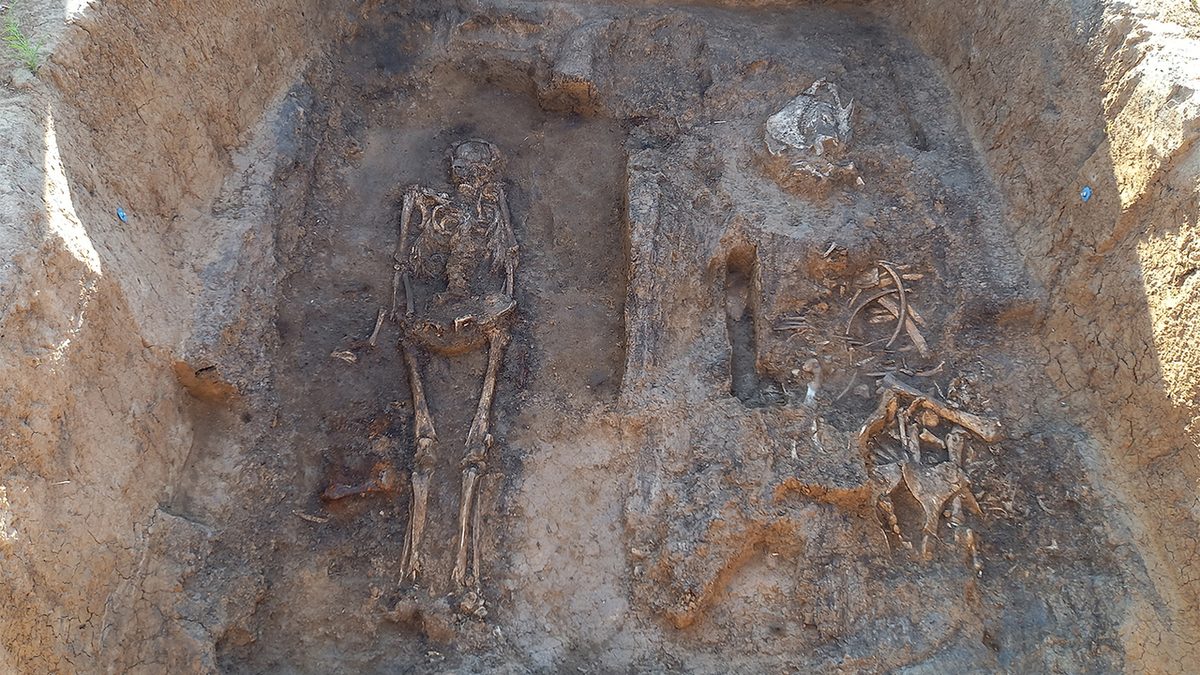
A remarkable archaeological discovery in Russia has shed new light on the complex cultural interactions of the early medieval period. Excavations at the Gnezdilovo cemetery in Suzdal have unearthed a rare 10th-century wooden chamber tomb, exceptionally well-preserved, containing the skeletal remains of a high-status man, accompanied by his horse and dog. This unique find provides compelling evidence of shared burial practices between Norse and Old Russian elites, offering a glimpse into the political and social landscape of Kievan Rus' a millennium ago.
Key Details
- Discovery Location: Gnezdilovo cemetery, Suzdal, Russia (approx. 220 km northeast of Moscow).
- Dating: 10th century CE.
- Tomb Structure: A rare wooden chamber tomb, measuring 3.1 by 2.7 meters, found 1 meter underground. The wooden roof had decayed and collapsed.
- Inhabitants: Skeletal remains of a man (estimated age 25-35 at death), a horse, and a dog.
- Grave Goods: An iron knife, stirrups, other riding gear, a bone comb, a battle ax, and a silver, horseshoe-shaped brooch.
- Rarity: Only 80 other medieval chamber burials have been found across western Russia, with previous discoveries concentrated in urban centers.
Background
The 10th century was a pivotal era for the region now known as western Russia. This period saw the consolidation of power under the Kievan Rus', a vast polity encompassing diverse populations including Baltic, Eastern Slavic, and Norse peoples. Scandinavian influence was significant, particularly in the adoption of burial customs. The practice of interring medieval Rus' nobility in elaborate underground wooden crypts, often accompanied by numerous grave goods, was a custom imported from Scandinavia. However, such well-preserved wooden chamber tombs from this early period are exceedingly rare, making the Suzdal discovery particularly significant.
Impact Analysis
The presence of a horse and dog alongside the nobleman indicates a continuation of warrior traditions and a belief in the afterlife that mirrored those found in Northern Europe. The inclusion of riding gear, a battle ax, and other weaponry clearly signifies the man's high social standing and likely military role. The silver brooch, used to fasten his garment, further underscores his elite status. The exceptional preservation of the wooden structure and the organic materials within offers archaeologists a unique opportunity to study the craftsmanship and materials of the period. Crucially, the discovery of this chamber tomb at Suzdal, a site previously not recognized as a major center, suggests that Suzdal itself was a significant hub of power and administration within the Kievan Rus' polity. This challenges previous assumptions about the distribution of power and influence, indicating that elite burials were not confined solely to established urban centers.
“As early as the 10th century, it was already a magnet for the Old Rus' nobility (bearers of a new identity) and served as a center of military-administrative control over the northeastern territories of Rus',” stated the Institute of Archaeology of the Russian Academy of Sciences.
Broader Context
The Gnezdilovo site has yielded numerous burials, with most being simpler pit graves. The other burials uncovered this summer included those of women adorned with silver rings and necklaces featuring rock-crystal beads, and men equipped with weapons and horse-riding paraphernalia. This variety highlights the different social strata and gender roles within the community. The chamber tomb, however, stands out as a testament to the deep connections and shared cultural norms that existed between different ethnic and social groups within Kievan Rus'. The blending of Norse and Slavic traditions in burial rites reflects the broader process of state formation and cultural integration occurring during this period. The findings at Suzdal contribute to a growing body of evidence that medieval Russia was a dynamic melting pot of cultures, where Scandinavian, Slavic, and other influences intertwined to forge a distinct Old Russian identity.
Future Outlook
Further analysis of the skeletal remains will undoubtedly provide more detailed information about the man's health, diet, and possibly even his origins. The study of the grave goods will continue to illuminate the technological capabilities and trade networks of the 10th century. The discovery reinforces the importance of archaeological research in understanding the nuances of early state development and cultural exchange. Future excavations at Gnezdilovo and other sites in the region are likely to uncover more evidence that will refine our understanding of Kievan Rus' and its place in medieval European history. The rare nature of this wooden tomb also emphasizes the need for careful preservation and study of such fragile archaeological contexts.
Conclusion
The unearthed 10th-century wooden chamber tomb at Suzdal is a find of immense archaeological significance. It not only provides a rare and detailed look at the burial customs of medieval Russian nobility but also offers crucial insights into the cultural and political integration within Kievan Rus'. The presence of a nobleman, his horse, and dog, along with rich grave goods, speaks volumes about his status and the beliefs of the time. More importantly, this discovery positions Suzdal as a previously underestimated center of power, highlighting the complex web of relationships that characterized this formative period of Russian history. This rare glimpse into the past underscores the enduring legacy of cultural exchange and the sophisticated social structures that existed a millennium ago.
Source: livescience.com