Quantum Theories Challenge the Concept of Pre-Big Bang Universes
Quantum Theories Challenge the Concept of Pre-Big Bang Universes
Introduction
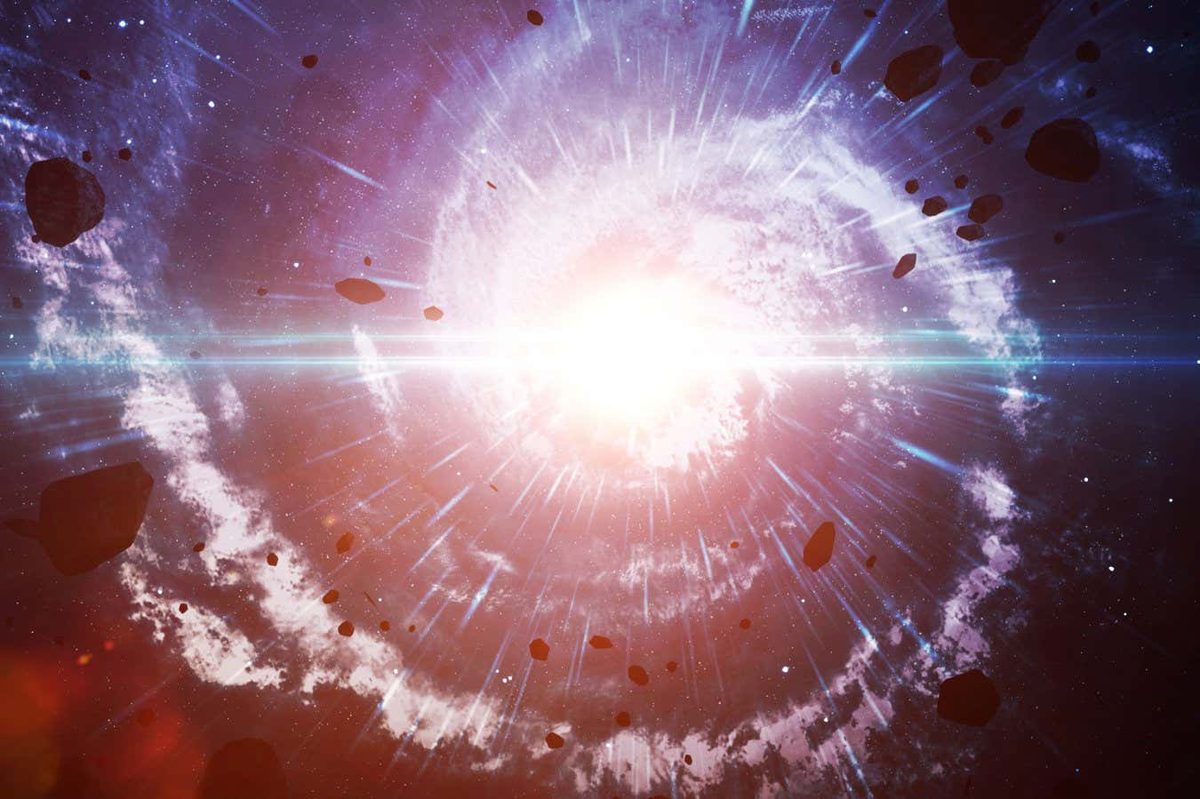
The origins of our universe have long fascinated scientists, philosophers, and curious minds alike. Most commonly, the narrative begins with the Big Bang, a moment of immense energy that sparked the expansion of space and time as we know it. However, an alternative theory suggests that our universe might not have originated from a singular event but rather from a 'big bounce'—a concept where a prior universe contracts before expanding into what we see today. Recent insights from the realm of quantum physics, however, indicate that this idea may not hold up under scrutiny, potentially ruling out the existence of a universe that preceded our own.
Key Details
- Some physicists theorize that the universe originated from a big bounce rather than the Big Bang.
- This theory posits that a prior universe collapsed and then re-expanded, leading to our current universe.
- Quantum mechanics introduces complexities that challenge the validity of a preceding universe.
- The implications of these findings could reshape our understanding of the universe's existence and nature.
Background
The idea of a universe arising from a preceding one has gained traction among certain physicists, particularly in the context of loop quantum gravity, which attempts to reconcile general relativity with quantum mechanics. The 'big bounce' concept suggests that instead of a singular Big Bang event, the universe undergoes a cycle of contraction and expansion. This cyclic model presents a fascinating alternative to traditional cosmology, proposing that our universe is merely the latest in a series of cosmic expansions.
However, as engaging as this theory is, it runs into complications when viewed through the lens of quantum physics. The fundamental principles of quantum theory dictate behaviors and phenomena at the microscopic level of particles and energy, leading to insights that are sometimes counterintuitive to our macroscopic understanding. Some physicists argue that certain attributes of quantum mechanics may inherently preclude the existence of a universe before ours.
Analysis
A critical aspect of the discussion surrounds the nature of quantum fluctuations and how they operate in extreme conditions like those found in black holes and at the dawn of the universe. Quantum mechanics suggests that energy levels can fluctuate wildly, leading to uncertainty in the properties of particles. This uncertainty could imply that the state of any prior universe would not simply transfer into the current one, challenging the trajectory of a 'big bounce.'
Furthermore, the mathematics involved in quantum field theory implies that the fabric of spacetime is not static but rather dynamic and subject to the fluctuations of quantum events. If the universe indeed originated from quantum fluctuations, then a previous universe may not have a coherent structure or timeline—that is, conditions necessary for a bounce to occur might not have existed. This brings up profound implications for the very nature of time, suggesting that time itself may have begun with the Big Bang rather than existing in a continuum that includes a previous universe.
Notably, the implications of such theories extend beyond mere academic curiosity. They challenge the philosophical foundations of our understanding of existence, creation, and the cosmos. If we conclude that our universe is the first of its kind, it raises questions about the uniqueness of our existence and the nature of reality beyond our observational capabilities.
Conclusion
As physicists continue to explore the boundaries of quantum mechanics and cosmology, the idea of a pre-Big Bang universe faces increasing scrutiny. The prospects of a universe that came before ours may be dimmed by the principles of quantum theory, leading to a renewed focus on understanding the origins of our universe in a way that aligns with both empirical evidence and theoretical consistency. Ultimately, these discussions not only deepen our appreciation for the cosmos but also remind us of the ever-evolving nature of scientific inquiry.