Hypernova Theory Challenged: Standard Supernovas May Explain Cosmic Chemical Signatures
Introduction
For years, astronomers have pointed to peculiar chemical compositions in certain ancient stars as compelling evidence for the existence of hypernovas – exceptionally energetic explosions far exceeding the power of typical supernovae. These cosmic events, theorized to be the progenitors of hypernovas, were thought to leave a distinct elemental fingerprint. However, a recent study, published in the September issue of Monthly Notices of the Royal Astronomical Society, introduces a significant challenge to this long-held hypothesis. New mathematical models suggest that the observed chemical anomalies might not require the exotic physics of hypernovas, but can instead be explained by the more conventional, albeit complex, processes of standard supernova explosions.
Key Details
- Challenged Evidence: The existence of hypernovas, previously inferred from chemical traces in certain stars, is now seriously questioned by new mathematical models.
- Alternative Explanation: Researchers propose that standard supernovas, coupled with asymmetric distribution of ejected elements, can account for the observed elemental ratios in these stars.
- Model Development: The new models incorporate the understanding that supernova ejecta do not mix uniformly with interstellar gas, leading to variations in stellar composition based on their proximity to the explosion site.
- Study Focus: The research specifically examined stars in the Milky Way's halo, which are known for their old age and low heavy element content, previously considered prime candidates for hypernova origins.
- Expert Opinions: While some astrophysicists, like Ralph Schönrich, believe the evidence for hypernovas is now severely undermined, others, such as Anna Frebel, maintain that hypernovas remain a plausible, though not exclusive, explanation.
Background
The lifecycle of stars is intrinsically linked to the creation and distribution of elements in the universe. When massive stars reach the end of their lives, they often explode as supernovae, scattering heavy elements forged in their cores into the interstellar medium. This enriched material then becomes the building blocks for subsequent generations of stars and planetary systems. Astronomers have long used the elemental composition of stars as a cosmic record, deciphering their origins by analyzing the relative abundances of different elements. Specific elemental ratios, particularly those involving heavy elements like nickel and oxygen, have been used to distinguish between different types of stellar explosions. For a long time, the extreme ratios observed in certain halo stars were considered a smoking gun for hypernovas, a theoretical class of supernova with energies orders of magnitude greater than standard ones.
Impact Analysis
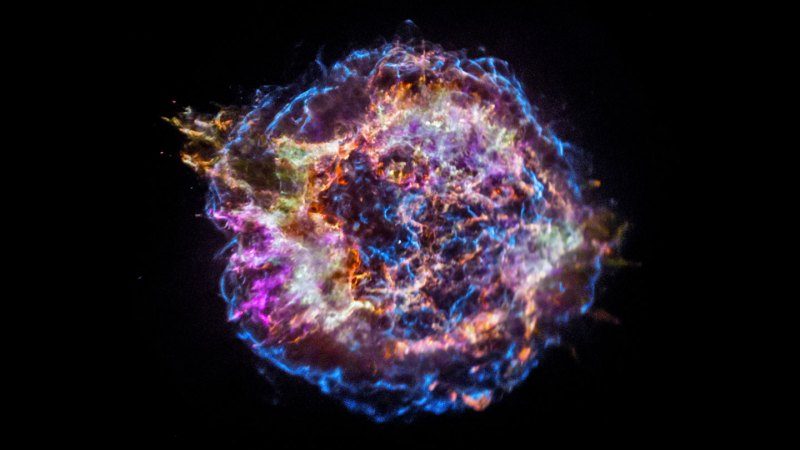
The core of the new research lies in re-evaluating how the material ejected by supernovae mixes with the surrounding interstellar gas. Traditional models often assumed a uniform mixing process, leading to a homogeneous distribution of elements. However, observational data and advanced simulations have revealed that supernova explosions are often asymmetric, ejecting material in specific directions and at varying speeds. This means that the resulting chemical enrichment of the interstellar medium is not uniform. Areas closer to the explosion site might receive a disproportionately higher concentration of certain elements compared to more distant regions. The new mathematical models developed by Schönrich and colleagues explicitly account for this uneven distribution. By simulating these lopsided explosions and their subsequent mixing patterns, the researchers found that they could accurately replicate the elemental abundances observed in the so-called “oddball” stars. This suggests that the unique chemical signatures previously attributed to hypernovas can be explained by the more common phenomenon of standard supernovas interacting with a non-uniformly mixed interstellar medium.
“The evidence for [hypernovas] is now very seriously challenged,” says astrophysicist Ralph Schönrich of University College London.
Broader Context
This debate touches upon fundamental questions in astrophysics regarding stellar evolution, nucleosynthesis, and the early universe. The existence and nature of hypernovas have implications for understanding the most energetic events in the cosmos and the formation of the first heavy elements. If hypernovas are indeed less common or even non-existent as a distinct class, it necessitates a reassessment of our models for extreme stellar explosions and their contribution to galactic chemical evolution. The findings also highlight a potential gap in communication or knowledge transfer between different subfields of astronomy. As astrophysicist Adam Burrows of Princeton University, who was not involved in the study, noted, the concept of irregular mixing from supernovae is well-understood by supernova researchers but may not have been widely disseminated to those studying galactic evolution and stellar populations. This research serves as a reminder that even well-established scientific interpretations can be overturned by refining our models and incorporating new observational insights.
Future Outlook
The study underscores the need for further investigation into the dynamics of supernova explosions and the complex processes of interstellar gas mixing. Future research will likely involve more sophisticated simulations that capture the intricacies of asymmetric ejecta distribution and its impact on the chemical composition of forming stars. Astronomers will also continue to observe and analyze the elemental abundances in ancient stars, seeking to differentiate between the predictions of standard supernova models with uneven mixing and the potential signatures of truly hyper-energetic events. While the new models provide a compelling alternative explanation, they do not definitively rule out the possibility of hypernovas. As astronomer Anna Frebel points out, a good model fit indicates possibility, not exclusivity. Therefore, the quest to understand the most extreme stellar explosions and their role in cosmic history is far from over. The scientific community will likely engage in further debate and observational campaigns to resolve this intriguing puzzle.
Conclusion
The hypothesis of hypernovas, once a leading explanation for peculiar chemical signatures in ancient stars, now faces significant scrutiny. New mathematical modeling, accounting for the asymmetric distribution of elements from standard supernova explosions, offers a plausible alternative. This research suggests that the unique elemental ratios observed may not require a distinct class of hyper-energetic events but can be explained by the complex interplay of conventional supernovae and uneven interstellar mixing. While this development challenges the prevailing view, it also emphasizes the dynamic nature of scientific inquiry, where refined models and new perspectives continually reshape our understanding of the cosmos. Further research is essential to definitively determine the origins of these enigmatic stars and the full spectrum of stellar explosions.
Source: sciencenews.org