Unlocking the Mystery: How Quasicrystals Defy Traditional Solid-State Structures
Introduction
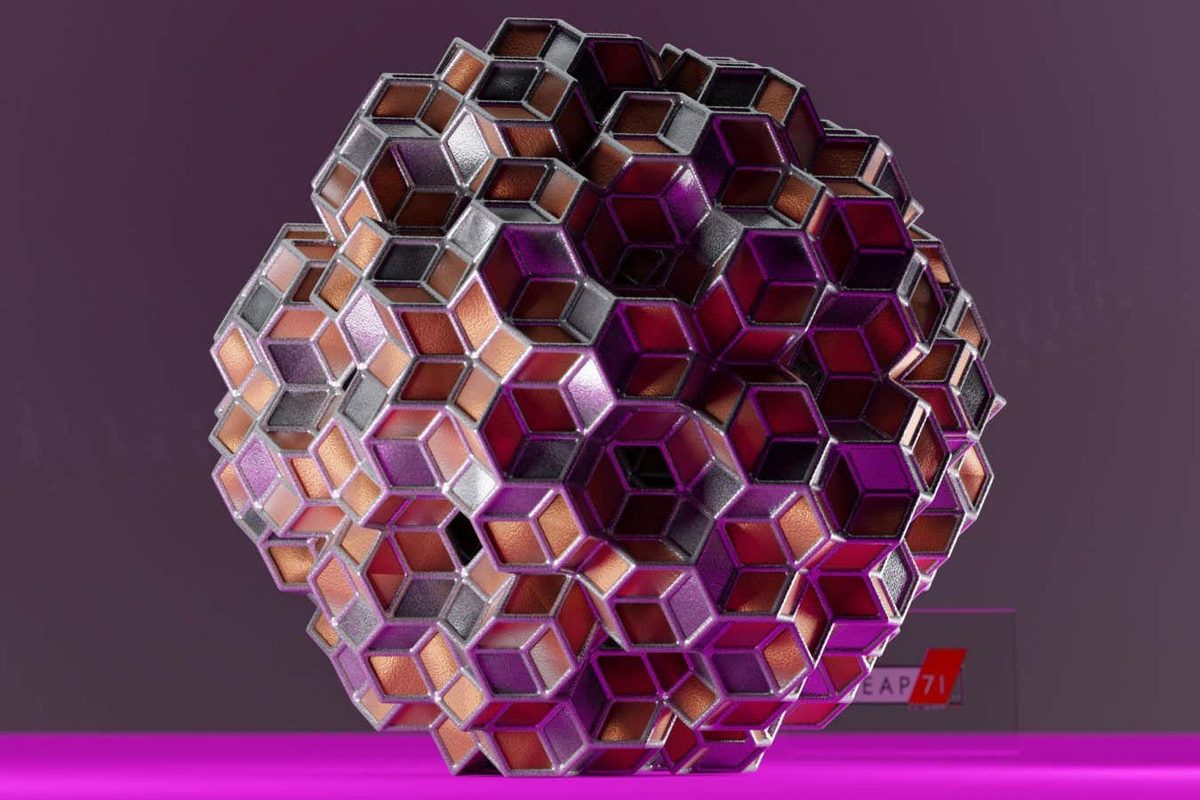
Quasicrystals occupy a fascinating middle ground between conventional crystals and amorphous solids such as glass. Unlike traditional crystals, which feature repeating atomic patterns, quasicrystals display ordered yet non-repetitive atomic arrangements. This distinctive structure gives rise to unusual physical properties, including unique symmetries and atypical electrical and thermal behaviors. For many years, the fundamental question of how quasicrystals maintain their stability remained unresolved, hindering the broader application and study of these intriguing materials.
Key Details
- Quasicrystals exhibit long-range order without periodicity, meaning their atomic patterns never exactly repeat.
- They were first discovered in 1982 by Dan Shechtman, who observed forbidden symmetries in metallic alloys that contradicted classical crystallography rules.
- Traditional crystallography struggled to explain how these structures could be energetically favorable and stable over time.
- Recent advances in computational simulations and experimental techniques have provided insights into the atomic interactions and entropic factors that stabilize quasicrystals.
- Understanding these mechanisms opens possibilities for new materials with tailored properties for industries ranging from aerospace to electronics.
Background
Crystals have been studied extensively due to their highly ordered, repeating atomic structures that lend themselves to predictable physical properties. This periodicity underpins much of classical solid-state physics and materials science. Glasses and amorphous solids, in contrast, lack long-range order, resulting in different mechanical and thermal characteristics. Quasicrystals challenge this dichotomy by blending order with aperiodicity, embodying a form of symmetry previously thought impossible in solid materials, such as fivefold rotational symmetry.
Since Shechtman’s breakthrough, quasicrystals have been synthesized in various alloy systems and even observed in natural minerals and soft matter. Their potential applications range from non-stick coatings to heat insulation and novel electronic components. However, the fundamental question of their stability—why atoms arrange themselves in these non-repetitive yet ordered ways—remained a significant puzzle, slowing progress in exploiting their properties.
Analysis
Recent studies have leveraged state-of-the-art computational models alongside advanced imaging techniques to probe the atomic scale interactions within quasicrystals. Researchers have discovered that the stability arises from a delicate balance between energy minimization and entropy maximization. In other words, the unique atomic arrangements lower the system’s overall energy while also allowing for a higher number of microstates, increasing entropy. This interplay helps quasicrystals resist transformations into more traditional crystal or glassy states.
Moreover, the presence of specific atomic clusters and phason strains—local rearrangements unique to quasicrystals—play a crucial role in maintaining the structure. These factors create energy landscapes with multiple minima, enabling the material to remain stable despite its aperiodic order. Such findings not only deepen our understanding of quasicrystalline matter but also challenge existing paradigms in materials science.
The implications extend beyond pure science. Knowing how quasicrystals sustain their structure allows material scientists to engineer alloys with customized electronic, thermal, and mechanical properties. This could lead to innovations in lightweight, corrosion-resistant components for aerospace, improved catalysts, and novel photonic devices.
Conclusion
The revelation of the mechanisms stabilizing quasicrystals marks a significant milestone in condensed matter physics and materials science. By unraveling how these complex structures balance energy and entropy to remain stable, scientists have opened new avenues for both theoretical exploration and practical applications. As research continues, quasicrystals may well become cornerstones of next-generation materials, expanding the boundaries of what is possible in technology and industry.