New High-Definition Footage Reveals 108-Year-Old USS F-1 Submarine Wreck in Stunning Detail
Introduction
In a remarkable intersection of history, technology, and underwater archaeology, researchers from the Woods Hole Oceanographic Institution (WHOI) have produced stunning high-definition footage of the long-sunken USS F-1 submarine wreck. This site, resting 1,300 feet beneath the Pacific Ocean near San Diego, marks the first wartime loss of the US Naval Submarine Force. The revitalized imagery not only offers a vivid glimpse into early 20th-century naval engineering but also serves as a solemn tribute to the 19 sailors who perished in the 1917 accident.
Key Details
- The USS F-1 sank in 1917 after a collision off San Diego’s coast with another US submarine, marking the first wartime loss for the US submarine fleet.
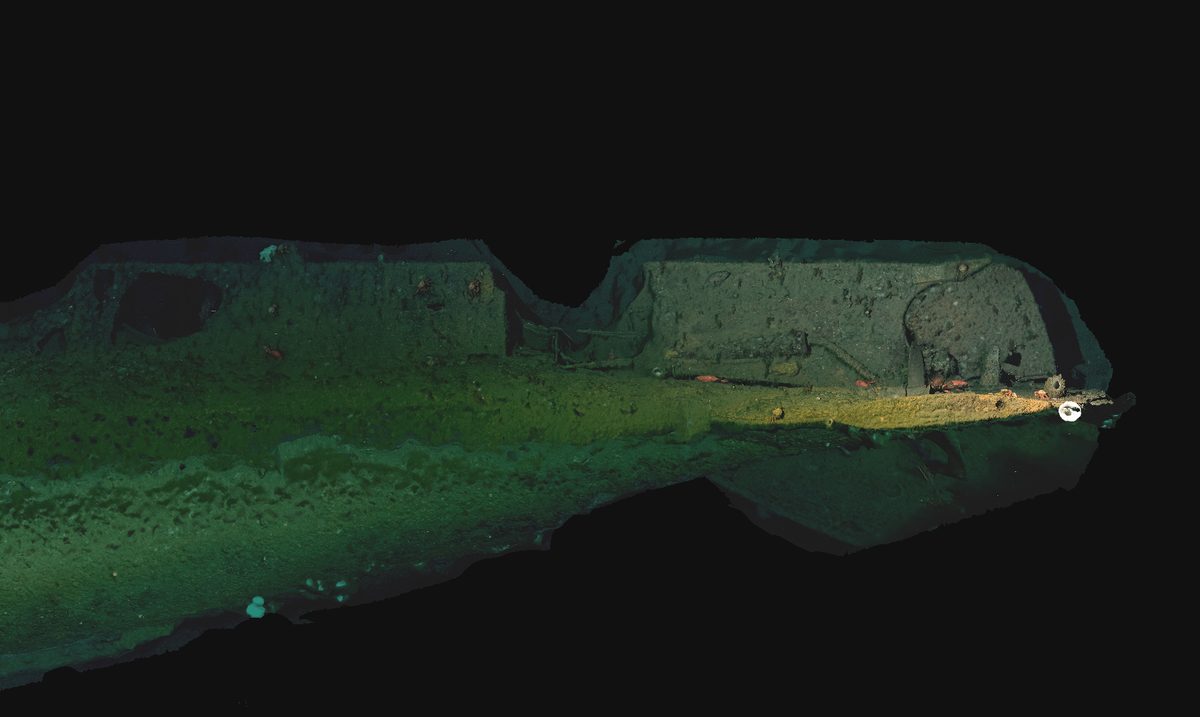
- The wreck was first discovered in 1975, but recent expeditions used advanced technologies for the first-ever high-definition imaging and photogrammetric 3D reconstruction.
- Research dives occurred in February and March, as part of deep-sea training missions using the human-occupied submersible Alvin and the autonomous underwater vehicle Sentry.
- The multidisciplinary team conducted sonar surveys and utilized photogrammetry to build a highly detailed 3D model of the submarine and the surrounding marine environment.
- Alongside the submarine exploration, researchers also investigated a Navy torpedo bomber wreck from 1950 in the same area.
- The mission ended with a solemn remembrance ceremony aboard the research vessel Atlantis, honoring the lost crew members by ringing a bell for each one.
Background
The USS F-1, also known as SS-20, was a US Navy F-class submarine commissioned in the 1910s. During World War I, submarines played an increasingly crucial role in naval warfare and reconnaissance. Tragically, the F-1’s sinking in 1917 after colliding with another US submarine halted its active service, resulting in the deaths of all 19 crew aboard. The submarine lay undiscovered on the seafloor until 1975, when underwater archaeological efforts first located the wreck.
Advancements in marine technology over subsequent decades have gradually enhanced capabilities for exploring such deep-sea historic sites. However, the combination of Alvin and Sentry submersibles represents a leap forward, enabling precise, close-up investigation and documentation of relics in situ without disturbing the site.
Impact Analysis
This latest mission combines sophisticated sonar mapping and photogrammetry to revisit the USS F-1 with unprecedented clarity and context. Photogrammetry, which synthesizes 2D images into accurate 3D models, allows for exact measurements and digital preservation of the submarine’s current state, alongside the marine ecosystem that has developed around it. This blend of technology and archaeology provides a richer understanding of both the physical wreck and its environmental transformation over the last century.
Furthermore, the involvement of Navy veterans and historians in the dives adds significant emotional and educational layers to the experience. Rob Sparrock, an Office of Naval Research Program Officer and Navy veteran, emphasized the solemn privilege of participating in such operations, reflecting on the ongoing risks sailors face and the importance of training that builds upon historical knowledge.
“There was time to contemplate the risks that all mariners, past and present, face. It also reminded me of the importance of these training dives, which leverage the knowledge from past dives, lessons learned and sound engineering.” — Rob Sparrock, ONR Program Officer
Broader Context
The expedition contributes to a growing global effort to document, preserve, and respect underwater cultural heritage. Submarine wrecks like the USS F-1 are underwater memorials and important historical artifacts. They reveal not only naval engineering of their time but also tell human stories of bravery and loss. Additionally, studying how marine life colonizes these wrecks enriches scientific knowledge of deep-sea ecosystems and biodiversity.
The research was supported by the National Science Foundation (NSF), reflecting the significance of investment in advanced oceanographic research and underwater archaeology. The use of both manned submersibles and autonomous vehicles demonstrates how technological innovation continues to expand the frontiers of marine exploration.
Future Outlook
As photogrammetry and underwater imaging techniques improve, we can expect even more detailed and accessible 3D models of underwater wreck sites. These models can be used by historians, marine biologists, educators, and policy makers to safeguard marine heritage and promote ocean literacy.
Moreover, the successful integration of training deep-sea pilots with research missions sets a valuable precedent. It ensures that future generations of submersible operators are both highly skilled and sensitive to the historical and environmental contexts of their missions.
There is also considerable potential for further exploration of related wrecks in the region, including military aircraft and other naval vessels, creating a more comprehensive picture of the area’s maritime history.
Conclusion
The newly captured high-definition images and 3D reconstructions of the USS F-1 submarine wreck represent a significant achievement in underwater archaeology and marine technology. By bridging historical remembrance with cutting-edge scientific capability, this project honors the memory of lost sailors while advancing knowledge of deep-sea environments. As more such sites are explored with advanced tools, our collective understanding and respect for oceanic heritage will only deepen.
The work exemplifies how historical preservation, scientific discovery, and technological innovation can converge to bring the past vividly into the present.