Unveiling the Universe’s Giants: LIGO Detects the Most Massive Black Hole Collision to Date
Introduction
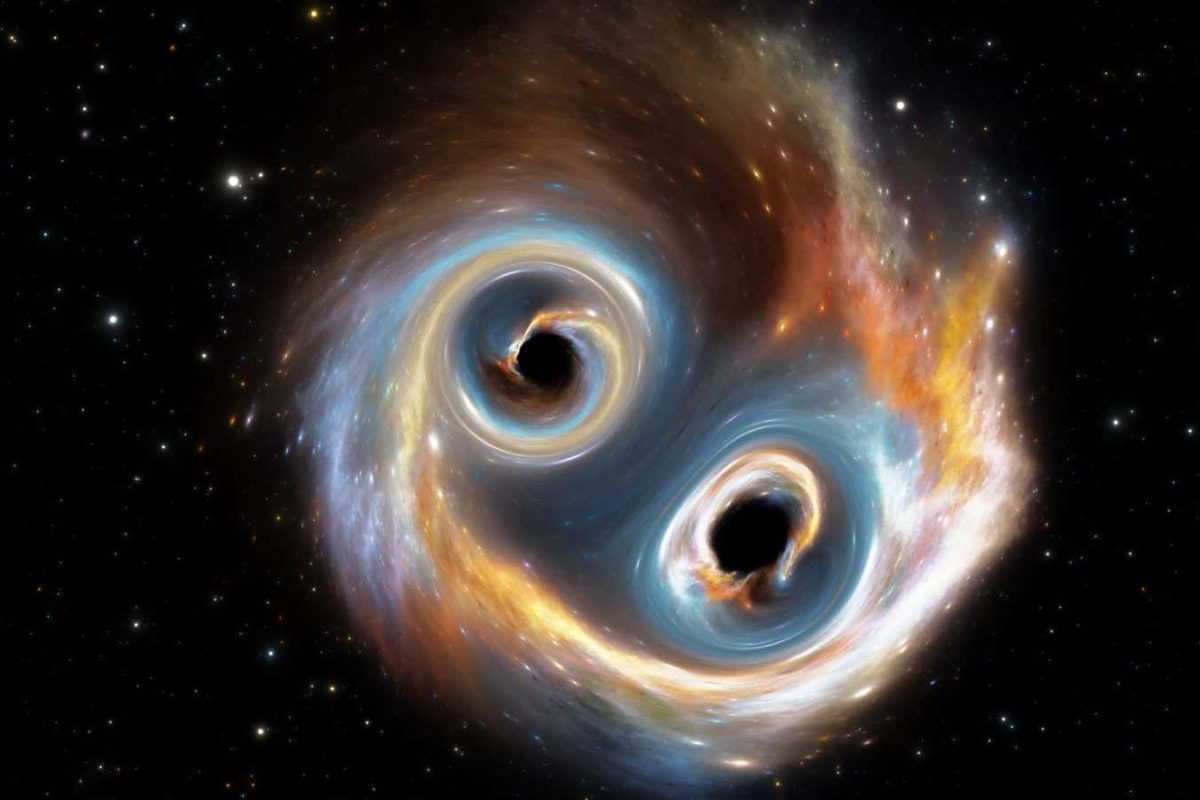
The scientific community has been captivated by the recent discovery of a gravitational wave signal detected by the Laser Interferometer Gravitational-Wave Observatory (LIGO). This particular signal stands out due to its origin: a collision between two extraordinarily massive black holes, marking the most massive black hole merger observed to date. This breakthrough enhances our understanding of these enigmatic objects and offers new clues about the dynamics of the universe’s most violent events.
Key Details
- Detection Event: LIGO recorded an exceptionally strong gravitational wave, attributed to a black hole merger.
- Record-Breaking Masses: The merging black holes are the largest pair ever detected, surpassing all previous observations.
- Gravitational Wave Signature: The observed waveform exhibited unique features enabling astronomers to estimate the mass and spin of the resulting black hole.
- Collaborative Efforts: Data from LIGO alongside its European counterpart, Virgo, were integral in confirming the event’s parameters.
Background
Gravitational waves, ripples in spacetime predicted by Einstein’s theory of general relativity, have become a revolutionary tool for astrophysics since their first direct detection in 2015. These waves typically originate from cataclysmic events such as black hole mergers or neutron star collisions. Black holes themselves are regions in space where gravity is so intense that nothing, not even light, can escape.
Previous detections by LIGO and Virgo have unveiled numerous black hole mergers, but most involved black holes of moderate size, typically ranging from 5 to 50 times the mass of our Sun. The recent event shatters these precedents, involving black holes with masses significantly beyond this range. Such massive entities challenge existing models of stellar evolution and black hole formation, sparking vigorous theoretical investigations.
Analysis
The detection offers compelling evidence that black holes can grow to sizes previously thought improbable, either through successive mergers or through the collapse of extraordinarily massive stars. These findings suggest the existence of a population of intermediate to heavy black holes, which may play critical roles in galaxy evolution and the growth of supermassive black holes found at galactic centers.
Moreover, the data provide an opportunity to test general relativity in regimes of extreme gravity. The precise measurements of gravitational waves allow physicists to explore whether the behavior of spacetime matches theoretical predictions even under such extraordinary conditions.
This discovery also opens up new questions regarding the environments where such massive black holes reside. Are they the result of dense stellar clusters facilitating repeated mergers, or do they indicate a separate formation channel involving massive progenitor stars? The answer could significantly refine our understanding of cosmic evolution.
Conclusion
The identification of the most massive black hole collision to date by LIGO represents a landmark achievement in astrophysics. It not only enriches the catalog of gravitational wave events but also pushes the boundaries of our knowledge about black hole characteristics and the extreme processes shaping our universe. As gravitational wave observatories improve their sensitivity, future detections will likely unveil even more extraordinary phenomena, deepening our grasp of the cosmos.