Mercury's Hidden Shrinkage: New Study Reveals Up to 30% More Contraction, Hinting at Violent Past
Introduction
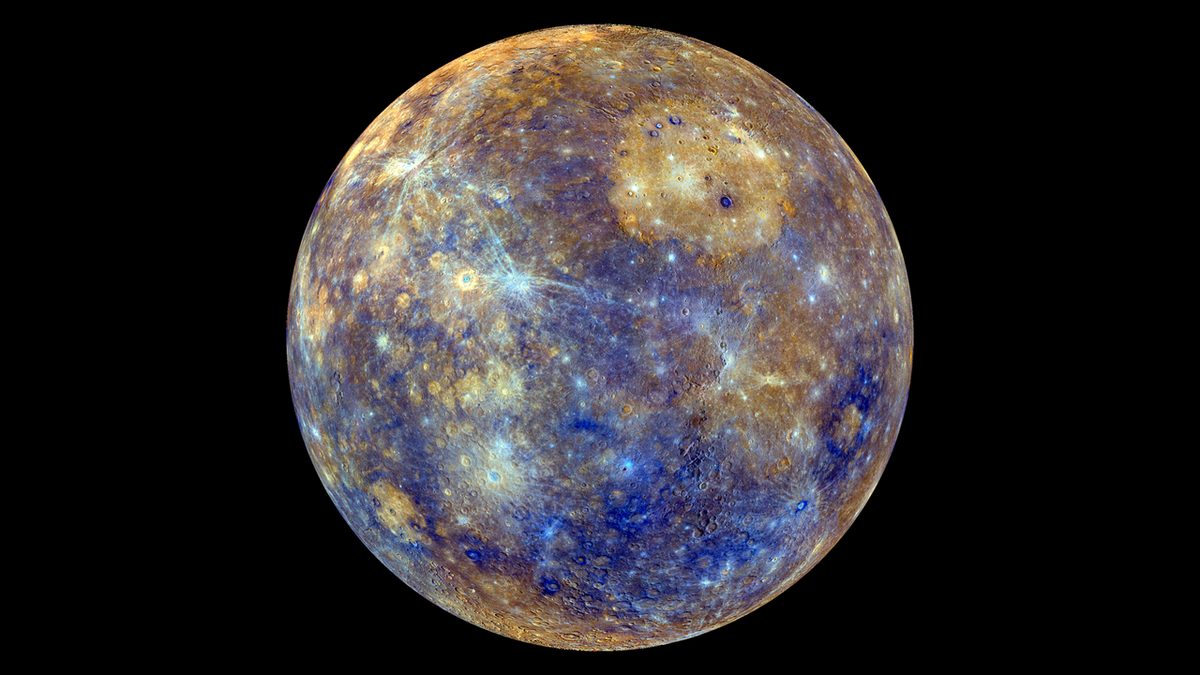
Mercury, the solar system's innermost planet, may be undergoing a much more significant transformation than scientists have long believed. New research indicates that the small, rocky world has likely contracted considerably more throughout its history than current models suggest. This revised understanding of Mercury's shrinkage, potentially 10% to 30% greater than previously estimated, could unlock crucial insights into the planet's violent formation and its internal structure.
Key Details
- Revised Shrinkage Estimate: A new study proposes that Mercury's diameter has shrunk by an additional 10% to 30% beyond earlier predictions. This translates to a total contraction of nearly 12 miles (19 km) since the planet's formation.
- Obscured Evidence: The extent of this shrinkage has been masked by the extensive debris fields and altered topography created by countless impact craters on Mercury's surface.
- Compositional Implications: Greater planetary contraction suggests a larger metallic core and a higher proportion of heavy elements, with fewer light elements like silicon, within Mercury's interior.
- Data Source: The study utilized data from NASA's MESSENGER mission, comparing geological features indicative of contraction with surface roughness maps.
- Future Research: Data from the European Space Agency's BepiColombo mission, currently en route to Mercury, is expected to provide higher-resolution imagery and topographical data to further refine these findings.
Background
The formation of Mercury, like other planets in our solar system, is believed to have resulted from the gradual accretion of dust, gas, asteroids, and comets. This process was inherently violent, involving numerous high-energy impacts that generated immense heat. As Mercury has cooled over billions of years from this primordial heat, its interior has contracted. This cooling and contraction process is a fundamental driver of planetary evolution, shaping the planet's surface features.
However, accurately measuring this contraction has been a significant challenge. Mercury's surface is heavily pockmarked with impact craters, a testament to its long and tumultuous history. The ejecta blankets and altered landscapes surrounding these craters effectively camouflage the subtler geological evidence of the planet's overall shrinkage. Previous analyses, relying on less detailed surface maps, were unable to fully account for this masking effect.
Impact Analysis
The implications of this newly estimated shrinkage are profound. Gaku Nishiyama, a planetary scientist at the German Aerospace Center Institute of Space Research and an author of the study, emphasizes the importance of contraction as an indicator of planetary cooling. “Because Mercury's evolution is driven by its cooling, the amount of contraction — an indicator of the extent of cooling — is one of the most important observables that can be compared to models for estimating its evolution scenario,” Nishiyama explained.
Furthermore, the degree of shrinkage directly influences our understanding of Mercury's internal composition. A more substantial contraction points towards a larger metallic core relative to the planet's overall size. This suggests that Mercury may be richer in heavy elements and less abundant in lighter elements, such as silicon, within its core. “The interior of Mercury would reflect its formation,” Nishiyama stated, potentially offering critical clues about the conditions present in the early solar system.
“Therefore, to understand how our solar system has evolved up to now, information that can be extracted from this estimation — such as core composition and initial temperature condition — is critical.”
Broader Context
This research places Mercury's evolution within the broader context of planetary science. Understanding how planets form, evolve, and differentiate is a central goal of space exploration. Mercury, being the closest planet to the Sun, experienced unique formation conditions and has a distinct geological history. Its substantial iron core, making up a large fraction of its volume, has long been a subject of scientific inquiry.
The findings also highlight the limitations of past observational data and the power of re-analyzing existing information with new methodologies. The MESSENGER mission provided invaluable data, but the interpretation of surface features can be complex. The new study’s approach, which specifically accounted for the obscuring effects of impact cratering, demonstrates the importance of sophisticated analytical techniques in planetary geology.
Future Outlook
The forthcoming data from the European Space Agency's BepiColombo mission is poised to be a game-changer in confirming and refining these findings. After an extensive journey, BepiColombo has begun its orbital operations around Mercury. Its instruments are designed to capture significantly higher-resolution images and perform detailed topographical measurements, including laser altimetry. This advanced data collection will enable scientists to identify smaller geological features, such as scarps and ridges, and measure surface topography with unprecedented precision.
“Stay tuned for future topography measurements by BepiColombo,” Nishiyama urged. “Future data from laser altimetry on BepiColombo will collect more information on planetary contraction by measuring topography more precisely.” This next phase of exploration promises to solidify our understanding of Mercury's internal processes and its early history.
Conclusion
The latest study on Mercury's shrinkage suggests a more dynamic and perhaps more violent past than previously understood. By accounting for the obscuring effects of impact craters, researchers have revised the planet's contraction estimate upwards, implying a larger core and providing critical data for understanding its formation. As the BepiColombo mission begins its detailed observations, the scientific community eagerly anticipates further revelations that will undoubtedly deepen our knowledge of this enigmatic inner planet and the evolution of our solar system.
Source: livescience.com