Florida Zoo Embraces Acupuncture for Diverse Animal Patients
Introduction
In a move that bridges ancient healing practices with modern veterinary care, ZooTampa at Lowry Park in Florida is employing veterinary acupuncture to address complex medical conditions in its animal residents. This innovative approach offers a new avenue for treatment, particularly when traditional methods may be limited or when the goal is to enhance an animal's overall well-being and recovery process. The initiative, led by certified veterinary acupuncturist Dr. Alex Mason, has already seen promising results in a variety of species, including a manatee, a duck, and a young chick.
Key Details
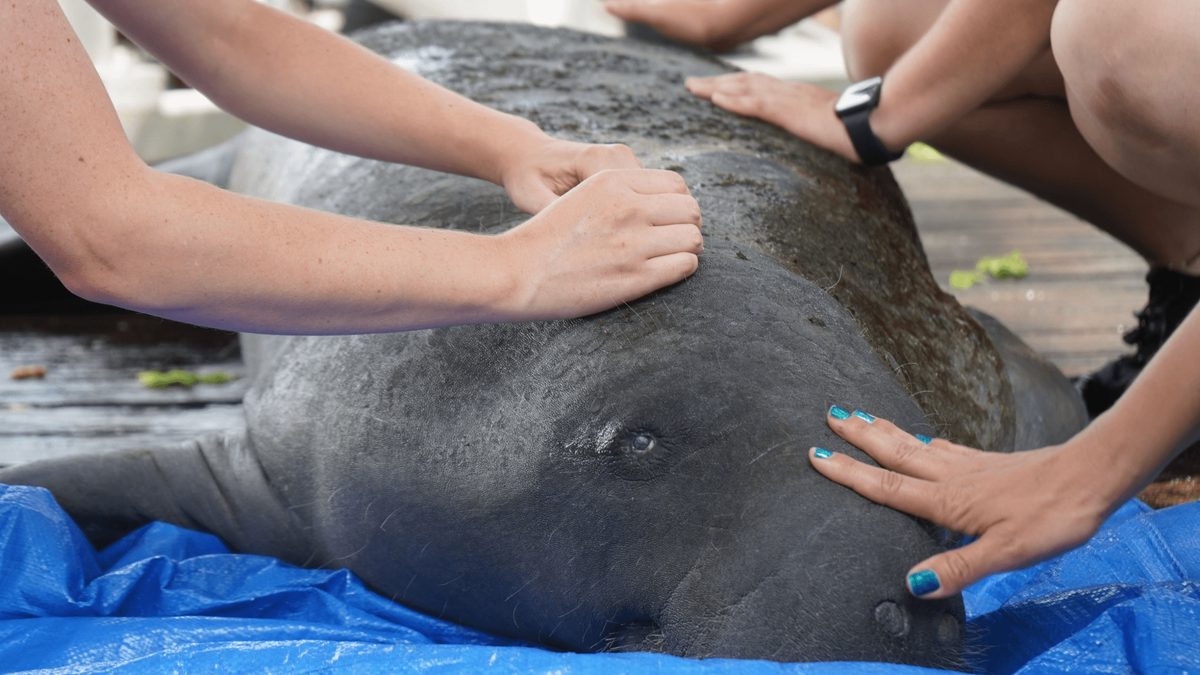
- Patients Treated: A manatee named Sloth, a black-bellied whistling duck named Earl Grey, and a roseate spoonbill chick.
- Conditions Addressed: Sloth the manatee received treatment for a facial nerve injury affecting an eye and nostril. Earl Grey the duck was treated for sudden weakness in his right leg. The roseate spoonbill chick was treated for a leg injury.
- Acupuncture Techniques: Both traditional acupuncture and electroacupuncture were utilized. Electroacupuncture involves connecting needles to an electrical current for potentially stronger and longer-lasting effects.
- Outcomes: Earl Grey showed improvements after three electroacupuncture sessions. The spoonbill chick regained normal limb function. Sloth the manatee experienced mild improvements from combined acupuncture and electroacupuncture.
- Therapeutic Approach: Acupuncture is used as a complementary therapy at ZooTampa, working alongside conventional veterinary medicine, physical therapy, and other treatments.
Background
Acupuncture, a practice with roots in Traditional Chinese Medicine, involves the insertion of very thin needles into specific points on the body. While commonly associated with human pain management, its application is expanding into veterinary medicine. The Mayo Clinic describes acupuncture as a technique that involves puncturing the skin at strategic points to stimulate nerves and promote healing. At ZooTampa, this ancient practice is being adapted to the unique physiological needs of different animal species.
“Acupuncture has a wide range of applications that can be applied to some of our diverse animal cases here at the zoo,” explains Dr. Alex Mason, the staff veterinarian leading the initiative. “It has been demonstrated to aid in healing responses by increasing blood flow and circulating stem cells, in addition to enhancing patient comfort through the body’s release of endogenous opioids like endorphins and serotonin, and can stimulate nerves to enhance function, in addition to other applications.”
Impact Analysis
The introduction of acupuncture at ZooTampa offers a significant advantage by providing an additional therapeutic option for conditions that might otherwise have limited treatment pathways. For Earl Grey, the duck, the sudden leg weakness presented a challenge. Electroacupuncture proved effective, with caretakers observing noticeable improvements after just three sessions, restoring his mobility. Similarly, the roseate spoonbill chick, suffering from a leg injury, benefited from electroacupuncture, ultimately regaining full limb function. These cases highlight acupuncture's potential to restore function and improve quality of life for animals experiencing acute injuries.
Sloth the manatee’s case, involving a chronic facial nerve injury, demonstrates acupuncture's utility in managing more persistent conditions. While the improvements were mild, the fact that acupuncture provided a different course of action where traditional treatments might be less effective underscores its value. Chronic nerve injuries are notoriously difficult to treat, and the ability to offer even mild improvements and enhance comfort is a considerable achievement. Dr. Mason further elaborated that electroacupuncture, by adding an electrical current, can offer stronger and more sustained therapeutic effects compared to traditional needle insertion alone.
Broader Context
The use of acupuncture in veterinary medicine is not entirely new, but ZooTampa’s proactive and diverse application showcases a growing trend towards integrating complementary therapies into animal healthcare. This approach recognizes that animals, like humans, can experience pain and discomfort and may benefit from a holistic treatment strategy. By employing acupuncture as a complementary therapy, ZooTampa ensures that it is used in conjunction with, rather than as a replacement for, established veterinary practices. This integrated model maximizes the potential benefits for the animals, leveraging the strengths of both conventional and alternative medicine.
Future Outlook
The success observed with Sloth, Earl Grey, and the spoonbill chick suggests that ZooTampa may expand its acupuncture program to include more animals and a wider range of conditions. As research into veterinary acupuncture continues to grow, so too will the understanding of its mechanisms and applications. The potential for acupuncture to aid in healing, reduce pain, and improve mobility without the side effects often associated with pharmaceuticals makes it an increasingly attractive option for animal welfare. This initiative at ZooTampa serves as a model for other zoological institutions and veterinary clinics looking to enhance their therapeutic capabilities.
Conclusion
ZooTampa's utilization of veterinary acupuncture represents a forward-thinking approach to animal care, demonstrating that innovative treatments can yield positive outcomes for diverse species. The successful application in treating nerve injuries and mobility issues in a manatee, duck, and chick highlights the versatility and efficacy of this ancient practice when adapted for veterinary use. By integrating acupuncture as a complementary therapy, the zoo is not only improving the quality of life for its animal residents but also contributing to the broader advancement of veterinary medicine.
Source: popsci.com