T. rex Had Human-Like Body Temperature, New Tooth Analysis Reveals
Introduction
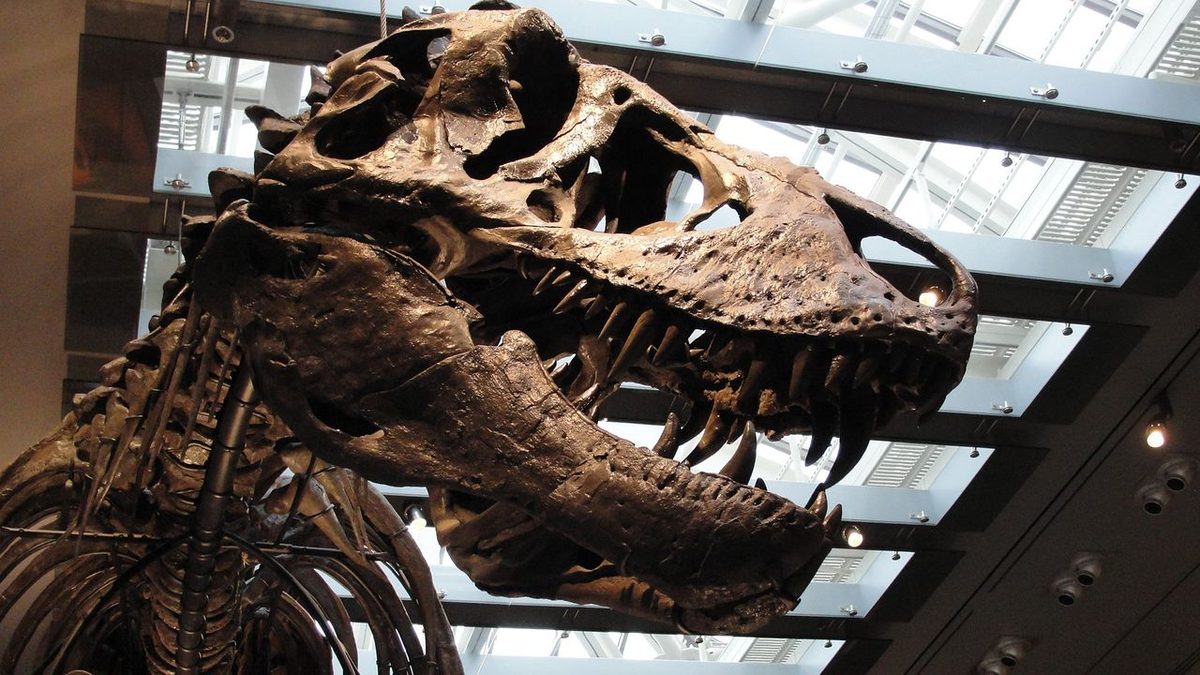
For decades, the exact physiological nature of the Tyrannosaurus rex has been a subject of intense scientific debate. Were these colossal predators warm-blooded, like modern mammals and birds, or cold-blooded, relying on external heat sources like modern reptiles? A significant new study, published in Science Advances, provides compelling evidence that T. rex possessed a body temperature remarkably similar to our own, suggesting a metabolism and lifestyle far more dynamic than previously imagined for many dinosaurs.
Key Details
- Estimated Body Temperature: The study places the T. rex body temperature at approximately 97.3 degrees Fahrenheit (36.3 degrees Celsius).
- Methodology: Researchers analyzed the isotopes of carbon and oxygen within the enamel of three T. rex teeth, sourced from the Hell Creek Formation in Montana. The bonding patterns of rare, heavy isotopes are temperature-dependent, providing a unique thermometer.
- Comparison: This temperature is comparable to that of humans (average 98.6°F or 37°C) and elephants, and significantly higher than modern cold-blooded reptiles (around 82-86°F or 28-30°C). It is lower than most birds, which are descendants of dinosaurs and tend to be hotter (104-109°F or 40-43°C).
- Authorship: The research was led by Randon Flores, a geologist at the University of California, Los Angeles (UCLA), with contributions from geobiologist Robert Eagle and a team of international scientists.
- Publication: The findings were published in the journal Science Advances.
Background
The question of whether dinosaurs were warm- or cold-blooded has profound implications for understanding their behavior, evolution, and ecological roles. Traditionally, many large reptiles were assumed to be ectothermic (cold-blooded), leading to depictions of dinosaurs as slow-moving, sun-basking creatures. However, fossil evidence, such as large bone structures and evidence of rapid growth, has increasingly suggested a more active, endothermic (warm-blooded) physiology for some species, particularly the large theropods like T. rex.
Previous research had hinted at warm-bloodedness in tyrannosaurs, but direct quantitative estimates of their body temperature remained elusive. This new study overcomes that hurdle by employing a sophisticated geochemical technique. The principle relies on the fact that rare, heavy isotopes of carbon and oxygen form chemical bonds differently depending on temperature. In growing tooth enamel, fewer bonds form between these isotopes at higher temperatures. By dissolving minute samples of the T. rex teeth and measuring the CO2 released, scientists could quantify these isotopic bonds and, by extension, infer the temperature at which the teeth formed.
“The temperature is about what I would have guessed — higher than a reptile or a slow mammal like a sloth, but lower than an avian,” said study co-author Robert Eagle.
Impact Analysis
The confirmation of a T. rex body temperature akin to modern mammals has significant implications for our understanding of this iconic dinosaur. A warm-blooded T. rex would have possessed a high metabolic rate, fueling a lifestyle of high activity. This supports the image of T. rex as an agile and energetic predator, capable of pursuing prey and engaging in vigorous scavenging, rather than a sluggish creature dependent on external heat. The energy demands of such a metabolism would necessitate a significant intake of food, aligning with its formidable predatory adaptations.
Broader Context
The findings also shed light on T. rex's ability to thrive in diverse environments during the Cretaceous period. This era was significantly warmer than today, with global temperatures estimated to be 11-25°F (6-14°C) higher. A warm-blooded T. rex could have comfortably inhabited a wide range of North American climates, from warmer southern regions to cooler northern latitudes. This helps explain fossil discoveries in areas like Alaska, where the presence of T. rex is noted, but where evidence of other cold-blooded reptiles from the same period is scarce. It suggests that T. rex was not limited by the thermal constraints that would have affected ectothermic species in cooler climates.
Furthermore, the ability of tyrannosaurs to inhabit higher latitudes aligns with evidence suggesting they migrated across the Bering Land Bridge between Asia and North America. A robust, warm-blooded physiology would have been a significant advantage for such long-distance movements and for surviving in varied geographical conditions.
Future Outlook
This study opens new avenues for research into dinosaur physiology and behavior. Future work could involve applying similar isotopic analysis techniques to teeth from other dinosaur species, allowing for a more comprehensive reconstruction of thermoregulation across different dinosaur groups. Comparing the body temperatures of various species, including herbivores and smaller carnivores, could reveal evolutionary trends in metabolism and adaptation. Additionally, refining the isotopic analysis methods may allow for even more precise temperature estimations and a deeper understanding of the physiological diversity within the dinosaur kingdom.
Conclusion
The estimation of T. rex's body temperature at approximately 97.3°F (36.3°C) marks a pivotal moment in paleontology. It strongly supports the classification of T. rex as a warm-blooded animal, fundamentally altering our perception of its capabilities and ecological role. This finding underscores the dynamic nature of these prehistoric giants, portraying them not as sluggish reptiles but as energetic, highly adapted predators capable of thriving across diverse environments. The study, leveraging advanced geochemical techniques on fossilized teeth, provides a tangible link to the internal biology of a creature that roamed the Earth millions of years ago.
Source: livescience.com