Medieval Myths vs. Fossil Reality: How Giants and Unicorns Obscured Ancient Truths
Introduction
For millennia, before the formal discipline of vertebrate paleontology emerged, the discovery of large, unfamiliar bones presented a profound mystery. Rather than recognizing them as the remains of extinct creatures, medieval Europeans and their predecessors often attributed these finds to mythical beings. This fascinating period, where folklore and religious doctrine heavily influenced scientific interpretation, saw giant tusks from Siberia identified as unicorn horns and massive skulls mistaken for those of Cyclopes. This excerpt from Donald R. Prothero's upcoming book, “The Story of the Mammals in 25 Discoveries,” delves into this era, highlighting how the prevailing belief in a divinely ordered, unchanging world, where extinction was considered blasphemous, shaped the understanding of Earth's ancient past.
Key Details
- Medieval interpretations of fossils were heavily influenced by mythology and religious texts, such as Genesis 6:4, which spoke of giants.
- Discoveries of large bones, including mammoth teeth and tusks, were attributed to giants, monsters, or even relics of saints.
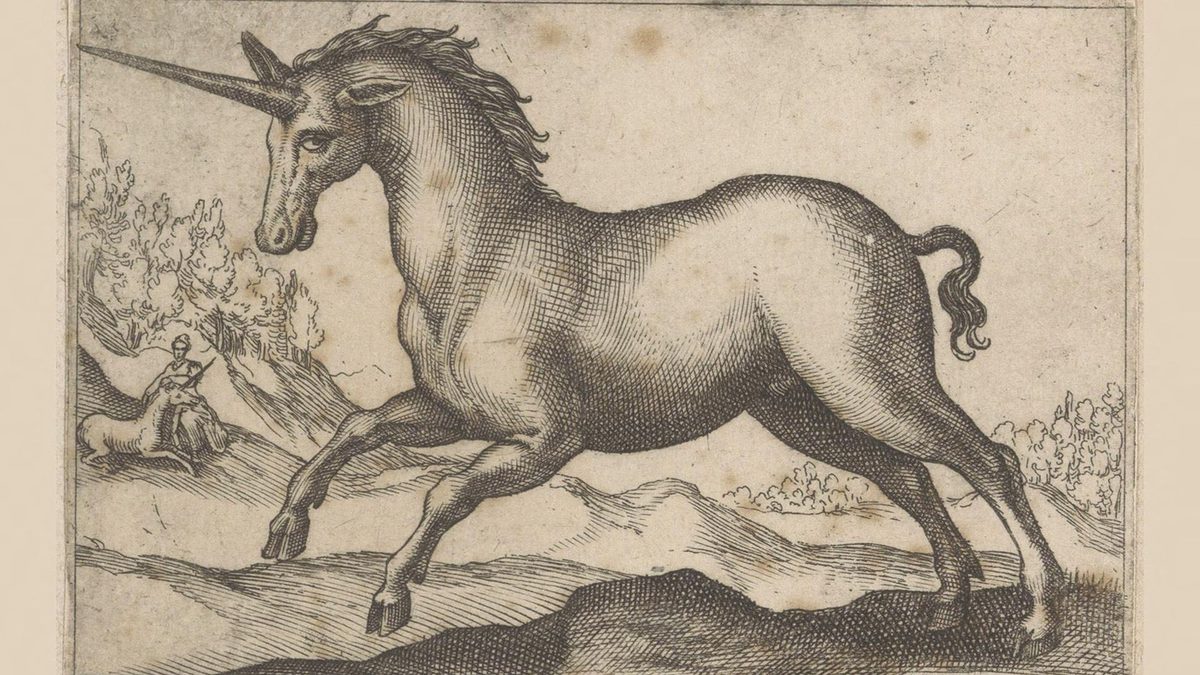
- Siberian mammoth tusks were commonly believed to be the horns of unicorns, while elephant skulls were thought to belong to one-eyed Cyclopes.
- The concept of extinction was considered heresy, as it conflicted with the idea of Divine Providence and a divinely created “great chain of being.”
- Early scientific challenges, like Riolan's suggestion in 1613 that giant bones were elephant remains, faced significant controversy and were largely rejected.
- Native American tribes often incorporated giant bones into their folklore, attributing them to monsters fought by their ancestors.
- European settlers initially interpreted New World giant bones as evidence of biblical giants, with some even suggesting they were placed by Satan.
- By the late 1700s, the accumulation of fossil evidence, particularly from places like Big Bone Lick, Kentucky, began to challenge prevailing beliefs, suggesting the existence of animals with no living counterparts.
- Georges Cuvier, in the early 19th century, is credited with revolutionizing natural history and establishing vertebrate paleontology, proving the reality of extinction.
Background
The story of mammals on Earth stretches back over 200 million years, but their dominance began only after the extinction event that wiped out the dinosaurs 66 million years ago. However, understanding the lineage and diversity of mammals has been a long and complex journey, fraught with misinterpretations. For centuries, the discovery of colossal bones—far larger than any known human or animal—posed a significant challenge to the prevailing worldview. Ancient Greek philosophers like Empedocles reported gigantic bones from Sicily, interpreting them as remnants of a race of giants. Pliny the Elder noted fossil ivory, and Emperor Augustus reportedly collected large bones found on the island of Capri, mistaking elephant skulls for those of Cyclopes. These interpretations were not merely academic curiosities; they were deeply intertwined with cultural narratives and religious beliefs.
Impact Analysis
The medieval period inherited and amplified these interpretations. The biblical account of giants and the Great Flood provided a ready framework for understanding these enormous finds. Bones of mammoths and other large extinct animals were seen as evidence of the monstrous races mentioned in Genesis, drowned by divine wrath. The idea that these creatures could have simply ceased to exist was anathema. The prevailing theological and philosophical doctrine of Divine Providence held that an omnipotent and benevolent God would not allow any of His creations to perish. This concept, coupled with the idea of a rigid “great chain of being” that linked all life forms in a divinely ordained hierarchy, made the notion of extinction seem not only improbable but heretical. Any break in this chain, represented by an extinct species, would imply a flaw in God's creation or a disruption of the cosmic order.
“Giant tusks from Siberia were thought to be the horns of the mythical unicorn or the tusks of dragons.”
This deeply ingrained belief system meant that even when anatomists like Riolan began to propose more rational explanations in the early 17th century—suggesting that some giant bones were actually those of elephants—their ideas were met with fierce opposition. The controversy between physicians and barber-surgeons over the interpretation of giant bones near Langon, France, in 1613 exemplifies this conflict. The prevailing view, that they were the remains of gigantic Germanic tribes, persisted for centuries, demonstrating the powerful hold of established narratives over empirical observation.
Broader Context
The discovery of massive fossil remains in the New World further complicated matters. Indigenous cultures often had their own explanations, incorporating these bones into myths about ancient battles between their ancestors and monstrous beings. When European settlers encountered these bones, they often superimposed their own biblical interpretations, seeing them as evidence of the giants described in the Old Testament. Hernán Cortés famously sent a “giant” bone back to the King of Spain in 1519 as proof of giants in the New World. Later, figures like Cotton Mather in the Massachusetts Bay Colony continued this tradition, viewing these remains as those of “godless giants drowned in Noah's Flood.” The scientific community, while increasingly exposed to these finds, was still largely constrained by religious dogma. The Royal Society, for instance, never officially pronounced on the nature of these bones, reflecting a broader societal reluctance to challenge biblical chronologies and narratives.
Future Outlook
The tide began to turn in the 18th century. Explorations of remote regions and the systematic collection of fossils, such as those from Big Bone Lick in Kentucky, provided increasingly undeniable evidence of creatures with no living parallels. While early interpretations still tried to reconcile these finds with existing beliefs—suggesting bones were washed from the tropics by the Great Flood—the sheer volume and strangeness of the fossils made such explanations untenable. The discovery of frozen mammoth carcasses in Siberia, complete with skin and hair, offered compelling proof of creatures that were undeniably real but no longer existed. Figures like the Comte de Buffon began to propose more radical ideas, suggesting that some large mammals, like mammoths, had indeed perished and that the Earth was far older than the biblical 6,000 years. However, it was Georges Cuvier, in the early 19th century, who definitively shattered the old paradigms. Through his pioneering work in comparative anatomy and his meticulous study of fossils, Cuvier established the reality of extinction and laid the foundation for modern paleontology, finally allowing science to correctly interpret the ancient past.
Conclusion
The journey from medieval myth to modern paleontology is a testament to the power of scientific inquiry to overcome deeply ingrained beliefs. For centuries, the tangible evidence of ancient life—fossilized bones and teeth—was filtered through a lens of folklore and religious doctrine, leading to fantastical interpretations of giants, unicorns, and monsters. The resistance to the idea of extinction, rooted in theological convictions about divine order and creation, significantly delayed scientific progress. It was only through the persistent accumulation of evidence and the revolutionary work of scientists like Georges Cuvier that the true nature of these ancient remains was finally understood, paving the way for our current knowledge of Earth's deep history and the incredible diversity of life that has inhabited it.
Source: livescience.com