Medieval Moscow Hoard of 2,600 Silver Coins May Belong to Plague Victim
Introduction
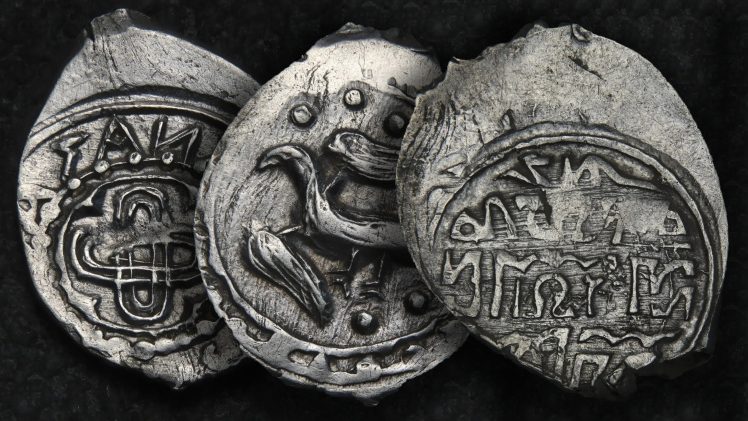
Archaeologists in Russia have made a significant discovery on the outskirts of Moscow: a hoard of 2,600 silver coins dating back to the 15th century. Unearthed in an elegant ceramic jug, the collection offers valuable insights into monetary systems of the late medieval period and hints at a dramatic personal story. The find, located in the historic city of Kolomna, approximately 71 miles (114 kilometers) southeast of Moscow, is particularly notable for the inclusion of over 350 coins of types never before documented by numismatists.
Key Details
- Discovery: A hoard of 2,600 silver coins.
- Location: Buried in a ceramic jug in Kolomna, a historic city near Moscow.
- Coinage: Primarily consists of denga coins, minted from the late 14th century.
- Rulers: Dominated by coins minted under Grand Princes Vasily I (1389-1425) and Vasily II (1425-1462).
- Novelty: Includes over 350 previously unknown varieties of coins minted in Kolomna.
- Rarity: Features an extremely rare denga with a bird in flight motif.
- Dating: The most recent coins date to the latter half of the 1420s.
- Context: Kolomna was a strategically important city in the 14th and 15th centuries.
Background
The unearthed coins are predominantly denga, a silver denomination that formed the backbone of monetary circulation in the Grand Principality of Moscow from the late 14th century onwards. Each denga was equivalent to half a kopek, with 100 kopeks making up a ruble. The majority of the coins in this hoard were minted during the reigns of Vasily I and his successor Vasily II, two key figures in the consolidation of Muscovite power. The minting location, Kolomna, was a vital administrative and defensive center, second only to Moscow in importance within the principality during this era. The presence of such a large and diverse collection of local mintages underscores Kolomna's economic significance.
Impact Analysis
The discovery is of considerable interest to numismatists and historians alike. The identification of over 350 previously unknown coin varieties presents a unique opportunity to refine our understanding of 15th-century minting practices in Kolomna. These new types could reveal details about the specific workshops, the metal sources, and the evolving iconography and standards employed during a period of significant political and economic development. The exceptionally rare denga featuring a bird in flight, attributed to the final years of Vasily I's reign, adds another layer of intrigue, potentially shedding light on experimental or short-lived coin designs.
The most recent coins were minted in the second half of the 1420s, suggesting that the hoard's owner could have fallen victim to a plague epidemic that swept through Russian principalities from 1424 to 1427.
The dating of the hoard, with the most recent coins from the late 1420s, provides a crucial temporal marker. This aligns with the period of a devastating plague epidemic that affected the Russian principalities between 1424 and 1427. Experts hypothesize that the owner of the hoard, likely a person of considerable wealth and status—perhaps a high-ranking official or a prosperous merchant—may have buried their savings in haste due to the encroaching epidemic and never returned to reclaim them, possibly succumbing to the disease.
Broader Context
The 15th century was a transformative period for the Grand Principality of Moscow. Rulers like Vasily I and Vasily II worked to centralize power, expand territory, and strengthen the economy, often in the face of external threats and internal rivalries. Monetary policy and coin production were integral to these state-building efforts. Hoards like the one found in Kolomna serve as tangible evidence of economic activity, trade networks, and the personal wealth accumulated by individuals within this developing state. The discovery also provides a stark reminder of the ever-present dangers of the medieval world, including devastating epidemics that could abruptly end lives and leave behind silent testaments to their passage.
Future Outlook
The coins are currently undergoing detailed study by experts at the Institute of Archaeology of the Russian Academy of Sciences. Further analysis will focus on classifying the newly discovered varieties, determining their precise minting locations within Kolomna, and potentially identifying any unique metallurgical characteristics. Comparative studies with other known hoards from the period will help contextualize this find within the broader economic landscape of 15th-century Eastern Europe. The potential link to a plague victim adds a compelling human dimension, inviting further historical research into mortality patterns and societal responses to epidemics during this era.
Conclusion
The Kolomna silver coin hoard represents a significant archaeological and numismatic find. Beyond the sheer number of coins and the discovery of new varieties, the hoard offers a potential glimpse into the life and fate of its owner, possibly a victim of the 1420s plague. This discovery enriches our understanding of medieval Russian economy, minting practices, and the ever-present challenges faced by individuals living through that tumultuous period.
Source: livescience.com