Breakthrough Technology Converts Lunar Soil into Vital Resources for Moon Missions
Introduction
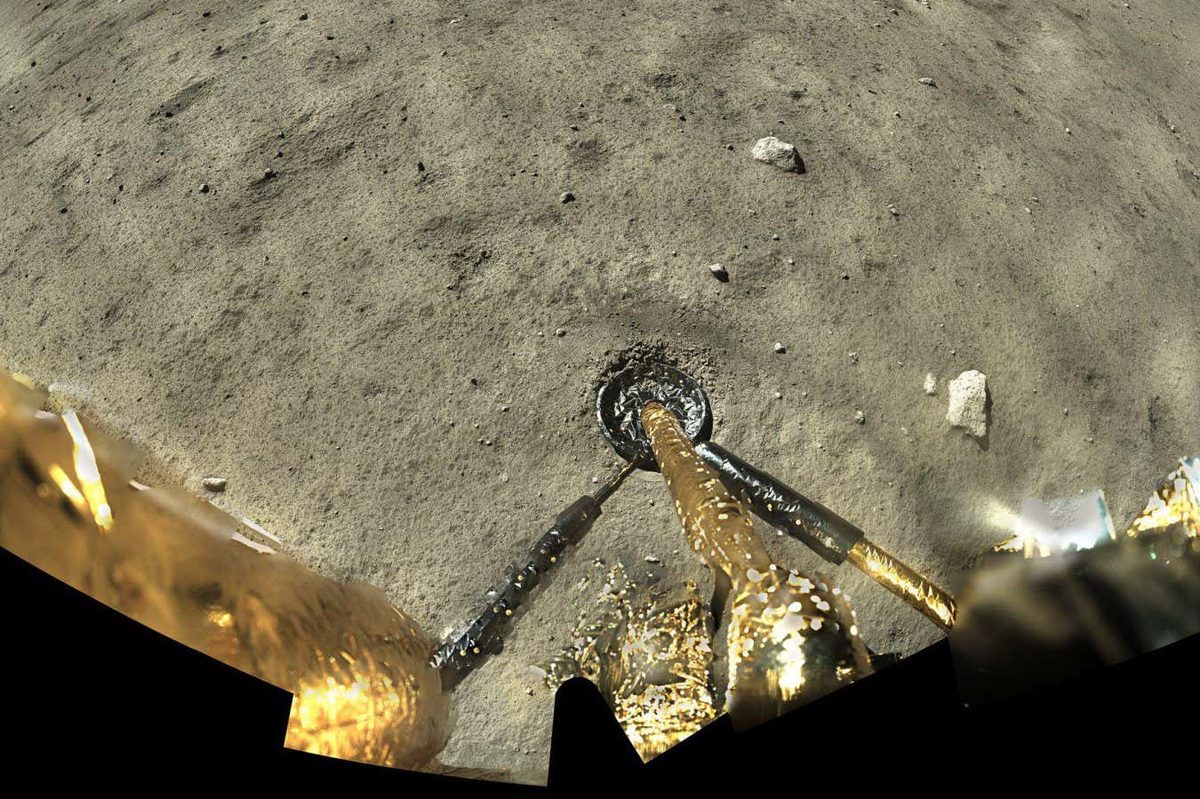
The prospect of sustained human presence on the Moon hinges critically on the ability to generate essential resources in situ. Recently, scientists working with lunar soil samples returned by China’s Chang’e 5 mission have made a significant advancement. They have engineered a simple yet effective device capable of extracting water, oxygen, and fuel from the Moon’s regolith, a breakthrough that could dramatically reduce the logistical challenges of lunar exploration.
Key Details
- Samples used originated from the Chang’e 5 mission, China's 2020 lunar sample-return initiative.
- The device efficiently extracts water molecules embedded in lunar soil through innovative chemical processes.
- It also processes carbon dioxide exhaled by astronauts, converting it into usable oxygen and fuel components.
- The technology utilizes relatively low energy compared to previous methods, enhancing feasibility for deployment in harsh lunar environments.
Background
The Moon’s surface, covered by fine, dusty regolith, contains trace amounts of water mostly in the form of chemically bound hydroxyl groups and ice within permanently shadowed craters. Traditionally, extracting water and oxygen involved complex, energy-intensive processes such as heating regolith to high temperatures. Moreover, supplying breathable oxygen and propellant from Earth is costly and limits mission duration. The Chang’e 5 mission, which returned nearly 2 kilograms of lunar soil to Earth, provided a rare opportunity for detailed laboratory analysis and experimentation to develop more efficient resource extraction techniques.
Analysis
This new device represents a paradigm shift because it integrates multiple resource extraction steps into a compact system. By combining water extraction with carbon dioxide recycling, the system addresses two critical needs simultaneously: hydration and air revitalization. The recovered water can be split into hydrogen and oxygen, supplying both drinking water and oxidizer for rocket fuel. Recycling carbon dioxide, a byproduct of human respiration, not only cleans the air but also produces additional oxygen, reducing reliance on Earth resupplies.
Importantly, the system’s simplicity and energy efficiency make it compatible with the limited power resources available on lunar habitats or robotic platforms. This could accelerate plans for establishing lunar bases, enabling longer stays and reducing mission costs. The technology also aligns with broader goals of sustainable space exploration, including NASA’s Artemis program and international lunar collaboration efforts.
Conclusion
The development of this device marks a critical step towards autonomous lunar living. By harnessing the Moon’s own soil to produce water, oxygen, and fuel, humanity moves closer to transforming the Moon from a remote outpost into a sustainable platform for scientific research, commercial activities, and deep space exploration. Future testing in simulated lunar conditions and eventual deployment on lunar missions will determine its practical viability, but the promise of this technology is a beacon for the next era of space exploration.