Martian Meteorite Sells for Record $5.3 Million, Representing 6.5% of Known Martian Material on Earth
Introduction
In a landmark auction event, a piece of Mars has fetched an unprecedented price of $5.3 million at Sotheby’s, captivating collectors and scientists alike. This Martian meteorite, a rare fragment of the Red Planet, was discovered in 2023 in the remote Sahara Desert of Niger. Its sale not only sets a new record for meteorite auctions but also highlights the growing fascination and value associated with extraterrestrial materials.
Key Details
- The meteorite is officially designated NWA 16788.
- It was found in 2023 in Niger’s Sahara Desert.
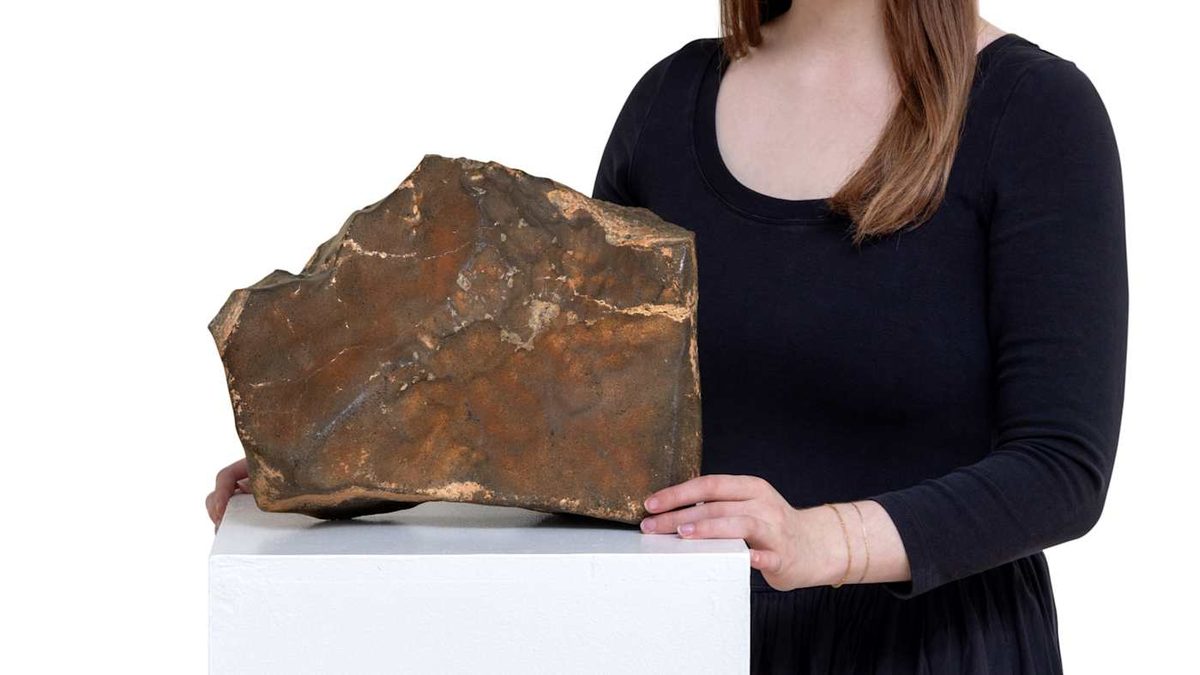
- Measures 14.75 x 11 x 6 inches and weighs over 54 lbs.
- About 70% larger than the second-largest Martian meteorite on Earth.
- Contains over 21% maskelynite, a glass formed by impact on Mars.
- Represents approximately 6.5% of all known Martian material on Earth.
- Final price including fees: over $5.3 million, the highest ever paid for a meteorite.
Background
Martian meteorites are extraordinarily rare. To reach Earth, a meteorite must first be ejected from Mars by a powerful asteroid impact. Only 19 Martian craters have been identified as large enough to have produced meteorites capable of escaping Mars’ gravity. Following this violent expulsion, the rock must then survive a perilous journey of approximately 140 million miles through space before landing on Earth. Of the more than 77,000 recognized meteorites globally, only about 400 are confirmed to originate from Mars, underscoring the rarity and scientific importance of these specimens.
The meteorite NWA 16788 is not only notable for its size but also for its striking appearance. Its reddish-brown exterior, marked by scars and textures, resembles a miniature version of the Martian surface itself.
Impact Analysis
The sale of NWA 16788 for over $5.3 million underscores a significant increase in the market value of extraterrestrial materials, driven by their rarity and scientific intrigue. For collectors, owning a piece of Mars represents a tangible connection to space exploration and the mysteries of the solar system. For scientists, such specimens provide invaluable insights into Mars’ geological history, composition, and even clues about its potential to harbor past life.
"The chemical analysis confirming over 21 percent maskelynite highlights the unique formation process of this meteorite, linking it directly to the violent impacts on Mars that ejected it into space," Sotheby’s stated.
Maskelynite is a glassy substance formed when intense shock waves from asteroid impacts transform plagioclase minerals. Its presence in high amounts confirms the meteorite’s Martian origin and provides clues about the violent events shaping Mars’ surface.
Broader Context
This record-breaking auction occurs amidst increasing interest in space resource utilization and planetary science. As private companies and governments invest in Mars exploration missions, artifacts like NWA 16788 gain symbolic and monetary value. The meteorite’s sale highlights the intersection of science, commerce, and cultural fascination with space.
Historically, Martian meteorites have served as key pieces in understanding Mars without having to rely solely on rover missions or orbiters. These space rocks are studied worldwide to analyze their mineralogy, isotopic composition, and even potential biosignatures. NWA 16788’s large size and purity make it a particularly valuable specimen for ongoing and future research.
Future Outlook
With Mars missions planned by NASA, ESA, and private enterprises, the scientific community anticipates new samples to be returned directly from the Martian surface within the next decade. Until then, meteorites like NWA 16788 remain critical to our understanding. The high auction price may also encourage increased interest in meteorite hunting and space-related collectibles, potentially driving up demand and prices for rare extraterrestrial materials.
However, such high valuations raise questions about the ownership and ethical considerations surrounding extraterrestrial materials. International space law and planetary protection protocols could evolve to address the commercialization of space resources, balancing scientific access with private ownership.
Conclusion
The $5.3 million sale of NWA 16788 marks a milestone in both meteorite collecting and space science. Representing about 6.5% of all Martian material on Earth, this exceptional meteorite connects us to Mars’ distant past and the dynamic processes shaping our solar system. As interest in space exploration grows, items like this will continue to captivate the imagination and fuel scientific discovery, while raising important questions about the future of extraterrestrial resource ownership.