Lung Cancer Treatment Advances: A Professor's Personal Battle and Hope for the Future
Introduction
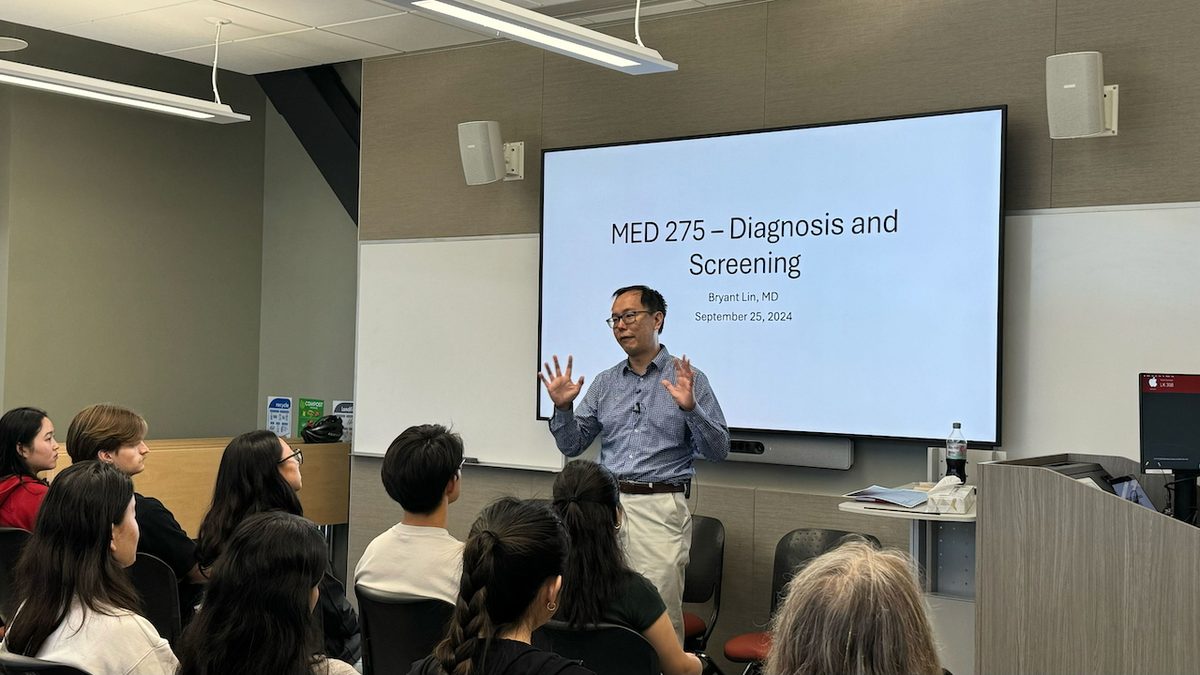
Stanford medical professor Bryant Lin, a prominent advocate for improved lung cancer screening and care, found himself on the other side of the stethoscope two years ago when diagnosed with Stage IV lung cancer. His personal journey, from leading researcher to patient, offers a unique perspective on the rapidly evolving landscape of lung cancer treatment, a disease he has dedicated his career to understanding and combating.
Key Details
- Professor Bryant Lin, a non-smoker, was diagnosed with Stage IV lung cancer in May 2024.
- He co-leads Stanford's Center for Asian Health Research and Education, focusing on lung cancer.
- Lin is undergoing treatment with new targeted therapies, including Tagrisso (osimertinib) and a combination of amivantamab and lazertinib.
- The five-year survival rate for all lung cancer stages is around 30%, but for early, localized cancer, it was 67% between 2015-2021.
- Comprehensive genomic testing to identify specific cancer mutations is crucial but not yet standard for all patients.
- Access to these advanced, often expensive, treatments faces hurdles with insurance prior authorization and coverage denials.
- Lin remains optimistic, viewing lung cancer as potentially becoming a chronic, manageable disease rather than a terminal one.
- He is also exploring personalized mRNA vaccines as a future treatment option.
- Despite recent scans showing progression, Lin continues to focus on living life fully, writing a book, and engaging with his family.
Background
Lung cancer has historically carried a grim prognosis, often considered a death sentence. For decades, treatment options were limited and largely ineffective, contributing to low survival rates. However, recent scientific breakthroughs, particularly in understanding the genetic underpinnings of the disease, are beginning to change this narrative. Professor Lin’s own work in establishing research centers and advocating for screening laid the groundwork for his understanding of these advancements, making his personal diagnosis a stark, yet informative, turning point.
Impact Analysis
The advent of targeted therapies, driven by comprehensive genomic testing, represents a paradigm shift in lung cancer treatment. Unlike traditional chemotherapy, which broadly attacks rapidly dividing cells, these precision medicines are designed to target specific genetic mutations driving the cancer. This specificity not only enhances efficacy by directly attacking tumor cells but also significantly reduces the harsh side effects commonly associated with chemotherapy, improving patients' quality of life. As UCLA oncologist Jonathan Goldman notes, treatments that once offered survival of under a year can now extend life for several years, sometimes many years. The study published in the New England Journal of Medicine, on which Goldman served as principal investigator, demonstrated dramatic reductions in recurrence rates when patients with rare subtypes received targeted medicines as their initial treatment, underscoring the power of this approach.
“My hope is if we're not able to cure lung cancer, we can at least turn it into a chronic disease.”
Broader Context
The progress in lung cancer treatment is part of a larger trend across oncology towards personalized medicine. The ability to identify and target specific genetic mutations is proving effective not only in lung cancer but also in other complex diseases. Promising developments in pancreatic cancer, for instance, driven by genes like KRAS (which also affects a subset of lung cancers), are yielding new drugs like Rasonque (daraxonrasib) that have shown the potential to double survival times in late-stage patients. This cross-pollination of research means breakthroughs in one cancer type can often inform and accelerate progress in others. Furthermore, emerging technologies like AI-powered imaging and sensitive blood tests hold promise for earlier detection and prediction of lung cancer, potentially mirroring advancements seen in colorectal cancer screening.
Future Outlook
The future of lung cancer treatment appears increasingly hopeful, with ongoing research into novel therapies. Personalized mRNA vaccines, designed to harness the patient's immune system against their specific cancer, are a particularly exciting frontier. Professor Lin himself is investigating this avenue. While screening rates remain a challenge, advancements in AI and liquid biopsies could revolutionize early detection. The key challenge ahead lies not only in scientific discovery but also in the equitable implementation of these findings. Ensuring widespread access to genetic testing and affordable, timely access to targeted therapies will be critical. As Dr. Goldman emphasizes, the focus must shift towards integrating these proven effective testing and treatment strategies into standard clinical practice.
Conclusion
Professor Bryant Lin’s personal battle with lung cancer illuminates both the profound challenges and the remarkable progress in its treatment. While the odds remain stacked against patients with advanced disease, the rapid development of targeted therapies offers unprecedented hope. The ability to personalize treatment based on genetic profiles, coupled with potential future innovations like mRNA vaccines and improved screening methods, is transforming lung cancer from a near-certain death sentence into a potentially manageable chronic condition. The journey ahead involves navigating the complexities of insurance, ensuring access to care, and continuing the relentless pursuit of research, but the trajectory is undeniably positive, offering a brighter future for patients and clinicians alike.
Source: npr.org