Giant Feathered Dinosaur Kayrasaurus Changliensis Discovered: 1.6 Times Larger Than Cousins
Introduction
Paleontology often unearths creatures that challenge our understanding of prehistoric life, and the therizinosauria group is a prime example. These dinosaurs, initially thought to be flesh-eaters like their theropod relatives such as Tyrannosaurus rex, surprised scientists with their herbivorous diet and astonishingly long claws, some exceeding three feet. Now, a recent discovery in China has introduced an even more remarkable member to this unusual clade: Kayrasaurus changliensis. Published in The Journal of Systematic Palaeontology, the findings describe what may be the largest and most anatomically bizarre therizinosaur discovered to date, shedding new light on the diversity and evolution of these fascinating creatures.
Key Details
- Discovery Location: A nearly complete specimen of Kayrasaurus changliensis was unearthed in the Lower Cretaceous Yixian Formation in northeastern China, a region known for its rich fossil deposits.
- Size and Scale: K. changliensis is estimated to have weighed between 250 and over 600 pounds, comparable to an adult male grizzly bear. It measured nearly 12 feet long, even as a juvenile specimen that was still growing.
- Comparative Size: The newly discovered dinosaur is approximately 1.6 times larger than the next biggest known therizinosaur found in China, Beipiaosaurus inexpectus.
- Unique Dental Features: K. changliensis possessed a distinctive dental arrangement with a severe underbite. Its lower jaw contained 45 teeth, while the upper jaw had 32, significantly more than the typical 40 teeth found in other large therizinosaurs.
- Jaw Morphology: The jaw structure of K. changliensis is further distinguished by a triangular side opening on the lower jaw and a large opening near the snout on the upper jaw, the function of which remains unclear to researchers.
- Dietary Evidence: Despite its formidable appearance, the jaw and teeth structure of K. changliensis are noted by the study authors to be “more reminiscent of herbivorous dinosaur clades,” strongly suggesting a plant-based diet.
Background
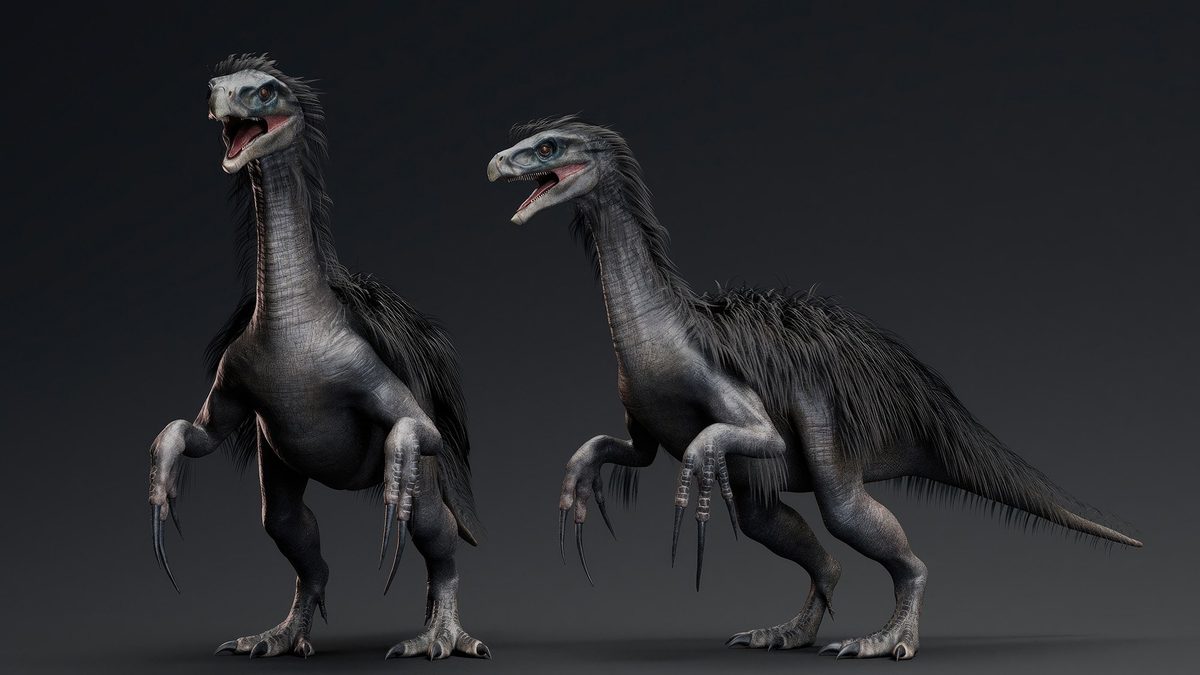
Therizinosaurs represent a peculiar branch of the theropod lineage, a group primarily known for its carnivorous members. These dinosaurs, which lived from roughly 100 million to 65 million years ago during the Late Cretaceous period, developed a unique set of physical characteristics. They typically featured long necks, small heads, bipedal locomotion, and disproportionately massive claws on their relatively short arms. Covered in feathers, they presented an odd combination, often described as resembling a cross between an ostrich and a grizzly bear, albeit with significantly larger talons. The discovery of Kayrasaurus changliensis adds a significant new data point to our understanding of this already enigmatic group.
Impact Analysis
The discovery of Kayrasaurus changliensis is significant for several reasons. Firstly, its sheer size pushes the upper limits of what was previously known about therizinosaur dimensions, indicating a greater range of gigantism within this clade than previously understood. The fact that the discovered specimen was a juvenile suggests that adult K. changliensis could have been even more imposing. Secondly, its unique dental and jaw morphology provides crucial clues about its feeding habits and ecological niche. The increased number of teeth and the specific arrangement, coupled with the jaw openings, suggest specialized adaptations for processing plant matter. This challenges earlier, more generalized assumptions about therizinosaur feeding strategies and highlights the evolutionary plasticity within the group.
“Its jaw and teeth are more reminiscent of herbivorous dinosaur clades.”
Broader Context
The Yixian Formation in China is globally renowned for yielding exceptionally well-preserved fossils, including feathered dinosaurs and early birds. The discovery of K. changliensis within this formation further solidifies its importance as a window into the diverse ecosystems of the Early Cretaceous. This find contributes to a growing body of evidence suggesting that dinosaur evolution during this period was characterized by remarkable experimentation in form and function. The presence of large, feathered herbivores like K. changliensis alongside more typical carnivorous theropods paints a complex picture of the Late Cretaceous food web and the varied evolutionary pathways dinosaurs pursued before their eventual extinction.
Future Outlook
The ongoing study of Kayrasaurus changliensis promises to yield further insights. Researchers will likely focus on biomechanical analyses of its jaw structure to better understand its feeding mechanisms and potential dietary specializations. Comparative studies with other therizinosaur fossils will help refine phylogenetic relationships and trace the evolutionary trajectory of traits like size, claw development, and dentition. Furthermore, the discovery may spur further paleontological expeditions in the Yixian Formation and surrounding regions, potentially uncovering more specimens that could fill remaining gaps in our knowledge of this fascinating dinosaur and its relatives.
Conclusion
Kayrasaurus changliensis stands as a testament to the astonishing diversity of the dinosaur world. This giant, feathered herbivore, distinguished by its immense size and unique dental features, represents a significant addition to the therizinosaur family. Its discovery in China not only expands our understanding of dinosaur paleobiology but also underscores the importance of continued paleontological research in uncovering the planet’s prehistoric past. As scientists continue to analyze this remarkable find, K. changliensis will undoubtedly remain a key subject in the ongoing quest to reconstruct the lives of these magnificent ancient creatures.
Source: popsci.com