Discovery of Compact 'Little Red Dot' Galaxies in the Local Universe Sheds Light on Cosmic Evolution
Introduction
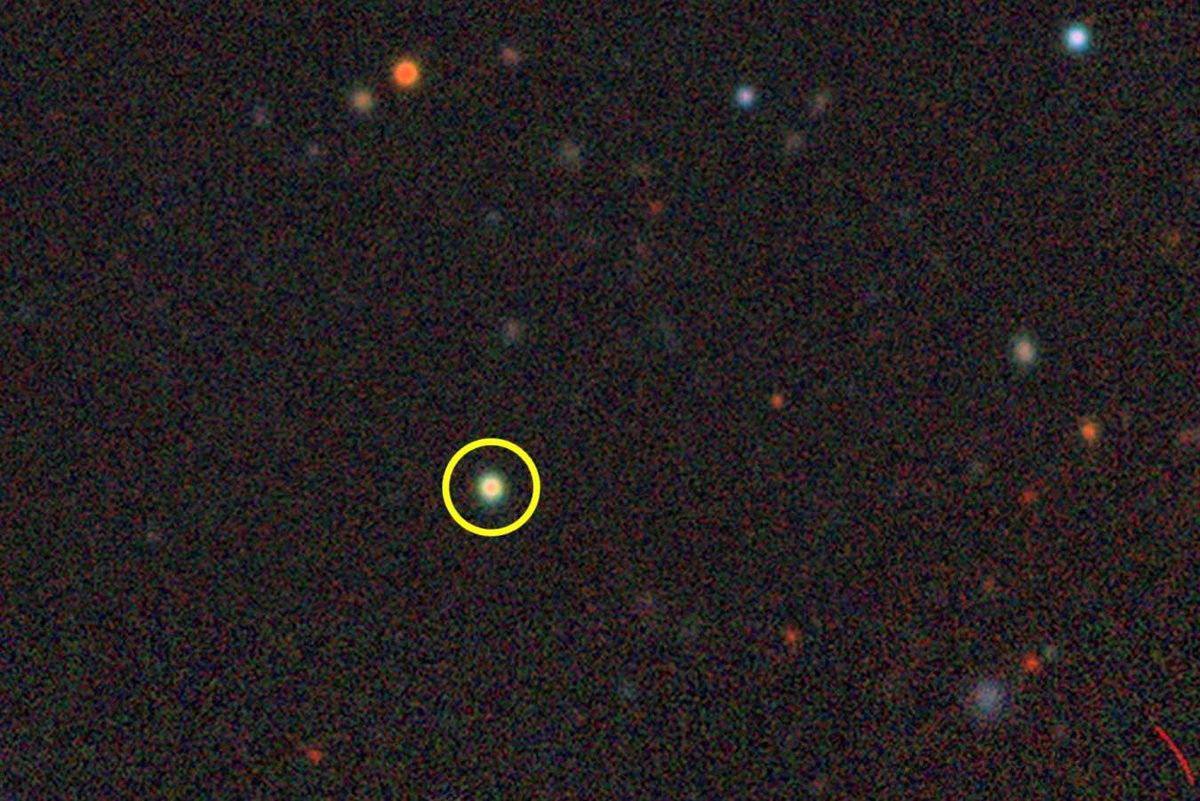
For decades, astronomers have been fascinated and puzzled by a particular class of small, dense galaxies commonly referred to as "little red dots." These galaxies, characterized by their compact size and intense red color, were predominantly observed in the distant, early universe—billions of light-years away—making their formation and properties difficult to study in detail. Recently, however, astronomers have discovered similar objects much closer to home, within our local universe. This breakthrough opens a new window for understanding the processes behind the formation and evolution of these enigmatic galaxies.
Key Details
- Definition and characteristics: Little red dot galaxies are small, compact, and display a deep reddish color due to aged stars and low star formation.
- Previous observations: Until now, such galaxies were mostly identified at very high redshifts, meaning they formed in the early universe.
- New discovery: Recent observations have uncovered similar compact galaxies in the local universe, much closer to the Milky Way.
- Implications: Finding these galaxies nearby allows astronomers to study them in greater detail, potentially uncovering their origins and evolutionary paths.
Background
The early universe was a vastly different environment from today, characterized by rapid star formation and galaxy assembly. Little red dot galaxies were first identified through deep-field surveys using powerful telescopes like the Hubble Space Telescope. Their compact nature and red color suggested they were composed of old stars, with star formation largely quenched. Because they were observed at great distances, their study was limited by the faintness and small angular size.
Scientists have proposed several theories about the formation of these galaxies, including rapid early star formation followed by quenching mechanisms such as supernova feedback or active galactic nuclei activity. However, because similar objects were not observed nearby, it was challenging to confirm these hypotheses or understand their long-term evolution.
Analysis
The recent identification of little red dot galaxies in the local universe represents a major advance for galactic astronomy. Unlike their distant counterparts, these nearby galaxies can be studied more comprehensively using a variety of instruments across the electromagnetic spectrum, from optical telescopes to radio and X-ray observatories. This has several implications:
- Detailed morphological studies: High-resolution imaging can reveal the internal structure and composition of these galaxies, helping to determine their formation mechanisms.
- Star formation history: Spectroscopic analysis allows scientists to measure the age distribution of stars, clarifying whether these galaxies formed rapidly early on or through more gradual processes.
- Environmental impact: Researchers can study how these galaxies interact with their surroundings, including the influence of nearby galaxies and intergalactic gas.
Moreover, understanding these compact galaxies contributes to the broader field of galaxy evolution by providing clues on how massive, larger galaxies develop over cosmic time. Some theories suggest that little red dot galaxies are relics or building blocks of larger systems or that they represent a transitional phase in galaxy development.
Conclusion
The discovery of little red dot galaxies in the local universe is a significant milestone that challenges previous assumptions about their rarity and formation. By enabling detailed study of these galaxies close to home, astronomers are better equipped to unravel the complex processes that shaped the universe’s galactic landscape. Future observations and theoretical work will likely leverage this discovery to refine models of galaxy evolution and enhance our understanding of the cosmos.