Horsetail Plant’s Unique Water Dynamics Offer Breakthrough in Paleoclimate Research
Horsetail Plant’s Unique Water Dynamics Offer Breakthrough in Paleoclimate Research
Introduction
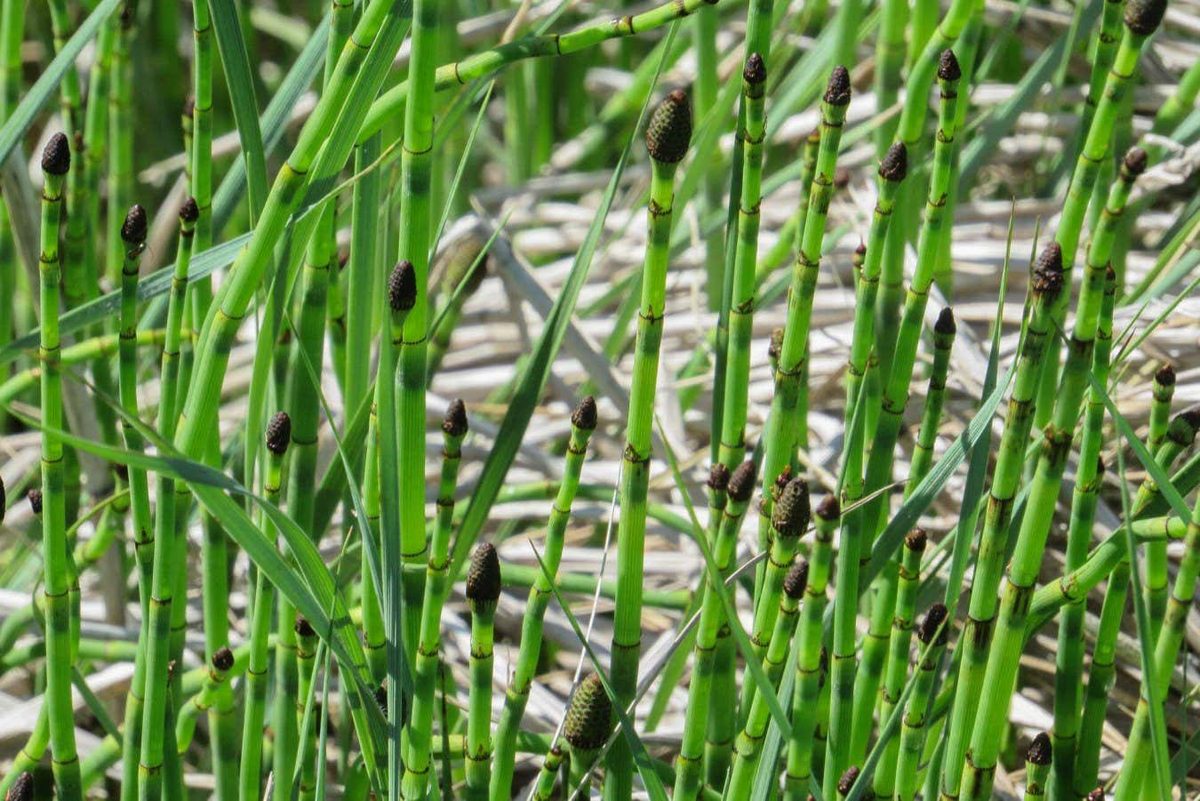
Scientists have discovered that the horsetail plant (Equisetum), a living relic from the Paleozoic era, exhibits a highly unusual method of water transport through its stem—offering unexpected insights into Earth’s ancient climate systems. This peculiar botanical trait, long overlooked, is now emerging as a potential game-changer for paleoclimatology, the study of past climates. By analyzing how water moves and evaporates within horsetail stems, researchers are unlocking clues about atmospheric conditions, humidity levels, and carbon dioxide concentrations from epochs long before human civilization.
Key Details
- The horsetail plant uses a passive, capillary-based system for water transport, unlike most vascular plants that rely on transpiration pull.
- Isotopic analysis of water in horsetail stems shows distinct fractionation patterns linked to ambient humidity and CO₂ levels.
- These plants are evolutionary holdovers from the Carboniferous period, making them ideal 'living fossils' for climate modeling.
- Researchers believe the data could refine climate proxies used in sediment and fossil records.
- Field studies across temperate zones confirm consistent isotopic signatures under varying environmental conditions.
Background
Horsetails are among the oldest plant lineages still in existence, with fossil records dating back over 350 million years. During the Carboniferous period, giant versions of these plants dominated vast swampy forests, contributing significantly to the formation of coal deposits. Their survival through multiple mass extinctions and dramatic shifts in Earth’s atmosphere makes them uniquely valuable to scientists studying long-term ecological and climatic change.
Unlike modern flowering plants, horsetails lack true leaves and seeds, reproducing via spores and relying on simple vascular structures. This anatomical simplicity, combined with their ancient heritage, allows researchers to model physiological processes that likely operated in prehistoric flora. One such process is the movement of water through their hollow, jointed stems. Recent experiments have demonstrated that water in horsetail stems undergoes isotopic fractionation—changes in the ratio of oxygen-18 to oxygen-16 and deuterium to hydrogen—that is highly sensitive to environmental conditions.
Analysis
The significance of this discovery lies in its potential to improve the accuracy of paleoclimate reconstructions. Traditionally, scientists have relied on proxies such as ice cores, tree rings, and sediment layers to infer ancient atmospheric conditions. However, these methods have limitations, particularly in regions with sparse fossil records or poor preservation.
Horsetails offer a novel biological proxy. Because their water transport is less influenced by biological regulation and more by physical factors like humidity and vapor pressure, the isotopic composition of water within their tissues can serve as a direct indicator of ambient climate conditions. This passive system acts almost like a natural hygrometer embedded in the plant’s physiology.
Furthermore, since horsetails have changed little over geological time, data from modern specimens can be cautiously extrapolated to their ancient ancestors. This allows researchers to simulate how water isotopes behaved in Carboniferous or Permian ecosystems, offering a clearer picture of global humidity patterns and hydrological cycles in deep time.
The implications extend beyond historical curiosity. Understanding past climate dynamics helps refine predictive models for future climate change. As Earth faces rising CO₂ levels and shifting precipitation patterns, insights from ancient analogs become increasingly relevant. Horsetails may help calibrate models forecasting how plant-mediated water cycles respond to long-term environmental stress.
Conclusion
The humble horsetail, often dismissed as a weedy survivor of a bygone era, is proving to be a powerful scientific tool. Its unique water transport mechanism provides a rare window into Earth’s climatic past, bridging gaps in the fossil record and enhancing our understanding of ecosystem resilience. As researchers continue to decode the isotopic language of these ancient plants, they move closer to reconstructing a more accurate, nuanced portrait of our planet’s environmental history—offering vital lessons for the challenges of the present and future.