Alexa Plus: A Smarter Home Assistant, But Not Yet a Personal Life Manager
Introduction
After a year immersed in Amazon’s AI-powered Alexa Plus, the experience is a mixed bag. While it has significantly advanced in managing the intricacies of a smart home, demonstrating impressive capabilities in understanding natural language and executing complex routines, its aspirations to become a comprehensive personal assistant fall short. The integration of generative AI has brought notable improvements in smart home control, making interactions more intuitive and efficient. However, persistent issues with consistency, intrusive advertising, and underdeveloped personal assistant features leave users questioning its readiness to manage more than just the household environment.
Key Details
- Smart Home Mastery: Alexa Plus excels in controlling smart home devices, understanding natural language commands like “Make it brighter in here” and executing multi-step routines with improved speed and reliability.
- Enhanced Understanding: The AI upgrade allows Alexa to comprehend conversational speech, eliminating the need for rigid command structures and making interactions more fluid.
- Kitchen Assistant: It proves particularly useful in the kitchen, assisting with recipes, timers, and conversions, remembering context throughout cooking tasks.
- Personal Assistant Flaws: Despite advances, Alexa Plus struggles with tasks requiring memory and accuracy, such as recalling personal information or completing complex orders via third-party services.
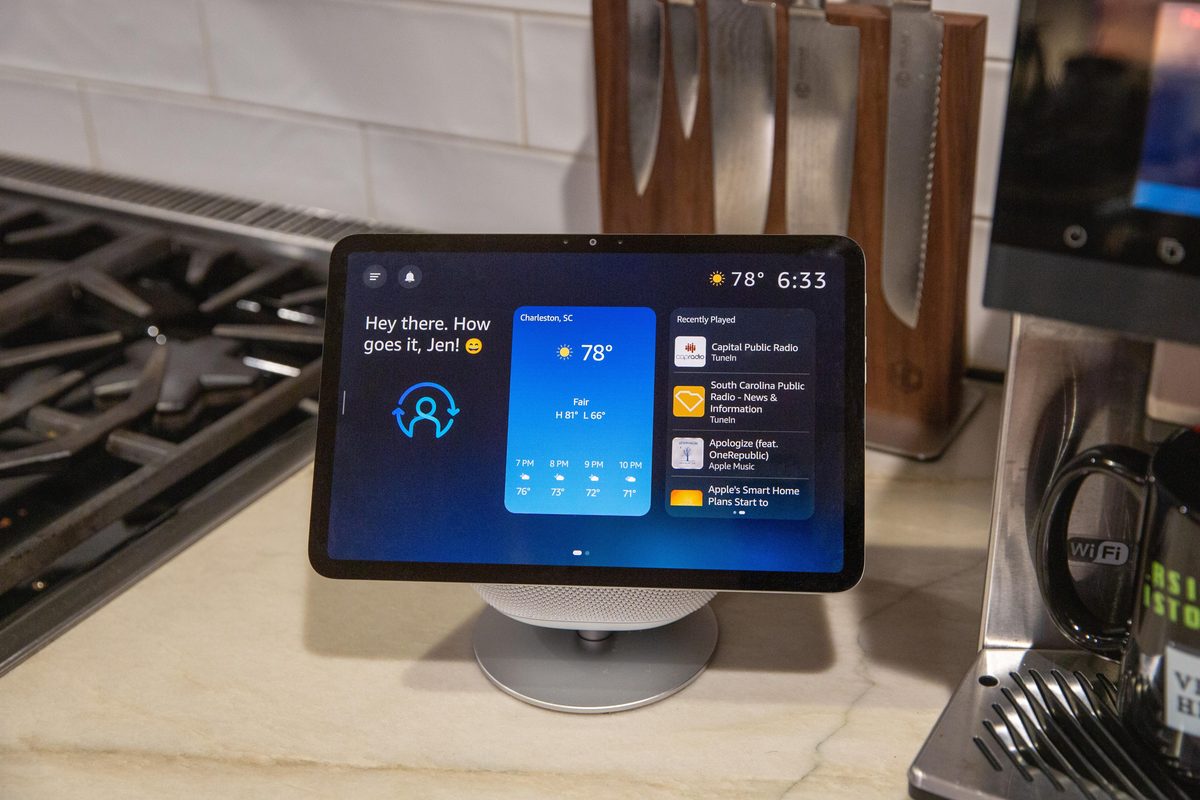
- Intrusive Advertising: Echo Show devices are plagued by frequent, often irrelevant, display and video ads, with an optional subscription required to remove them.
- Setup Challenges: Optimizing Alexa Plus for advanced functionality required a complete rebuild of the existing smart home setup, a time-consuming process.
- Competitive Landscape: While Alexa leads in smart home breadth, competitors like Google and Apple show more promise in personal context and integration.
Background
Amazon launched Alexa Plus in early access in July 2025, with a full rollout in February 2026, positioning it as a next-generation AI assistant. This move comes amid increasing competition from Google’s Gemini for Home and anticipated advancements in Apple’s HomeKit. The updated Alexa leverages large language models (LLMs) to enhance its understanding and interaction capabilities, moving beyond the rigid command-and-control structure of its predecessor. The testing period, spanning from July 2025 to February 2026, provided ample opportunity to evaluate its performance across various smart home and personal assistance tasks.
Impact Analysis
The impact of Alexa Plus on daily life is bifurcated. On the one hand, it has demonstrably improved the smart home experience. The ability to issue more natural commands, such as “I’m cold,” and have Alexa adjust the thermostat, or to create complex routines like “Lock the front door, turn off the lights, turn down the thermostat, and tell the robot to clean downstairs,” showcases significant progress. The improved speed, with responses in 3-5 seconds compared to the previous 10-15 seconds, makes interactions feel more seamless. The kitchen assistance, particularly with recipes, offers a tangible benefit, simplifying cooking processes. However, the negative impacts are equally pronounced. The intrusive advertising on Echo Show devices, often irrelevant and unavoidable without a subscription, detracts heavily from the user experience. The inconsistency in performing personal assistant tasks—misremembering crucial details like a child’s school or failing to complete simple orders—undermines the very concept of an “assistant.” The need to rebuild smart home setups from scratch highlights a significant barrier to entry for existing users, creating frustration and technical debt.
“What I really want is Alexa Plus to manage all that for me so I never have to touch the app. From setting up gadgets to troubleshooting issues, Alexa should be able to put devices in the right room and, if something isn’t working, figure it out. I want it to manage my smart home for me. That is an assistant I would pay money for.”
Broader Context
Amazon’s push with Alexa Plus occurs within a broader technological race in the AI and smart home sectors. Google’s Gemini for Home and Apple’s evolving HomeKit with Apple Intelligence represent direct challenges. The shift towards LLM-powered assistants is a industry-wide trend, promising more natural and capable interactions. Amazon’s strategy appears to be a dual approach: solidifying its dominance in the smart home market while simultaneously attempting to expand into personal assistance. The introduction of a subscription model for unlimited use on Echo devices ($19.99/month without Prime) and the $2.99/month per device ad-removal feature signal Amazon’s efforts to monetize its AI investments. This contrasts with the initial free model of Alexa. The company faces a delicate balance between leveraging its vast user base and data for AI development and maintaining user trust, particularly concerning privacy and the intrusive nature of its advertising.
Future Outlook
The future of Alexa Plus hinges on Amazon’s ability to refine its AI capabilities and address user frustrations. A crucial step will be to move beyond superficial integrations and deliver on the promise of true personal assistance, focusing on reliability and context. Amazon’s announcement of a developer toolkit and the potential of its Omnisense sensor platform suggest a commitment to deeper device control and household pattern recognition. The ideal scenario would see Alexa becoming a seamless, proactive manager of the home environment, perhaps even integrating with third-party personal AI assistants. However, if Amazon continues to prioritize broad feature stuffing and aggressive monetization over core functionality and user experience, Alexa Plus risks becoming a less appealing option compared to more focused competitors. The company must decide whether to be a comprehensive AI bot or the definitive brain of the smart home.
Conclusion
After a year of rigorous testing, Alexa Plus has undeniably become a more capable smart home assistant, excelling in intuitive control and routine execution. Its natural language processing and speed represent a significant leap forward. Yet, its shortcomings as a personal assistant are stark, marked by inconsistency, memory lapses, and frustrating interactions with third-party services. The pervasive advertising on Echo Show devices further diminishes its value proposition, forcing users to pay extra for an ad-free experience. While Amazon has laid groundwork for a more intelligent home, it must prioritize reliability and contextual understanding over feature bloat and aggressive monetization. Until it can consistently manage personal tasks and provide a less intrusive user experience, Alexa Plus remains a powerful tool for the home, but not yet a trusted manager of one’s life.
Source: theverge.com