Plaud One Earbuds Debut: AI Recording Meets Standalone Connectivity
Introduction
In the ever-evolving landscape of AI-powered gadgets, the quest for a compelling alternative to the ubiquitous smartphone continues. While numerous attempts have been made, none have yet achieved widespread adoption. Plaud, a company previously known for its phone-attachable conversation recorders, is now entering this arena with a distinct approach. Their latest offering, the Plaud One earbuds, represents a significant departure by aiming to function independently of a smartphone, focusing on continuous audio capture and AI-driven summarization.
Key Details
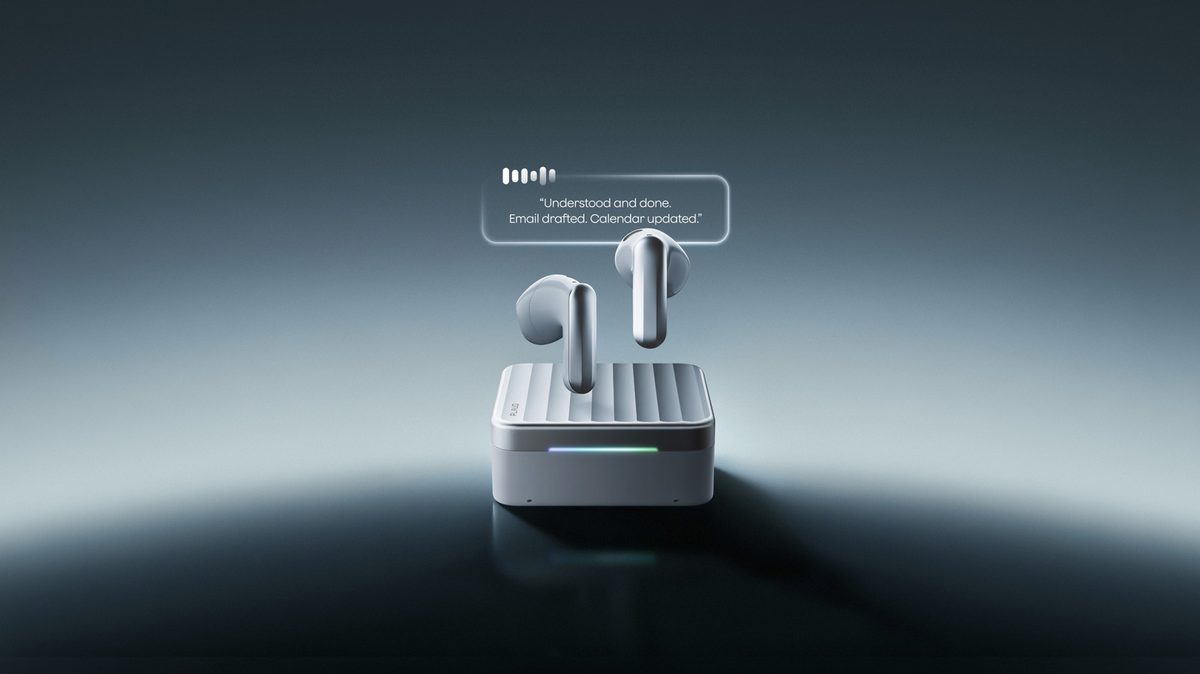
- Device Functionality: The Plaud One earbuds are designed primarily for recording in-person and online conversations, automatically transcribing and summarizing them using Plaud's AI agent.
- Standalone Operation: Integrated LTE connectivity within the charging case allows the earbuds to connect to the internet and Plaud's AI services without a paired smartphone or a separate cellular contract, thanks to agreements with carriers in over 80 countries.
- Storage Capacity: Each earbud offers 16MB of local storage, complemented by 512MB in the charging case, providing capacity for up to 30 hours of audio recording.
- AI Integration: The earbuds can connect to Plaud's AI agent, which can generate reports, prepare follow-ups, and interact with third-party apps like Gmail, Google Calendar, Notion, and Slack. Activation is via voice command (“Hey, Plaud”) or a dedicated button.
- Audio Playback: While capable of music and podcast playback via Bluetooth 5.4 (with multipoint support), audio codec support is limited, with LDAC available but potentially not benefiting iPhone users or all Android users (lacking AptX codecs).
- Durability and Features: The earbuds include active noise cancellation (up to 40dB reduction), EQ presets, IP54 dust and splash resistance, Apple Find My network compatibility, and Google Fast Pair.
- Battery Life: Claimed battery life is six hours with ANC off for music playback, closer to four hours for calls. The charging case provides an additional 36 hours. Fast charging offers two hours of usage from a 10-minute charge.
- Pricing and Availability: An “Explorer Edition” is priced at $250 for early adopters, with pre-orders open now and shipments expected by year-end. This edition includes $200 worth of Plaud tokens for AI features.
- Subscription Model: Full utilization of transcription and AI features will likely require a subscription plan, with options ranging from a free tier (300 minutes/month) to a Pro plan ($20/month for 1,200 minutes).
Background
The concept of AI-integrated wearables has been a subject of intense speculation and development. Following the mainstream breakthrough of large language models like ChatGPT, tech companies have been exploring ways to embed AI into everyday devices. Early attempts, such as those from Rabbit and Humane, aimed to offer a more focused AI interaction than found on smartphones. Plaud's previous products, the Plaud Note and Note Pro, established the company's expertise in capturing and processing audio for transcription and summarization, albeit requiring a connection to a smartphone. The Plaud One represents a natural evolution, removing the smartphone dependency to create a more seamless and always-on recording solution.
Impact Analysis
The Plaud One earbuds introduce a compelling proposition for professionals, students, and anyone who needs to meticulously document conversations or meetings. The ability to record, transcribe, and summarize audio on the go, without needing to pull out a phone, could significantly enhance productivity. The integrated LTE connectivity is a key differentiator, enabling real-time cloud processing and AI assistance, transforming the earbuds from mere recording devices into proactive productivity tools. However, the reliance on a subscription model for full functionality and the limitations in Bluetooth audio codec support might temper enthusiasm for users seeking premium audio experiences alongside AI features. The $250 price point, coupled with potential ongoing subscription costs, places it in a premium category, requiring a clear value proposition for its target audience.
Broader Context
Plaud's strategy aligns with a broader trend in wearable technology towards greater autonomy and specialized functionality. As AI capabilities become more sophisticated, devices are moving beyond simple data collection to active assistance and task automation. The Plaud One taps into the growing demand for tools that can manage information overload and streamline workflows. Its success could influence future designs of AI wearables, potentially leading to more devices that integrate seamlessly into daily routines without demanding constant user interaction or reliance on other primary devices. The challenge, as always, will be balancing innovative features with user privacy concerns and the practicalities of cost and usability.
Future Outlook
The Plaud One is positioned as a niche product for early adopters, with its “Explorer Edition” serving as a testing ground for market reception. If successful, Plaud may refine the technology, expand carrier agreements, and potentially improve audio codec support. The company's commitment to releasing version 4.0 of its app concurrently suggests ongoing development and integration of AI capabilities across its product line. The long-term viability will depend on how effectively Plaud can demonstrate the tangible benefits of its AI agent and transcription services, convincing users that the investment in both hardware and subscriptions offers a significant return in productivity and convenience. Further iterations could see enhanced AI features, improved audio quality, and perhaps even broader integration with enterprise software.
Conclusion
The Plaud One earbuds represent an ambitious step into the realm of standalone AI wearables. By prioritizing continuous audio recording, transcription, and AI-powered summarization with integrated LTE, Plaud aims to carve out a unique niche. While the device offers innovative features for productivity-focused users, considerations around audio playback quality, subscription costs, and the overall value proposition compared to existing smartphone-based solutions will be crucial for its market success. It is a bold experiment in redefining how we interact with AI and manage our daily information flow.
Source: engadget.com