320 Million Trees Killed Annually by Lightning: Hidden Climate Threat Revealed
Introduction
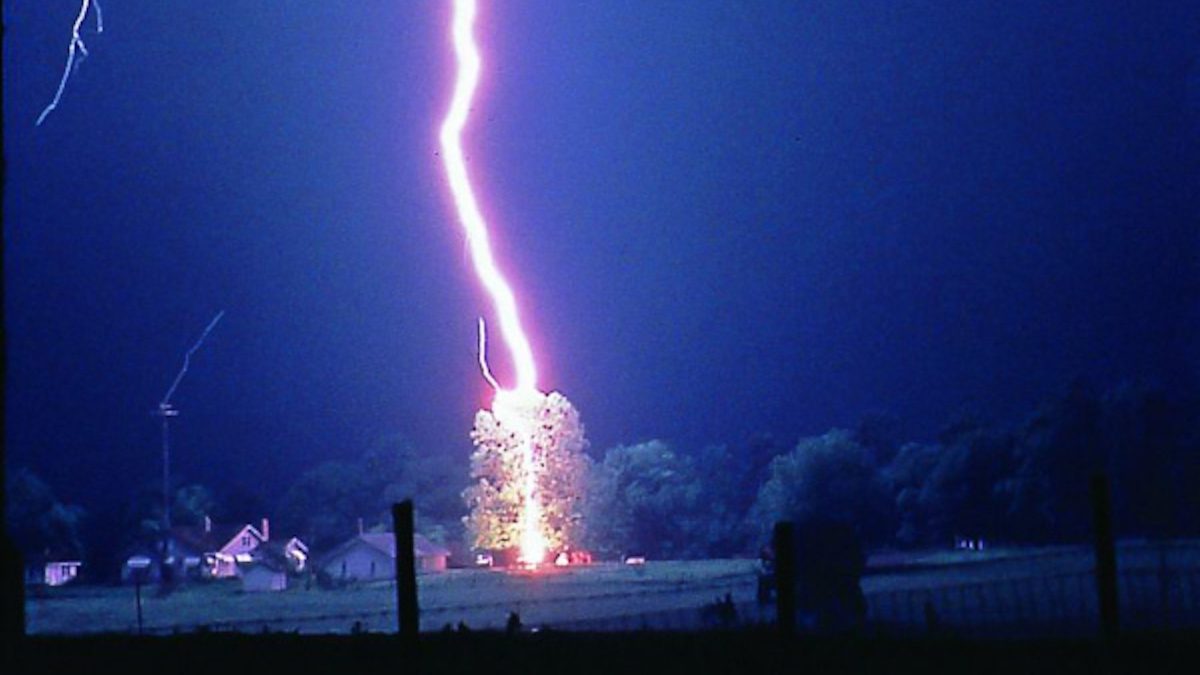
While lightning may appear as a fleeting spectacle during thunderstorms, its long-term ecological impact is far more severe than previously understood. A groundbreaking study published in Global Change Biology estimates that lightning strikes are responsible for the death of approximately 320 million trees every year—a figure that excludes trees lost to lightning-triggered wildfires. This revelation, derived from advanced statistical modeling by researchers at the Technical University of Munich (TUM), underscores a previously overlooked yet substantial natural disturbance in global forest ecosystems. The findings not only recalibrate our understanding of tree mortality but also highlight a growing concern: as climate change intensifies thunderstorm activity, the frequency of lightning strikes—and their ecological toll—is expected to rise.
Key Details
The study, led by atmospheric scientist Andreas Krause and his team at TUM, utilized a novel integration of global vegetation models, lightning distribution data, and observational forest records to estimate annual tree mortality from direct lightning strikes. Key findings include:
- 320 million trees die each year due to direct lightning strikes globally.
- This mortality accounts for 2.1% to 2.9% of total annual plant biomass loss.
- Decomposition of lightning-killed trees releases between 0.77 and 1.09 billion tons of CO₂ annually.
- Lightning-related emissions approach the carbon output from wildfire-killed plant biomass (excluding soil and deadwood), though still fall short of total wildfire emissions (~5.85 billion tons/year).
- Tropical regions, particularly Central Africa, northern South America, and Southeast Asia, are identified as global hotspots for lightning-induced tree mortality.
Background
Historically, the impact of lightning on forests has been difficult to quantify. Earlier studies relied heavily on localized field observations, often limited to specific forest plots or post-storm damage assessments. These methods, while valuable, lacked the scale needed to produce global estimates. The TUM team addressed this gap by combining the Integrated Biosphere Simulator (IBIS)—a widely used vegetation model—with high-resolution lightning detection datasets from satellites and ground-based networks. This allowed them to simulate how frequently lightning interacts with forest canopies across diverse biomes. Crucially, the model distinguished between direct tree mortality and indirect effects such as fires, enabling a focused analysis on the immediate physiological damage caused by electrical discharge.
Impact Analysis
When lightning strikes a tree, the immense electrical current—often exceeding 30,000 amperes—causes rapid heating of sap and water within the trunk, leading to explosive steam formation. This can rupture bark, split trunks, or ignite internal combustion, often killing the tree outright or leaving it vulnerable to disease and pests. The study emphasizes that even in the absence of fire, these direct strikes result in significant carbon release as the dead biomass decomposes over time.
"We're now able not only to estimate how many trees die from lightning strikes annually, but also to identify the regions most affected and assess the implications for global carbon storage and forest structure,"said Andreas Krause in a press statement. This capacity marks a critical advancement in ecological modeling, allowing scientists to incorporate lightning mortality into carbon cycle projections with greater accuracy.
The release of nearly a billion tons of CO₂ annually from lightning-killed trees represents a non-trivial flux in the global carbon budget. Although still less than emissions from full-scale wildfires, this figure rivals some national industrial outputs. For context, the annual CO₂ release from lightning-killed trees is comparable to the total emissions of countries like Germany or Japan. This highlights the need for climate models to account for such biotic disturbances, especially as their frequency may increase.
Broader Context
The study’s implications extend beyond carbon accounting. Lightning-induced tree mortality can alter forest composition, favoring species that are more resistant to electrical damage or faster-growing pioneers that colonize gaps in the canopy. Over time, this could shift biodiversity patterns, particularly in tropical forests where lightning rates are highest. Moreover, dead trees increase fuel loads, potentially amplifying fire risk even if the initial strike didn’t ignite a blaze.
Climate change adds another layer of complexity. Most climate models project an increase in lightning activity—estimated at roughly 10–12% per degree Celsius of warming—due to more intense convection and storm systems. If these projections hold, the 320 million annual tree deaths could rise significantly in the coming decades, creating a feedback loop: more lightning → more tree deaths → more CO₂ → further warming → more lightning.
Future Outlook
The TUM research calls for enhanced monitoring of lightning impacts through satellite remote sensing, drone surveys, and expanded ground validation networks. Integrating these data into next-generation Earth system models will improve climate predictions and inform conservation strategies. For forest managers, the findings suggest a need to consider lightning resilience in reforestation efforts, particularly in vulnerable tropical regions.
Additionally, future studies could explore species-specific vulnerabilities, the role of tree height and bark thickness in survival, and the potential for lightning to influence nutrient cycling through rapid biomass turnover. As extreme weather events become more common, understanding these subtle yet powerful natural forces becomes essential for ecosystem resilience.
Conclusion
The death of 320 million trees annually to lightning is not just a dramatic statistic—it’s a wake-up call. This study reveals a major, previously underappreciated source of carbon emissions and forest disturbance. As climate change accelerates, the interplay between atmospheric electricity and forest health demands urgent scientific and policy attention. Ignoring lightning’s ecological footprint could undermine global efforts to stabilize the climate and preserve forest biodiversity. The spark may be brief, but its consequences are long-lasting.