Unearthing Prehistoric Predators: The Battle Between Terror Birds and Giant Caimans
Unearthing Prehistoric Predators: The Battle Between Terror Birds and Giant Caimans
Introduction
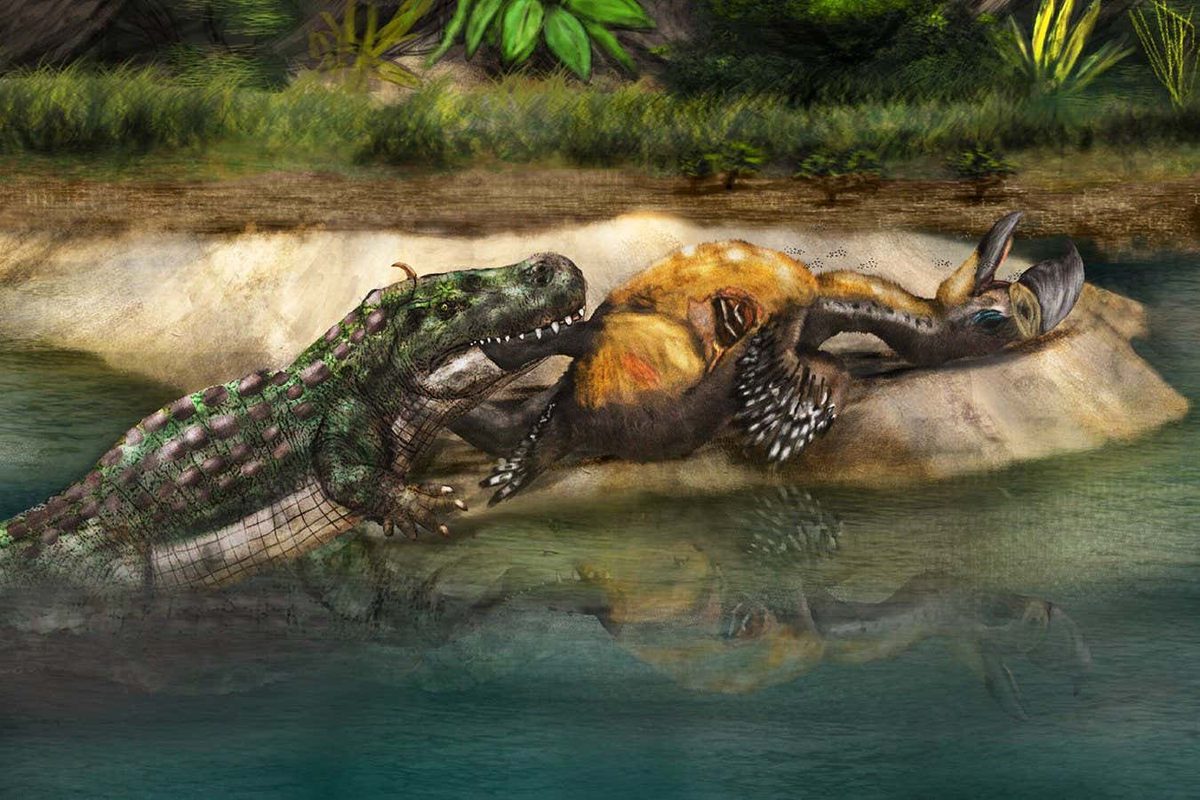
The discovery of a 13-million-year-old leg bone belonging to an enormous flightless bird, often referred to as a 'terror bird,' has opened a window into the predatory dynamics of ancient South America. This leg bone, which bears distinct tooth marks from a crocodilian species, suggests that these avian giants were not the top predators of their time. Instead, they coexisted with formidable caimans that posed a significant threat, creating a complex and competitive ecosystem.
Key Details
- The leg bone was excavated from a site in South America, confirming the presence of terror birds in this region 13 million years ago.
- The tooth marks found on the bone indicate interactions with large crocodilians, specifically giant caimans that lived during the same period.
- This discovery provides evidence of predation, indicating that terror birds, despite their size and predatory adaptations, were not invulnerable.
- The findings contribute to a broader understanding of the ecological dynamics during the Miocene epoch, particularly in the context of predator-prey relationships.
- This research challenges previous notions about the supremacy of terror birds in their ecosystems.
Background
Terror birds, part of the Phorusrhacidae family, were flightless predators that roamed South America for millions of years. They are known for their impressive size and powerful beaks, which they likely used to hunt a variety of prey, from small mammals to other birds. These birds thrived in a range of habitats, from open plains to forested areas, making them highly adaptable predators. However, the ecosystem during the Miocene epoch, when these birds flourished, was also home to a variety of other large predators, including giant caimans. These crocodilian ancestors were significantly larger than modern-day relatives and were formidable hunters capable of taking down large prey. The coexistence of these two powerful groups creates a fascinating narrative about the prehistoric food web in South America.
Analysis
The implications of this discovery are profound. The evidence of tooth marks on the leg bone of a terror bird presents a compelling case for reevaluating our understanding of predator hierarchies in ancient ecosystems. While terror birds are often portrayed as apex predators due to their size and predatory traits, the existence of giant caimans as active predators suggests a more nuanced interplay between species, where even the most dominant predators can fall prey to others. This dynamic is not unique to ancient South American ecosystems. It mirrors predator-prey relationships observed in modern ecosystems, where competition and predation can lead to unexpected outcomes. The discovery serves as a reminder of the complexities of ecological balance, where size and ferocity do not always guarantee survival. Furthermore, the findings encourage paleontologists to consider the broader implications of interspecies interactions in prehistoric environments. As researchers continue to unearth fossils and analyze ancient ecosystems, they may uncover even more layers of complexity surrounding predator-prey dynamics.
Conclusion
The discovery of a 13-million-year-old terror bird leg bone with crocodilian bite marks underscores the dramatic interactions that occurred in ancient South America. It challenges the narrative of terror birds as the ultimate predators and highlights the existence of other formidable hunters like giant caimans. As paleontologists delve deeper into the fossil record, we can expect to gain richer insights into the ecological systems that shaped the evolution of these prehistoric creatures. The cooperative and competitive behaviors that existed among ancient species continue to echo in the animal kingdom today, reminding us of the ever-changing and often perilous relationships that define life.