The Challenges of Implementing Trump's Executive Order on 'Woke' AI
The Challenges of Implementing Trump's Executive Order on 'Woke' AI
Introduction
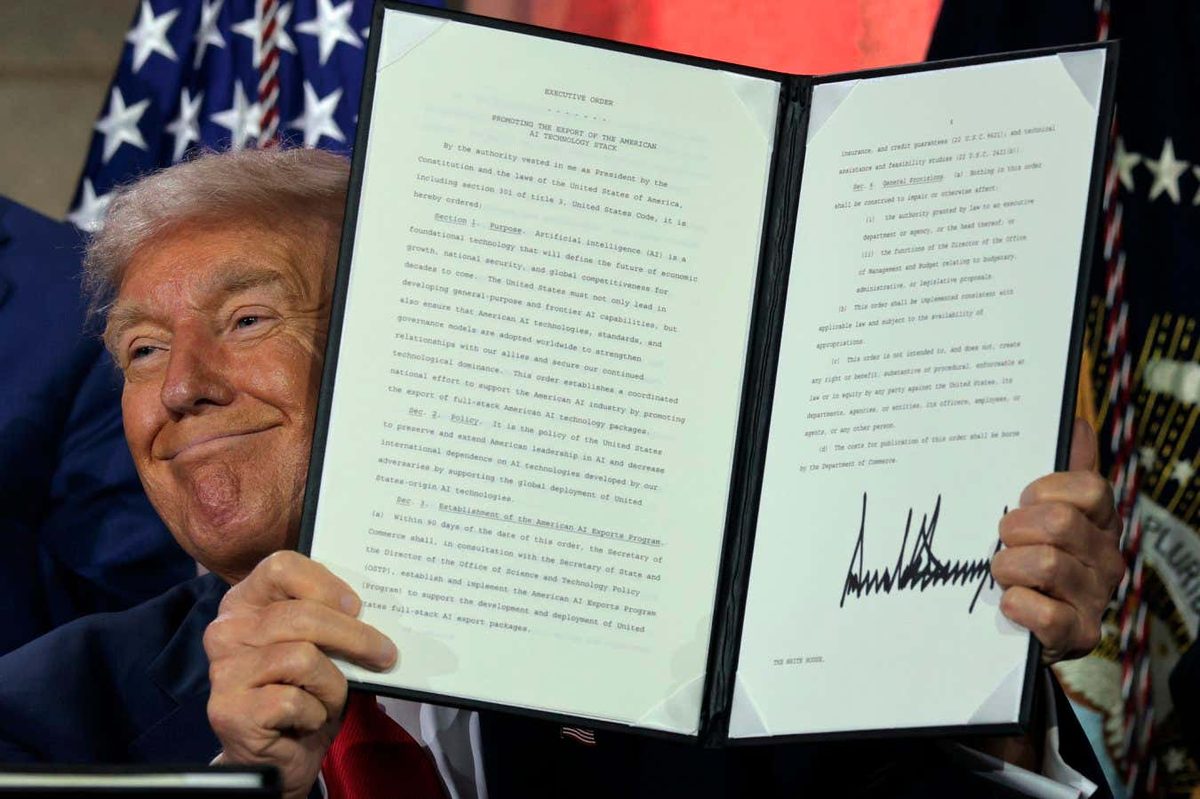
In a striking move that has reverberated through the technology sector, former President Donald Trump signed an executive order aimed at addressing concerns over what he termed 'woke' artificial intelligence. This directive mandates that companies holding U.S. government contracts ensure their AI models are free from ideological bias. This order raises several pressing questions: What does it mean for AI to be 'free from ideological bias'? How will this affect the operations of major tech companies? And perhaps most importantly, is this directive even feasible?
Key Details
- The executive order was signed on October 23, 2023, amidst ongoing debates about the role of AI in society.
- It specifically targets companies with federal contracts, compelling them to audit their AI systems for bias.
- Tech industry leaders have expressed concerns about the subjectivity involved in determining what constitutes 'ideological bias.'
- Critics argue that the order could stifle innovation and lead to censorship of legitimate discussions around AI ethics.
- The order's requirements may result in significant operational shifts for tech firms, especially those heavily involved in data analysis and machine learning.
Background
The emergence of AI technologies has sparked intense debate over ethics and bias. As AI systems are increasingly integrated into critical sectors—such as healthcare, education, and criminal justice—the ramifications of biased algorithms are becoming clearer. Trump's order comes against a backdrop of heightened scrutiny on how AI can perpetuate existing societal biases, often leading to unfair outcomes for marginalized groups.
This executive order is part of a broader trend in U.S. politics, where the term 'woke' has been weaponized in cultural debates. For Trump and his supporters, the ideological lens through which AI is developed and deployed is seen as a threat to conservative values. The order aims to counter this perceived bias, but the implications are far-reaching and complex.
Analysis
The directive raises numerous challenges for tech companies tasked with compliance. Firstly, defining what constitutes 'ideological bias' is inherently subjective. AI systems are trained on vast datasets that reflect the biases present in society. Therefore, any attempt to eliminate bias may not only be difficult but could lead to oversimplification of complex social issues.
Moreover, the process of auditing AI models for bias could become a logistical nightmare for companies. They would need to not only identify bias but also implement changes to ensure compliance—all while maintaining the integrity and functionality of their AI systems. This could divert resources from innovation and product development to compliance and auditing, potentially hindering growth in a rapidly evolving sector.
Additionally, the potential for governmental overreach and censorship raises concerns among industry stakeholders. Critics argue that the order may lead to a chilling effect, where companies self-censor their AI models to avoid punitive measures. This could stifle crucial discourse on AI ethics, as companies may shy away from exploring controversial topics that could be perceived as biased.
Furthermore, the order may lead to inconsistencies across different sectors and applications of AI. Each industry has unique challenges and requirements when it comes to AI deployment. A one-size-fits-all approach could undermine the effectiveness of AI solutions and hinder the progress of technology in fields where nuanced understanding is key.
Conclusion
As the tech industry grapples with the implications of Trump's executive order on 'woke' AI, it is clear that the path to compliance is fraught with challenges. The subjective nature of bias, the logistical burdens of auditing, and the potential for stifling innovation all underscore the complexity of navigating this new regulatory landscape. Ultimately, the success or failure of this initiative may hinge on how well industry leaders can engage with policymakers to establish a framework that promotes ethical AI development without compromising innovation.