New Books Illuminate Science Journalism, Kelp Forests, and Alchemy's Legacy
Introduction
The world of science, often perceived as a purely objective pursuit, is in reality deeply intertwined with human curiosity, historical practices, and the art of effective communication. A trio of new books, as reviewed in a recent publication, offers a compelling look into these less obvious connections. From the intricate craft of science journalism to the vital, yet often overlooked, ecological significance of kelp forests, and the surprising legacy of alchemy in the birth of modern chemistry, these works collectively underscore that scientific progress is built not just on data, but also on a foundation of exploration, context, and skillful storytelling.
Key Details
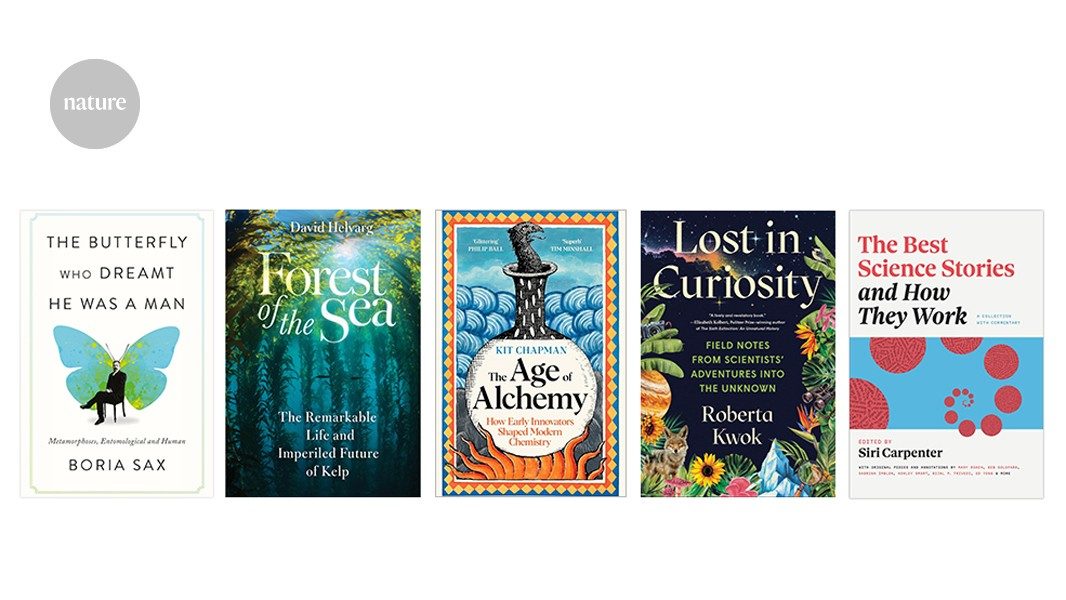
- Science Journalism Collection: An edited volume features 11 reprinted science articles from various publications, each accompanied by commentary and an interview, offering insights into high-quality science writing.
- Kelp Forest Conservation: A book by David Helvarg champions the cause of cold-water kelp forests, highlighting their vast ecological importance, carbon sequestration capabilities, and the urgent need for their protection from human-induced damage.
- Alchemy's Influence on Chemistry: Kit Chapman's work argues that modern chemistry owes a significant debt to alchemy, tracing the historical evolution from mystical practices to rigorous scientific inquiry.
Background
The review introduces a collection edited by science journalist Siri Carpenter, which aims to demystify the practice of science journalism. Carpenter emphasizes that science journalism is not an insular discipline but rather a vibrant field that draws from diverse sources and requires a nuanced approach to reporting complex topics. The collection showcases exemplary articles from publications like Nature, demonstrating how compelling narratives can be crafted around scientific discoveries. Each piece is further enriched by a critical commentary and a dialogue between the author and commentator, providing a meta-analysis of the writing process itself.
In parallel, David Helvarg’s book, Forest of the Sea, addresses the ecological importance of cold-water kelp forests. Helvarg points out that these underwater ecosystems are as poorly understood by the public as the deep ocean, despite covering an area larger than the Amazon rainforest. He details their critical role in absorbing carbon dioxide and contributing to global oxygen production, alongside other vital coastal habitats like mangroves and seagrasses. His work serves as a passionate call to action against the ongoing destruction of these invaluable natural resources.
Kit Chapman’s The Age of Alchemy delves into the historical roots of chemistry. Chapman revisits a pivotal moment in 1901 when Frederick Soddy discovered radioactive decay, a finding that echoed the alchemists’ ancient quest for transmutation. The anecdote involving Ernest Rutherford’s caution against using the term “transmutation” highlights the prevailing disdain for alchemy at the time. However, Chapman contends that this historical practice, far from being mere pseudoscience, laid crucial groundwork for the development of modern chemistry, suggesting a continuity of inquiry that transcends changing scientific paradigms.
Impact Analysis
The reviewed books collectively highlight the multifaceted nature of scientific understanding and communication. The science journalism collection underscores the power of clear, engaging writing in making complex scientific issues accessible to the public. It suggests that effective science communication is crucial for fostering informed public discourse and support for scientific endeavors. The emphasis on commentary and author-editor interviews provides a valuable resource for aspiring science writers and journalists, promoting a higher standard of reporting.
Helvarg’s work on kelp forests brings attention to critical environmental issues that often remain outside the public spotlight. By framing kelp forests as essential components of the global ecosystem, comparable in scale and importance to terrestrial rainforests, the book aims to galvanize conservation efforts. Its impact lies in raising awareness about the ecological services provided by these often-invisible ecosystems and the urgent threats they face.
Chapman’s exploration of alchemy challenges conventional historical narratives about science. By demonstrating the foundational contributions of alchemical thought and practice to chemistry, the book encourages a re-evaluation of scientific history. It suggests that the line between early speculative inquiry and modern empirical science is more blurred than often acknowledged, emphasizing the role of persistent curiosity across different eras.
Broader Context
These books arrive at a time when the public’s relationship with science is under scrutiny. Misinformation and a general lack of scientific literacy can hinder progress on critical issues, from climate change to public health. The emphasis on quality science journalism is therefore more important than ever. By showcasing how to report on science effectively, Carpenter’s collection contributes to building trust and understanding between scientists and the public. Similarly, understanding the ecological importance of systems like kelp forests is vital for effective environmental policy and action, especially in the face of accelerating climate change.
Furthermore, the historical perspective offered by Chapman’s work on alchemy provides a valuable lesson in intellectual humility. It reminds us that scientific understanding evolves and that practices once dismissed can hold the seeds of future breakthroughs. This historical continuity highlights the enduring human drive to understand the natural world, a drive that fuels both scientific discovery and the need for careful, well-written accounts of it.
Future Outlook
The future of science hinges on our ability to not only make discoveries but also to communicate them effectively and understand their place within the broader ecological and historical landscape. The science journalism collection points towards a future where reporting on science is more transparent, analytical, and accessible. As environmental challenges mount, books like Helvarg’s will be crucial in advocating for the conservation of vital ecosystems like kelp forests, potentially influencing policy and public behavior.
Chapman’s work suggests that a deeper appreciation of scientific history, including its more unconventional chapters, can foster a more robust and innovative scientific community. By recognizing the lineage of ideas, we can better understand the foundations upon which current research is built and perhaps even identify new avenues for exploration inspired by past endeavors. The enduring power of curiosity, coupled with rigorous methodology and clear communication, will undoubtedly shape the scientific landscape for years to come.
Conclusion
The reviewed books offer a rich tapestry of insights, demonstrating that science is far more than a sterile collection of facts. It is a dynamic human endeavor fueled by curiosity, shaped by historical context, and communicated through the art of writing. Whether exploring the vital role of kelp forests, challenging our perceptions of scientific history through the lens of alchemy, or dissecting the craft of science journalism, these works collectively argue for a more holistic understanding of science. They remind us that progress depends not only on groundbreaking research but also on our ability to understand, appreciate, and articulate its significance to the world.
Source: nature.com