Space Mirrors Ignite Debate: On-Demand Sunlight vs. Dark Sky Preservation
Introduction
A new venture by the company Reflect Orbital, aiming to illuminate Earth’s night side with reflected sunlight from space, has ignited a significant debate. The proposed technology, which could offer “sunlight on demand,” promises potential benefits like aiding search and rescue operations and enabling round-the-clock solar power. However, this ambitious project has drawn sharp criticism from astronomers, environmentalists, and space observers who fear catastrophic consequences for astronomical research, human health, and the natural world. The controversy underscores the escalating challenges of managing the increasingly crowded and regulated domain of outer space.
Key Details
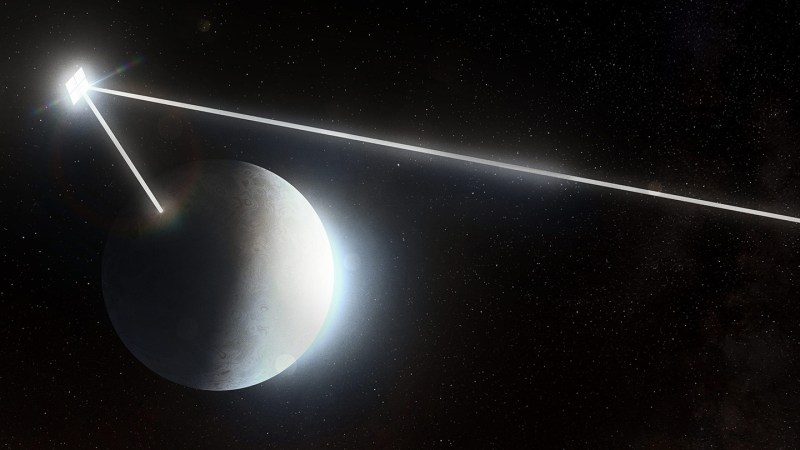
- Project Goal: Reflect Orbital plans to launch satellites equipped with large mirrors to reflect sunlight onto specific areas of Earth at night.
- Proposed Applications: Potential uses include illuminating disaster zones for rescue efforts, lighting up nighttime events, and extending the operational hours of solar farms.
- Technological Aspect: The initial satellite, Eärendil-1, is an 18x18 meter reflective sheet designed to unfurl in orbit. It aims to illuminate a spot about five kilometers wide, comparable to the brightness of a full moon, for approximately four minutes at a time.
- Company Vision: Reflect Orbital envisions a fleet of 5,000 mirrors by 2030 and 50,000 by 2035, with larger mirror dimensions.
- Regulatory Hurdles: The company has received approval from the U.S. Federal Communications Commission (FCC) for a test satellite, despite petitions from organizations like the American Astronomical Society and DarkSky International to deny the request.
- Historical Precedents: Similar concepts were explored in the 1960s (Project Able) and implemented in 1993 by Russia with a 20-meter mirror to light up Siberia.
Background
The concept of using space-based mirrors to illuminate Earth is not new. In the 1960s, Project Able explored the feasibility of a large mirror in geosynchronous orbit, partly motivated by military applications. More recently, in 1993, the Russian space agency deployed a 20-meter mirror that cast a beam of light across Europe, intended to demonstrate the possibility of lighting up Siberia’s long winter nights. While that project faced challenges, including cloud cover, it showcased the technical potential. Reflect Orbital’s current proposal builds on these historical efforts, aiming for greater control and broader applications.
Impact Analysis
The potential impact of Reflect Orbital's project is a major point of contention. Astronomers warn that the reflected light, even if directed, can scatter in the atmosphere and reflect off the ground, creating significant light pollution. Simulations suggest that even a single 54-meter mirror could make the night sky glow as brightly as four full moons within hundreds of kilometers of the beam, potentially outshining the full moon from tens of kilometers away. This would severely disrupt astronomical observations, rendering faint celestial objects invisible and potentially damaging sensitive equipment. Beyond astronomy, concerns are raised about the disruption of wildlife, including nocturnal animals and migratory birds, and the potential impact on human circadian rhythms. The company asserts that the light will be controllable and can be switched off, and that eye-safety limits will be respected, but critics remain skeptical about the long-term and widespread effects.
“It’s an insane project. There’s a failure to understand that darkness is a good thing.” — Jonathan McDowell, astrophysicist and honorary professor at Durham University.
Broader Context
Reflect Orbital's plans arrive amidst a period of unprecedented growth in satellite deployment. The number of active satellites has surged from around 2,000 in 2018 to over 16,000 today, with projections for many more. This "crowding of space" raises concerns not only about light pollution but also about orbital debris, the risk of collisions, and the strain on existing regulatory frameworks. International space law, largely rooted in Cold War-era treaties like the 1967 Outer Space Treaty, struggles to keep pace with technological advancements and commercial interests. Regulations are often voluntary, enforcement is difficult, and domestic agencies like the FCC, traditionally focused on communication licensing, have not been mandated to consider broader environmental impacts like light pollution. This regulatory gap means that individual launches are assessed without a cumulative understanding of their aggregate effect.
Future Outlook
The Reflect Orbital case may serve as a critical inflection point for space regulation. The sheer visibility and potential impact of these light-reflecting satellites could force a re-evaluation of how space activities are governed. Legal experts suggest that the project's tangible nature could make it easier to rally public support and challenge existing regulatory loopholes. Potential legal avenues include public nuisance claims and international liability for cross-border light pollution. While current environmental review processes often exclude space activities, a lawsuit stemming from an injury or damage caused by the reflected light could compel a more robust legal response. The outcome will depend on public and policymaker reactions, potentially shaping whether future generations view the night sky with awe for celestial phenomena or for human-made constructions.
Conclusion
The debate over Reflect Orbital's space mirrors highlights a growing tension between technological innovation and the preservation of natural environments, including the night sky. While the company emphasizes potential benefits and responsible development, a significant portion of the scientific and environmental community views the project as a serious threat. The controversy is emblematic of broader challenges in space governance, where outdated regulations struggle to address the cumulative impacts of a rapidly expanding orbital economy. The future of the night sky, and potentially the legal frameworks governing space, may hinge on how societies choose to balance the allure of on-demand light with the intrinsic value of darkness.
Source: sciencenews.org