Kilauea's Lava Fountain Frenzy Offers New Clues to Volcanic Eruptions
Introduction
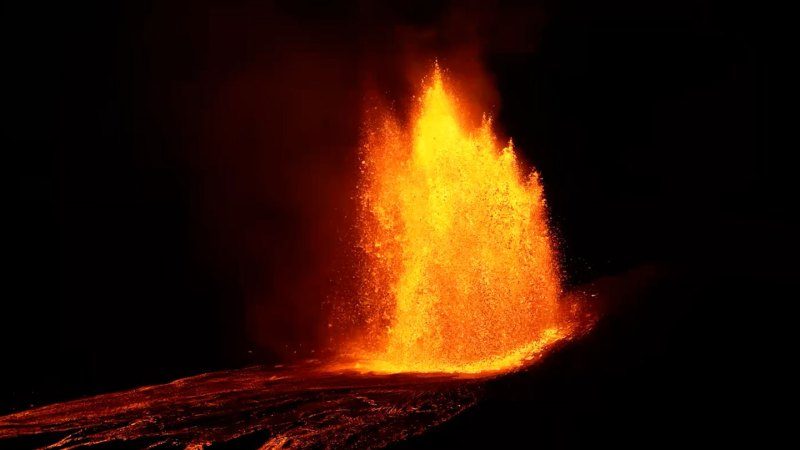
Hawaii's Kilauea volcano, a perennial performer on the world stage of geological activity, has recently captivated scientists with a new act: an unusually frequent and sustained display of lava fountains. While Kilauea has been erupting almost continuously for nearly two centuries, the past year has seen a dramatic shift, marked by the onset of these spectacular, fountain-like eruptions. This phenomenon, which began on December 23, 2024, inside the Halema’uma’u crater, has produced a remarkable series of lava jets, some soaring as high as 457 meters (1,500 feet) into the sky. The regularity and intensity of these events have prompted volcanologists to investigate the underlying mechanisms, offering a unique opportunity to understand the dynamics of volcanic eruptions.
Key Details
- Unprecedented Frequency: Kilauea has produced 54 distinct lava fountains between December 23, 2024, and September 2026.
- Exceptional Height: Some fountains have reached heights of up to 457 meters (1,500 feet).
- Rarity of the Phenomenon: While occasional lava fountains are common during eruptions, repeated, distinct bursts separated by minutes to weeks are rare. This has only occurred three times since 1823, with the current event being the most frequent.
- New Research Published: Findings on the cause of these fountains were reported on October 8 in the journal Science.
- Dominant Hypothesis: The research suggests that dissolved gases within the magma, rather than a carbon dioxide-rich foam, are the primary drivers of these episodic fountains.
Background
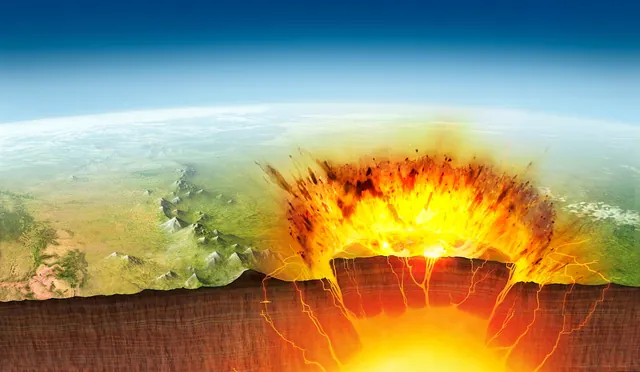
Lava fountains are a dramatic manifestation of volcanic activity, occurring when volcanic gases dissolved in magma rapidly expand and propel molten rock upwards. Typically, during a prolonged eruption, these fountains might appear sporadically. However, the current activity at Kilauea is characterized by recurring fountains within a single eruptive phase, a pattern observed only a handful of times in its recorded history. This rarity has made it challenging for scientists to gather sufficient data to test existing hypotheses about what triggers and sustains these episodic bursts. Two main theories have vied for prominence: one posits that dissolved water vapor in the magma escapes as pressure changes, leading to explosive bursts; the other suggests that a pressurized foam of carbon dioxide at the top of the magma column suddenly expands, similar to opening a shaken soda bottle.
Impact Analysis
The study, led by Ashton Flinders, a research geophysicist at the U.S. Geological Survey’s Hawaiian Volcano Observatory, utilized Kilauea’s extensive monitoring network. For decades, scientists have collected a wealth of data on seismic activity, ground deformation, temperature fluctuations, acoustic signals, and gas emissions. By analyzing this comprehensive dataset, particularly focusing on the period leading up to and during the recent fountain events, the research team identified a crucial pattern. They observed that before each fountain, the caldera floor would swell and tilt, indicating magma accumulation beneath the surface. More significantly, as the eruption progressed, a distinct sequence of seismic energy bursts and low-frequency acoustic signals emerged minutes before the fourteenth fountain. These signals are interpreted as the result of trapped gases building up and releasing within narrow volcanic conduits, acting like a piston to drive the magma upwards.
The research suggests that dissolved gases within the magma, rather than a carbon dioxide-rich foam, are the primary drivers of these episodic fountains.
Broader Context
Kilauea’s status as one of the world’s most active and intensely studied volcanoes makes it an ideal natural laboratory. The continuous influx of data from sophisticated instruments allows for detailed analysis of volcanic processes that would be impossible elsewhere. The current findings challenge the prevailing CO2 foam hypothesis by noting the relatively low levels of carbon dioxide detected alongside sulfur dioxide during the fountain events. This observation lends stronger support to the theory that the expansion of dissolved gases within the magma itself, rather than a separate gas-rich layer, is responsible for the fountain activity. Understanding these mechanisms is crucial not only for Kilauea but for volcanoes globally, as it can improve eruption forecasting and hazard assessment.
Future Outlook
While this study provides a significant step forward in understanding Kilauea’s lava fountains, the researchers acknowledge that the phenomenon is complex and further investigation is warranted. The preliminary nature of these findings means that many questions remain unanswered. Future research will likely focus on refining the models of gas exsolution and magma ascent within the volcanic plumbing system. Continued monitoring of Kilauea and comparative studies with other volcanoes exhibiting similar fountain behavior will be essential to build a more complete picture. The ongoing eruption provides an invaluable, albeit dynamic, opportunity to test and improve these nascent theories, potentially leading to enhanced predictive capabilities for volcanic hazards.
Conclusion
Kilauea's recent spate of lava fountains represents a significant and scientifically illuminating chapter in the study of volcanism. The research published in Science offers compelling evidence that the spectacular displays are driven by the cyclical release of dissolved gases within the magma, acting like a piston in a volcanic conduit. This insight refines our understanding of volcanic eruption dynamics, moving away from the CO2 foam hypothesis. As Kilauea continues its active period, it provides an unparalleled opportunity for volcanologists to gather data, test theories, and ultimately enhance our ability to predict and mitigate the risks associated with these powerful natural events.
Source: sciencenews.org