Lesotho Shepherds Brave Mountains for Night School Education
Introduction
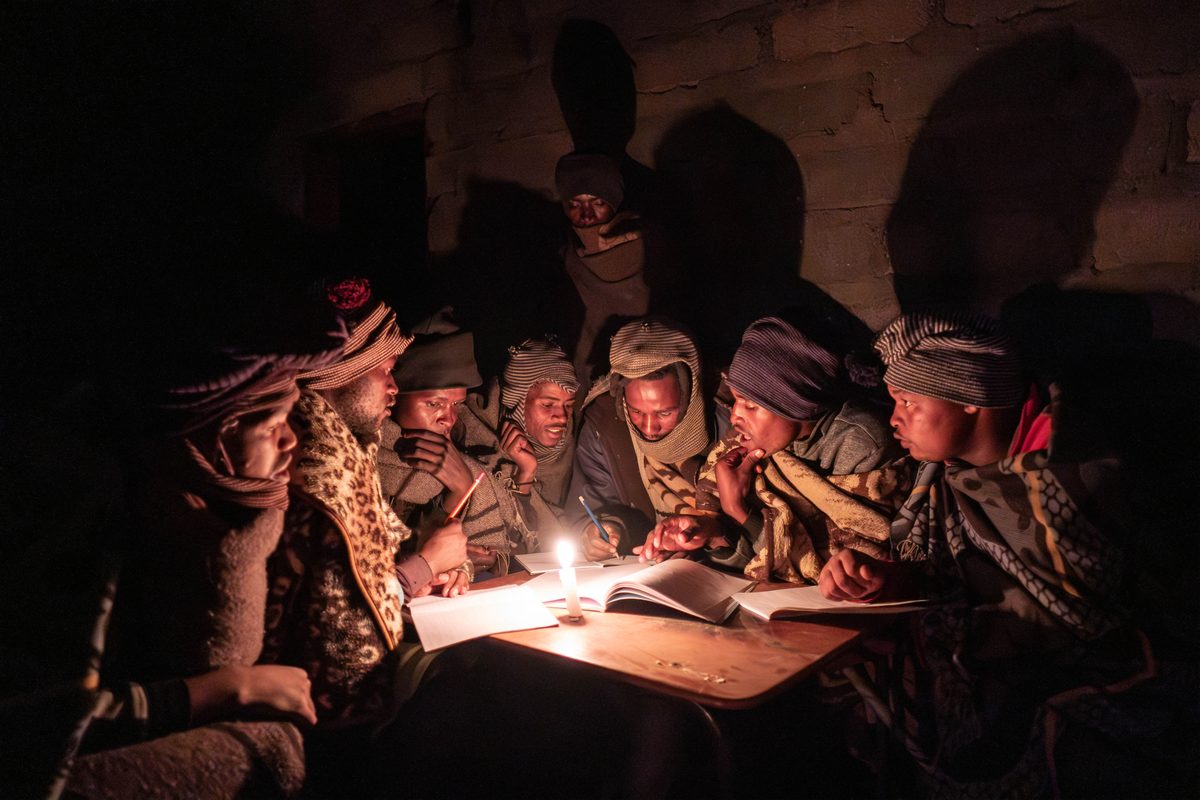
As dusk settles over the towering peaks of central Lesotho, a unique educational journey begins. Young shepherds, like 20-year-old Kabelo Mohai and 23-year-old Lepeli Maapesa, trade their flocks for textbooks, embarking on a challenging descent down rocky, near 8,000-foot high mountain paths. Wrapped in traditional wool blankets against the biting cold, they navigate the darkening landscape, their silhouettes joining dozens of others making their way towards the distant lights of Semonkong. Their destination: the Good Shepherd School, a beacon of hope where over 40 herders gather each evening for night classes, a testament to their determination to overcome the limitations imposed by their rural lives.
Key Details
- Thousands of boys and young men in Lesotho work as shepherds, a role deeply ingrained in the nation's economy and culture, accounting for nearly 60% of agricultural exports.
- Poverty and tradition often lead school-aged boys to abandon formal education to tend livestock, with a 2018 World Bank analysis finding nearly half of the country's boys engaged in herding.
- Volunteer-run night schools, often operating on shoestring budgets, provide basic literacy and numeracy skills to shepherds after their daily herding duties.
- These schools, like the Good Shepherd School founded in 2003, serve students ranging from 15 to 55 years old, offering a crucial second chance at education.
- Challenges include financial instability, delayed government support, and the difficulty of learning basic skills at an older age.
- Beyond academics, these schools offer vital social interaction for isolated young men, helping them develop social skills and reconnect with society.
Background
Lesotho, a nation entirely above 1,000 meters (3,281 feet), presents a starkly beautiful but challenging environment. For many young men, life as a shepherd is a reality dictated by economic necessity and cultural norms. Mohai, who began herding at nine and only completed primary school, describes his life in a makeshift mountain hut, his main companion his dog, Balireng. While he finds solace in the independence of his work, the isolation and harsh weather conditions—from heavy winter snows to scorching summers—take their toll. The lack of social interaction is a significant drawback, as Mohai admits. The opportunity to attend the Good Shepherd Night School, therefore, represents more than just a chance to learn; it's a lifeline to a different future, a way to maintain literacy and potentially secure employment beyond herding.
Impact Analysis
The impact of these night schools extends far beyond basic literacy. For individuals like Mohai and Lepeli, they offer a path out of a cycle of poverty and limited opportunity. Mohai dreams of becoming a soldier, a goal contingent on his ability to read and write. Similarly, Motlatsi Monoana, in his mid-40s, never attended school due to herding duties. He now struggles with basic counting and reading, leading to exploitation by employers and difficulties in managing his life. The night school provides him with hope for future employment outside of herding. Another student, Ketso Mokoena, faced bullying for being a shepherd but persevered. With the nuns' financial assistance, he is now in Grade 11, studying science and aiming to become a pharmacist, a testament to the transformative power of these educational initiatives. These schools are crucial in combating illiteracy, which hinders economic participation and personal development.
“Shepherds are very important to our country. The economy rests on their shoulders. Without the school, they are sitting in the dark, because they may never know how to read and write,” says Sister Rosemary Mokebe, a nun running the Good Shepherd Night School.
Broader Context
The challenges faced by Lesotho's shepherds are emblematic of broader issues in rural development and education access in many parts of the world. While Lesotho's government has made efforts to formalize and support these non-formal education centers, bureaucratic delays and funding shortfalls persist. The stark statistics—only 69% of boys complete primary school compared to 92% of girls, and a mere 22% pursue secondary education—highlight a significant gender disparity in educational attainment. This educational gap not only limits individual potential but also has societal consequences. Lisemelo Mosakeng, former head of the Lesotho Association for Non-Formal Education (LANFE), points out that the isolation inherent in herding, coupled with a lack of social skills developed through schooling, can lead to difficulties in relationships and conflict resolution, sometimes resorting to violence. The night schools, therefore, serve a dual purpose: providing education and fostering crucial social development.
Future Outlook
The future of these shepherd schools remains uncertain, heavily reliant on volunteer efforts and inconsistent government support. While Sister Mokebe and Sister Patricia Neko continue their dedicated work at the Good Shepherd School, and Mampho Makha tirelessly teaches in her small tin shack in Thaba-Tseka, the sustainability of these initiatives is a constant concern. The government's Non-Formal Education Department's slow progress in formalizing and funding these schools leaves educators in precarious positions, often working without renewed contracts or stipends. However, the resilience of educators like Makha, who was inspired to teach after witnessing her illiterate father's jailing over an unsigned affidavit, and the unwavering commitment of students like Mokoena, who dreams of becoming a pharmacist, offer a glimmer of hope. Continued advocacy and consistent governmental commitment are essential to ensure these vital educational opportunities persist for Lesotho's marginalized youth.
Conclusion
The image of shepherds descending mountains in the dark to attend night school in Lesotho is a powerful symbol of resilience and the pursuit of knowledge against formidable odds. These educational initiatives, often run by dedicated volunteers on minimal resources, are more than just places of learning; they are sanctuaries offering social connection, personal growth, and a tangible pathway to a brighter future. While systemic challenges and funding gaps persist, the unwavering spirit of both educators and students underscores the profound importance of basic education in transforming lives and empowering communities. The journey of these shepherds highlights a universal truth: the desire for knowledge knows no bounds, and with the right support, even the most isolated individuals can aspire to achieve their dreams.
Source: npr.org