Atomic Gravity Test in Space Achieves Unprecedented Precision
Introduction
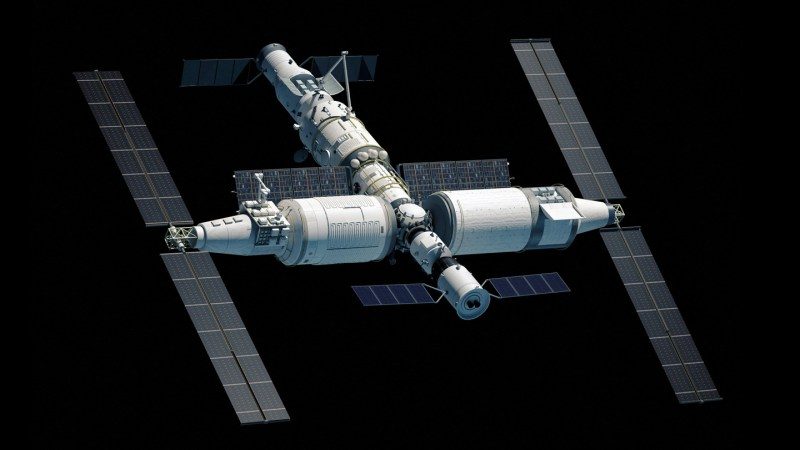
An experiment famously associated with Galileo Galilei, designed to demonstrate that objects fall at the same rate regardless of their mass, has been miniaturized and transported to the extreme environment of space. While Galileo is traditionally credited with dropping objects from the Leaning Tower of Pisa to illustrate this principle, modern science has taken this concept to the atomic level. Researchers aboard China’s Tiangong space station have successfully conducted this experiment with clouds of rubidium atoms, revealing accelerations that match with astonishing accuracy, a finding reported in the journal Science Advances.
Key Details
- Two clouds of cold rubidium atoms were used in the experiment.
- The atoms within each cloud possessed different masses due to variations in the number of neutrons in their nuclei.
- The relative accelerations of these two atom clouds were measured to be nearly identical.
- The precision of the measured accelerations matched to 0.05 thousandths of a percent.
- This high precision confirms the equivalence of gravitational and inertial mass, a fundamental concept in physics.
Background
The experiment hinges on the weak equivalence principle, a cornerstone of physics that posits that the gravitational mass and inertial mass of an object are equivalent. Gravitational mass dictates how strongly an object is affected by gravity, while inertial mass determines its resistance to acceleration when a force is applied. If these two masses are equal, then in a vacuum, objects of differing masses will accelerate at the same rate when falling under gravity. This principle is a foundational element of Albert Einstein’s general theory of relativity, which elegantly describes gravity not as a force, but as a curvature of spacetime caused by mass and energy.
Previous tests of the weak equivalence principle have been conducted on Earth, but the limited duration of free fall on our planet restricts the achievable precision. Satellites have also been used for such tests, notably with falling metal cylinders, which have provided strong confirmation. However, atoms, governed by the principles of quantum mechanics, represent a unique test case. It was crucial to verify if these fundamental particles adhere to the same macroscopic laws of gravity, and conducting the experiment in the prolonged free-fall environment of orbit offered an unparalleled opportunity.
Impact Analysis
The results from the Tiangong space station experiment represent a significant leap in the precision with which the weak equivalence principle has been tested. Achieving a precision of 0.05 thousandths of a percent means that any potential violation of the principle at this level has been ruled out. This high degree of accuracy strengthens our confidence in Einstein’s general theory of relativity, particularly in scenarios involving weak gravitational fields, such as those experienced in orbit.
The confirmation extends the validity of the weak equivalence principle to the quantum realm. While macroscopic objects and even atoms have previously shown adherence to this principle, this experiment specifically highlights that the quantum nature of atoms does not introduce any deviations. This is vital for theoretical physicists who are constantly seeking to unify gravity with quantum mechanics, a major unsolved problem in modern physics.
“Atoms in orbit take the weak equivalence principle to a whole new level.”
Broader Context
This experiment is part of a global effort to test the fundamental laws of physics with ever-increasing precision. Deviations from expected behavior, even minuscule ones, could point towards new physics beyond the Standard Model and general relativity. Such deviations are actively sought in various high-precision experiments, including those involving atomic clocks, gravitational wave detectors, and cosmological observations.
The use of the Tiangong space station highlights the growing capabilities of international space platforms for conducting cutting-edge scientific research. These platforms offer unique environments—like prolonged microgravity and vacuum—that are impossible to replicate on Earth, enabling experiments that push the boundaries of our understanding.
Future Outlook
The success of this atomic gravity test opens doors for future, even more precise experiments. Scientists may aim to increase the number of atoms, extend the duration of the free fall, or use different types of atoms to probe for subtle differences in their gravitational behavior. Further research could explore the interplay between quantum entanglement and gravity, potentially leading to new insights into quantum gravity theories.
The data gathered will also serve as a benchmark for theoretical models. Any future theories attempting to unify quantum mechanics and general relativity will need to be consistent with these highly precise experimental results. This ongoing quest for precision is essential for uncovering the deepest secrets of the universe.
Conclusion
The experiment conducted on the Tiangong space station has successfully re-enacted Galileo’s foundational gravity test at the atomic scale in space, achieving unprecedented precision. By demonstrating that atoms of different masses fall at virtually identical rates, the research provides robust confirmation of the weak equivalence principle. This finding not only reinforces the validity of Einstein’s general theory of relativity but also extends its reach into the quantum domain, underscoring the fundamental nature of gravity across different scales of the universe. The results pave the way for future experiments that promise to further unravel the mysteries of gravity and its connection to quantum mechanics.
Source: sciencenews.org