Hovercraft Revival: How Cold War-Era Sea-Skimming Technology Is Reshaping Modern Naval Strategy
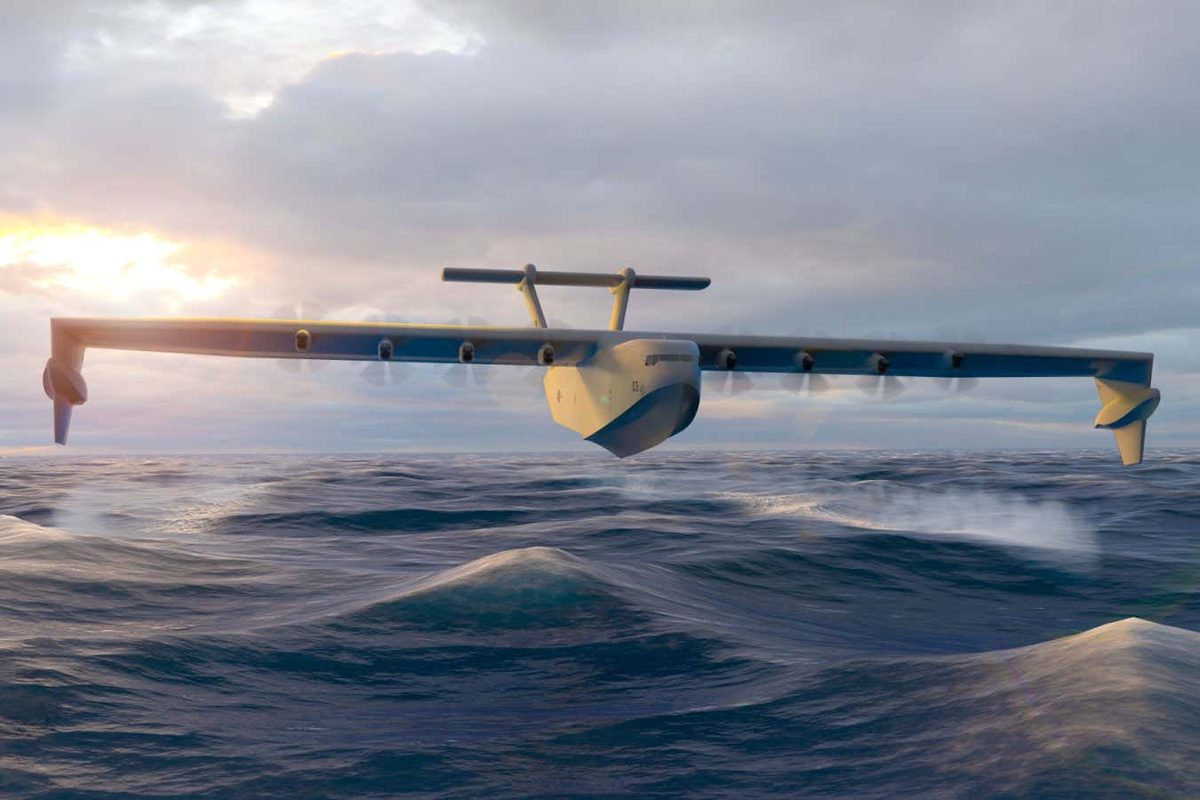
Hovercraft Revival: How Cold War-Era Sea-Skimming Technology Is Reshaping Modern Naval Strategy
Introduction
In a surprising twist of military innovation, hovercraft—long considered relics of Cold War-era experimentation—are experiencing a global resurgence. Once dismissed as impractical, noisy, and vulnerable, these sea-skimming vessels are now being reevaluated by major world powers, particularly China and the United States, as strategic tools in an era of increasing Pacific maritime competition. Originally developed during the mid-20th century, hovercraft utilize a cushion of air to glide just above the water's surface, enabling them to move swiftly across both sea and land. Their return to military attention underscores a broader shift in defense doctrine: the need for speed, stealth, and versatility in contested waters.
Key Details
- China is actively testing next-generation ground-effect vehicles (GEVs), commonly known as ekranoplans, capable of carrying missiles and traveling at high speeds over water.
- The U.S. Navy and DARPA are investing in research for Wing-in-Ground (WIG) effect craft to enhance rapid deployment and logistics in the Indo-Pacific.
- Modern hovercraft benefit from lightweight composite materials, advanced avionics, and improved radar evasion techniques.
- These vessels can travel at speeds exceeding 300 mph while flying just 10–20 feet above the ocean, avoiding most traditional radar detection.
- They offer strategic advantages in anti-access/area denial (A2/AD) environments, particularly in the South China Sea and Taiwan Strait.
Background
The concept of ground-effect flight dates back to the 1930s, but it was the Soviet Union that aggressively pursued the technology during the Cold War. The most famous example was the Kaspian Monster, or KM-class ekranoplan, a 100-ton prototype developed in the 1960s that could fly at 300 mph just meters above the Caspian Sea. Though the program was eventually shelved due to high costs and limited versatility, it demonstrated the potential of low-altitude, high-speed maritime transport. With the end of the Cold War, Western militaries largely abandoned the technology in favor of conventional aircraft and high-speed ships.
However, the geopolitical landscape has changed dramatically. China’s expansive island-building and militarization of the South China Sea, coupled with growing U.S. concerns over access to key maritime chokepoints, have created a demand for new asymmetric capabilities. In this context, hovercraft and GEVs offer a unique blend of speed, range, and low observability. Unlike traditional ships, they are not constrained by hull resistance; unlike aircraft, they require less fuel and no runways. This makes them ideal for rapid troop insertion, missile strikes, or supply missions in contested zones.
Analysis
The renewed interest in hovercraft reflects a broader pivot toward hybrid naval platforms that blur the line between air and sea operations. In modern warfare, where early detection often leads to destruction, the ability to remain under radar coverage—by flying in the ground-effect zone—is a significant tactical advantage. These crafts exploit the aerodynamic phenomenon where wings generate extra lift when close to a surface, allowing them to carry heavy payloads at high speeds with minimal energy expenditure.
For China, GEVs align with its strategy of regional dominance through anti-access and area denial. A missile-armed ekranoplan could threaten U.S. carrier groups before they enter striking distance. For the U.S., such vehicles could bypass China’s extensive coastal surveillance networks, delivering Marines or supplies directly to forward operating areas. Moreover, in a conflict over Taiwan, where time is critical, hovercraft could execute rapid amphibious assaults without relying on vulnerable amphibious landing ships.
Challenges remain: weather sensitivity, limited range compared to aircraft, and vulnerability to advanced air defenses. Yet, with advancements in stealth coatings, autonomous systems, and precision guidance, these drawbacks are being mitigated. The integration of AI for navigation and threat detection further enhances their operational viability.
Conclusion
The comeback of Cold War hovercraft is not nostalgia—it’s necessity. As great-power competition intensifies in the Indo-Pacific, both China and the U.S. are revisiting unconventional technologies to gain an edge. The sea-skimming hovercraft, once a Soviet oddity, may soon become a cornerstone of 21st-century naval doctrine, symbolizing the fusion of legacy innovation with modern warfare demands.