Kentucky Woman Finds Painted Turtle, Wildlife Experts Urge Against Altering Wild Animals
Introduction
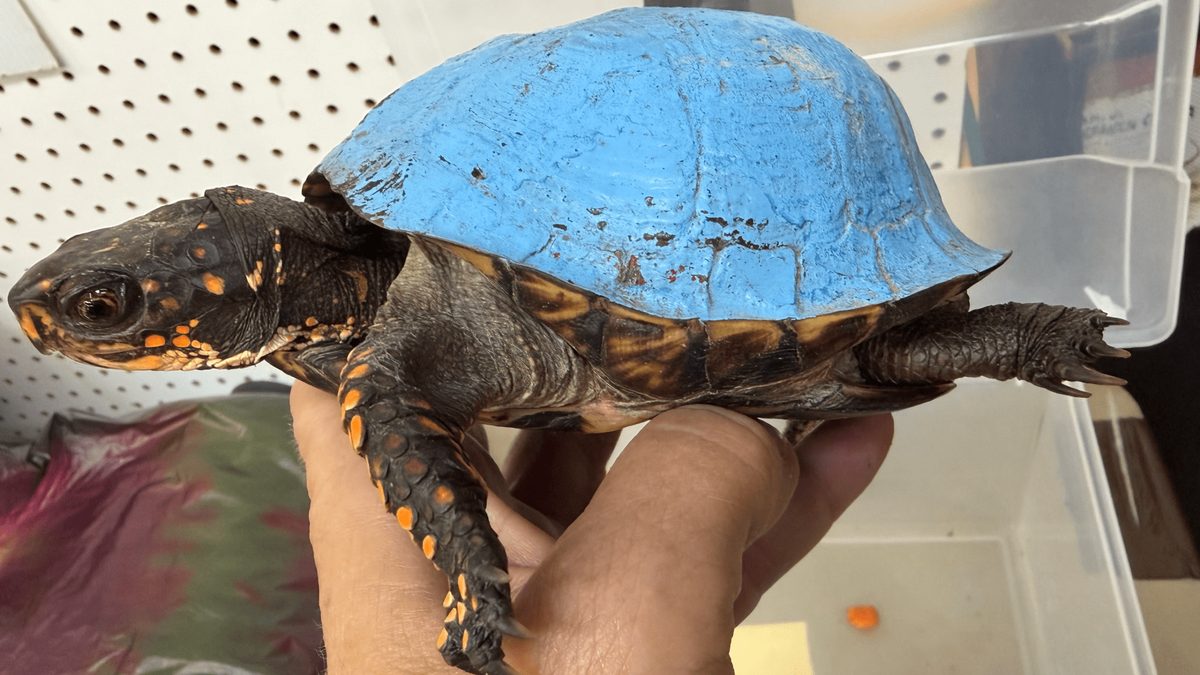
In a peculiar discovery in Campbellsville, Kentucky, a new homeowner stumbled upon an unexpected resident in her backyard: an Eastern box turtle adorned with a striking, unnatural blue shell. While initially appearing as a rare genetic anomaly, the vibrant hue was soon revealed to be the result of human interference. This incident highlights a concerning trend of interacting with wildlife in ways that can be detrimental to their survival and well-being, prompting experts to issue warnings and calls for greater respect for nature’s design.
Key Details
- An Eastern box turtle (Terrapene carolina carolina) was found with a bright blue shell in Campbellsville, Kentucky.
- The color was not natural; a neighbor revealed a previous resident had painted turtles on the property.
- The turtle also had red paint beneath the blue, suggesting multiple applications.
- The paint, seemingly oil-based, was tough and difficult to remove.
- Wildlife rehabilitator Tonya Poindexter of the Wilderness Trail Wildlife Center was contacted to assist.
- The turtle is otherwise healthy but will not be released back into the wild due to the paint's impact on camouflage.
- Rehabilitation involves careful removal using warm water soaks, soft toothbrushes, Dawn dish soap, and occasionally mineral spirits for stubborn areas, with precautions against fume inhalation.
- Poindexter advises against DIY attempts at paint removal, recommending professional help for chemically altered wildlife.
- The homeowner has volunteered to take the turtle back once rehabilitation is complete.
Background
The Eastern box turtle, a common species in the eastern United States, is known for its distinctive, domed shell which typically features intricate patterns of brown, yellow, and orange. These natural colors provide crucial camouflage, allowing the turtle to blend seamlessly with its environment—the forest floor, leaf litter, and soil. This camouflage is not merely aesthetic; it is a vital survival mechanism, protecting the turtle from predators. The discovery of a turtle painted in garish blue and red tones immediately raised alarms among wildlife experts, signaling a disregard for the animal's natural adaptations and inherent needs.
Impact Analysis
The application of paint to a turtle’s shell poses several significant threats. Firstly, it directly compromises the animal’s ability to survive in the wild. The bright, unnatural colors strip away its camouflage, making it highly visible to predators such as birds of prey, raccoons, and foxes. This increased vulnerability can lead to a higher risk of predation. Secondly, the paint itself, especially if oil-based, can be toxic. It can irritate the turtle’s skin, potentially be ingested during grooming, or interfere with the shell’s natural processes. The shell is a living part of the turtle’s anatomy, growing and healing with the animal. Foreign substances can impede these functions, leading to discomfort, infection, or long-term damage. Tonya Poindexter emphasized this point, stating, “Putting paints and chemicals that were never intended for an animal onto that shell is simply not something we should be doing to wildlife.” The difficulty in removing the paint further underscores the severity of the interference.
Broader Context
This incident is part of a larger issue where humans, often with good intentions but lacking knowledge, interfere with wild animals. While some may see painting a turtle as a harmless act of adornment, it demonstrates a fundamental misunderstanding of wildlife ecology and animal welfare. Wildlife rehabilitators frequently encounter animals harmed by human activities, ranging from entanglement in plastic to ingestion of foreign objects, or in this case, direct physical alteration. The instinct to “help” or “decorate” wild creatures can inadvertently cause significant harm. This case serves as a potent reminder that wild animals are not pets or decorative objects; they have complex needs and adaptations that should be respected and protected.
Future Outlook
The immediate future for this particular turtle involves a slow and meticulous rehabilitation process. The Wilderness Trail Wildlife Center is committed to removing the paint as safely and effectively as possible. Once the turtle is free of the artificial coloring and deemed healthy, she will be returned to her original habitat. However, the long-term outlook for wildlife affected by such human interference remains a concern. Increased public education is crucial to prevent similar incidents. Promoting a message of observation and appreciation from a distance, rather than direct interaction and alteration, is key. Wildlife centers like Poindexter’s play a vital role in not only treating injured or compromised animals but also in educating the public about responsible coexistence with nature.
Conclusion
The story of the blue-shelled turtle from Kentucky is a stark illustration of how human actions, even those seemingly minor or whimsical, can have serious consequences for wildlife. The turtle’s journey from a brightly painted backyard novelty to a patient undergoing careful rehabilitation underscores the importance of respecting the natural state of wild animals. As Tonya Poindexter aptly put it, “Eastern box turtles are already beautifully painted—by nature.” This incident should serve as a powerful educational tool, urging the public to admire wildlife from afar and to refrain from any actions that could jeopardize their health, safety, and natural survival mechanisms.
Source: popsci.com