China's Reusable Rocket Ambitions: Closing the Gap with SpaceX
Introduction
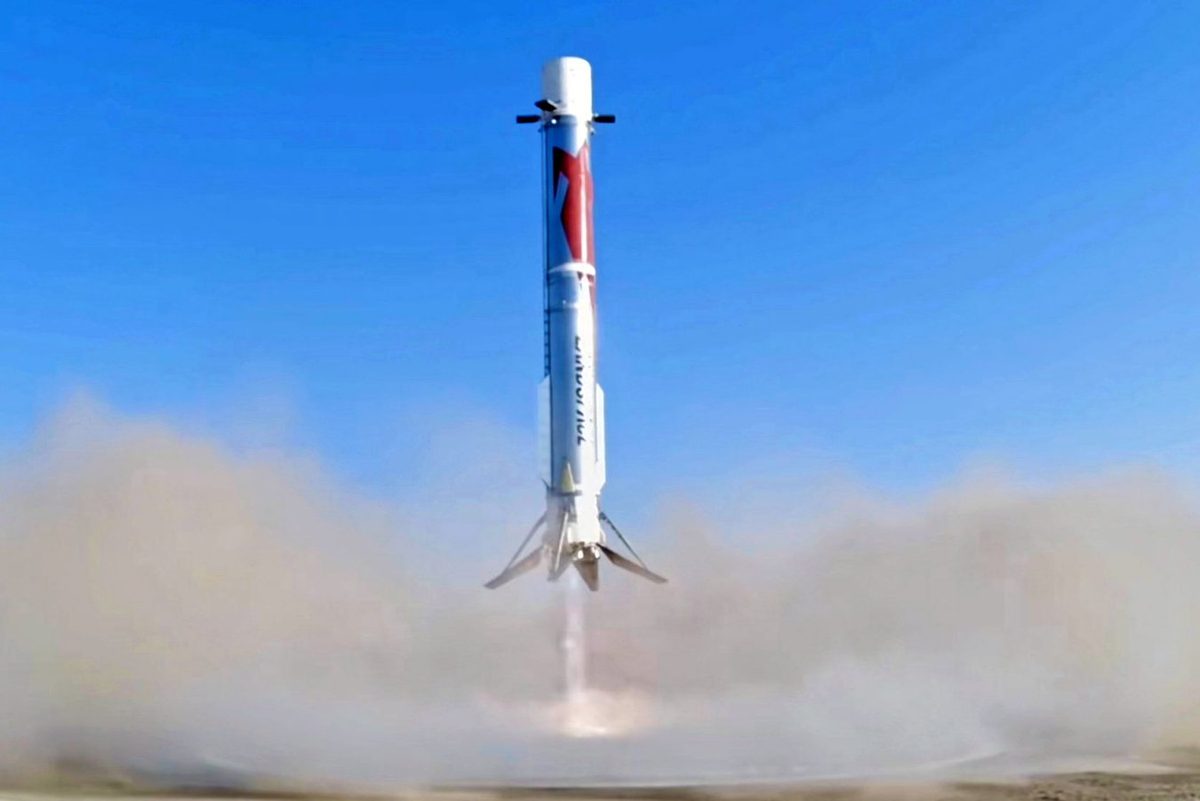
China has taken a significant stride in its pursuit of space dominance with the recent successful landing of a Zhuque-3 rocket booster by LandSpace, a commercial rival to SpaceX. This achievement marks a first for the nation in reusable rocket technology. However, despite this milestone, China has yet to demonstrate the routine reuse of boosters, a capability that SpaceX has mastered over hundreds of launches. The question remains: can China truly catch up to the United States and SpaceX in the increasingly critical race for reusable rocket technology?
Key Details
- LandSpace successfully launched and landed a Zhuque-3 rocket booster, a first for China.
- China's 15th Five-Year Plan prioritizes becoming a “space power” by 2030, with reusable rockets being key to lunar missions and a Starlink-like internet constellation.
- Experts estimate China is currently about 10 years behind the US in reusable rocket technology.
- China's Zhuque-2 was the first methane-fueled rocket to reach orbit, a feat not yet matched by SpaceX.
- Other Chinese players like Galactic Energy and state-owned CASC are also developing reusable rocket capabilities.
- SpaceX has a substantial lead, having routinely reused boosters hundreds of times, with ongoing development of larger systems like Starship.
Background
The drive towards reusable rockets is fueled by the immense cost savings they offer. As Kevin Sagis from the University of Texas at Austin points out, the cost of expendable rockets like the Saturn V or the current SLS is astronomical, making sustained space exploration unsustainable. Reusable technology promises to drastically reduce launch costs, opening up new possibilities for both commercial and governmental space activities.
China’s ambitions are clearly articulated in its 15th Five-Year Plan, which outlines a vision to become a leading “space power” by 2030. This includes developing reusable rockets essential for future endeavors such as landing Chinese astronauts on the moon and establishing a domestic alternative to SpaceX's Starlink satellite internet constellation. This national strategy reflects a broader geopolitical understanding, as articulated by Zeno Leoni of King’s College London, who notes that space capabilities are increasingly vital for both military and economic strength in a turbulent global climate. Nations without independent access to space risk being marginalized.
Impact Analysis
The geopolitical implications of the reusable rocket race are profound. Leoni suggests that for China, technological leadership is intrinsically linked to global superpower status, a sentiment echoed in President Xi Jinping’s long-term vision for the nation to master key technologies like AI, quantum computing, fusion, and space by 2049. While China may excel in some areas, mastering all is an unlikely feat.
“If you look at previous speeches from [Chinese President] Xi Jinping, there is the idea that if you are the leading technological power, then you also are the leading geopolitical superpower.”
Kevin Sagis draws parallels between the current reusable rocket race and the Cold War space race between the US and the Soviet Union. He highlights China's advantages, including a one-party system that can efficiently marshal resources and pursue long-term goals without the distractions of election cycles. This centralized approach, coupled with strong motivation and less stringent regulation, mirrors the Soviet Union's historical strengths.
In contrast, SpaceX’s approach is often characterized as a Silicon Valley-esque model: rapid testing, frequent failures, and iterative improvements. Sagis likens this to the bold, experimental spirit of NASA during the Apollo era, an approach that has proven highly effective for SpaceX, leading to consistent mission successes. However, Sagis also cautions the US against complacency, drawing lessons from the Cold War where initial Soviet successes did not guarantee ultimate victory. He emphasizes the need for sustained investment and focus on long-term benefits, rather than abandoning projects due to temporary setbacks.
Broader Context
China’s tolerance for risk also presents a distinct advantage. In space exploration, failures and potential loss of life are inherent risks. Sagis posits that in China, where public perception and electoral concerns are less dominant factors for policymakers, the acceptance of such risks may be higher compared to Western nations. This allows for more audacious endeavors.
While Chris Ellis from the University of Nottingham estimates China to be about a decade behind in overall reusable rocket technology, he cautions against viewing the race as a single linear progression. Instead, it comprises numerous smaller challenges, and China may already lead in specific areas. A notable example is China’s Zhuque-2, which in 2023 became the first methane-fueled rocket to successfully reach orbit, a milestone SpaceX has yet to achieve.
The competitive landscape includes other players. While SpaceX continues its development, including the massive Starship, China is advancing with projects like Galactic Energy’s Pallas-1 and the Long March series rockets. The Long March 9 is planned with a reusable first stage, and future variants of the Long March 10 are also slated for partial reusability, with a successful sea recovery test already conducted.
Future Outlook
The transparency of progress in the space sector varies significantly. Ellis suggests that China may be less open about its advancements and setbacks than SpaceX, potentially creating a skewed public perception of its capabilities. Both Chinese firms and SpaceX are likely analyzing each other's launch data for insights, potentially leading to strategic, vague disclosures to maintain a competitive edge. Ellis notes that failures, which are inevitable in testing, are unlikely to be publicized by Chinese entities seeking to project an image of consistent success.
Space research, particularly due to its national security implications, is subject to stringent export controls and government secrecy. This inherent lack of open collaboration hinders progress. Ellis believes that in an ideal scenario, with international cooperation on rocket designs, humanity might already have established bases on the moon. However, the intersection of significant financial interests and geopolitical tensions limits such collaborative opportunities for researchers.
Conclusion
China's recent booster landing is a clear signal of its accelerating progress in reusable rocket technology. While a significant technological gap with leaders like SpaceX still exists, estimated at around ten years, China's focused national strategy, centralized resource allocation, and willingness to accept risk position it as a formidable competitor. The race is not just about technological prowess but also about economic viability and geopolitical influence. As both nations and their commercial entities push the boundaries of spaceflight, the coming decade will be crucial in determining the future landscape of space access and exploration.
Source: newscientist.com