Four-Winged Dinosaur Fossil Challenges Single Origin of Flight Theory
Introduction
Paleontology continues to unveil astonishing details about the prehistoric world, with a recent discovery in China adding a significant chapter to our understanding of dinosaur evolution, particularly concerning the origins of flight. The exceptionally well-preserved fossil of a feathered dinosaur, named Norellraptor barsboldi, has provided compelling evidence that the evolution of flight may not have been a singular event but rather a phenomenon that occurred independently across various dinosaur groups. This finding challenges long-held assumptions and offers new insights into the complex evolutionary pathways that led to aerial locomotion.
Key Details
- Fossil Discovery: A new species of feathered dinosaur, Norellraptor barsboldi, has been unearthed in the Early Cretaceous Jiufotang Formation in northeastern China.
- Specimen Characteristics: The fossil represents a 3-year-old individual measuring approximately 21 inches (57 centimeters) in length.
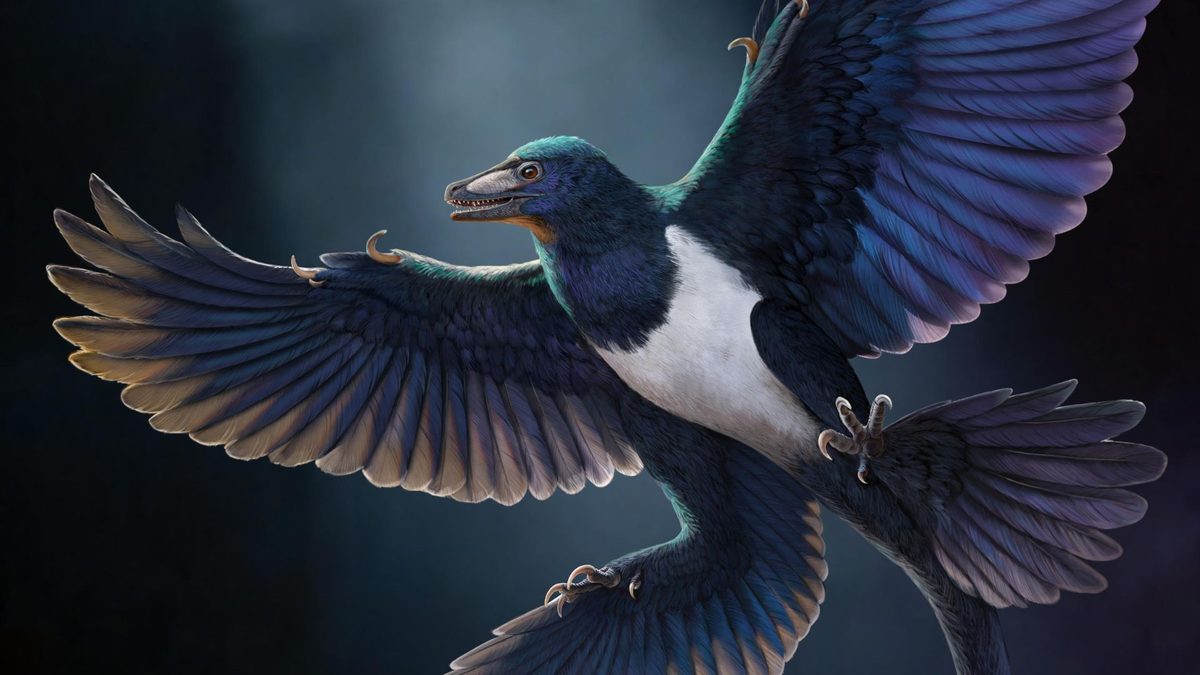
- Anatomical Features: N. barsboldi possessed sharply curved predatory teeth and claws, indicating a carnivorous diet. Notably, it had four wings, suggesting a unique adaptation for aerial movement.
- Classification: The dinosaur belongs to the microraptor group, which are close relatives of birds but not their direct ancestors.
- Research Findings: Analysis indicates that approximately 30% of anatomical changes associated with microraptor evolution also appeared in the bird lineage, but in a different sequence, supporting convergent evolution.
- Journal Publication: The study detailing these findings was published in the journal Nature Communications.
Background
The question of how flight evolved in dinosaurs has long been a subject of intense scientific debate. For decades, the prevailing view linked the evolution of flight primarily to the lineage leading to modern birds. However, discoveries of feathered dinosaurs, particularly those within the microraptor group, have complicated this picture. Microraptors, known for their distinctive four-winged configurations, shared certain anatomical traits with early birds, such as feathers and adaptations for forelimb use in locomotion. This raised a critical puzzle: did flight evolve once in a common ancestor, or did it arise multiple times independently?
Impact Analysis
The detailed analysis of Norellraptor barsboldi, conducted by researchers including Andrea Cau, provides strong evidence for the latter hypothesis. By comparing the evolutionary pathways of microraptors and the bird lineage (Avialae), the study identified numerous shared anatomical changes, such as the development of a rigid torso, robust forelimb bones, and elongated ulna bones suitable for wing support. Crucially, the research revealed that the order in which these features evolved differed significantly between the two groups. This divergence in evolutionary timing suggests that these adaptations, including feathers and the potential for flight, were not inherited from a single common ancestor but rather evolved independently as convergent traits.
“This demonstrates that microraptors acquired traits convergent with the early evolutionary stages of true birds, albeit through a distinct evolutionary pathway, supporting the hypothesis that flapping flight evolved independently in non-avialan dinosaurs and birds,” stated Rui Pei, a paleontologist not involved in the study.
Broader Context
This discovery places Norellraptor barsboldi within a broader context of understanding dinosaur diversity and adaptation. The Early Cretaceous period was a time of significant evolutionary experimentation. The presence of a small, generalist predator like N. barsboldi, likely preying on small mammals, lizards, and juvenile dinosaurs, highlights the ecological niches that even small theropods occupied. The four-winged morphology, while unusual, aligns with other microraptor fossils and suggests a range of potential flight capabilities, from gliding to more active flapping. The debate over independent evolution of flight also extends to other dinosaur groups, with ongoing research exploring similar adaptations in various theropod lineages.
Future Outlook
The findings regarding Norellraptor barsboldi are likely to spur further research into the evolutionary history of flight. Paleontologists will be keen to examine other feathered dinosaur fossils for similar patterns of convergent evolution. Future studies may focus on biomechanical analyses to better understand how these four-winged dinosaurs utilized their appendages for locomotion. Moreover, the discovery reinforces the importance of meticulous comparative anatomy and phylogenetic analysis in unraveling complex evolutionary narratives. The ongoing exploration of fossil sites in China and elsewhere promises to yield more specimens that will continue to refine our understanding of how dinosaurs took to the skies.
Conclusion
The discovery of Norellraptor barsboldi represents a significant advancement in paleontology. This exquisitely preserved fossil not only offers a glimpse into the life of a small, predatory dinosaur from the Early Cretaceous but also provides critical evidence supporting the theory of multiple, independent origins of flight among dinosaurs. By showcasing convergent evolution in distinct lineages, this finding enriches our appreciation of the dynamic and multifaceted nature of evolution, demonstrating that nature often finds similar solutions to environmental challenges through diverse evolutionary pathways.
Source: livescience.com