41 Delivery Robots Revolutionize Shenzhen Subway Logistics for 7-Eleven with AI Efficiency
Introduction
Shenzhen, one of China's largest megacities, is pioneering a transformative approach to urban logistics by deploying autonomous delivery robots that navigate the subway system to restock convenience stores. Recently, 41 four-wheeled delivery robots successfully boarded active subway trains, delivering goods to several 7-Eleven stores in a demonstration that marks a significant step in integrating robotics with public infrastructure. This initiative aims to enhance efficiency in urban delivery, mitigate challenges of congestion and parking limitations, and aligns with China's broader push to normalize robots in daily life.
Key Details
- 41 autonomous delivery robots operated by a subsidiary of Vanke, partly owned by Shenzhen Metro, participated in the subway test run.
- Robots used panoramic lidar technology and AI planning systems to navigate subway cars, elevators, and optimize delivery routes.
- The delivery robots transported items like cartons of tea to 7-Eleven convenience stores located within subway stations.
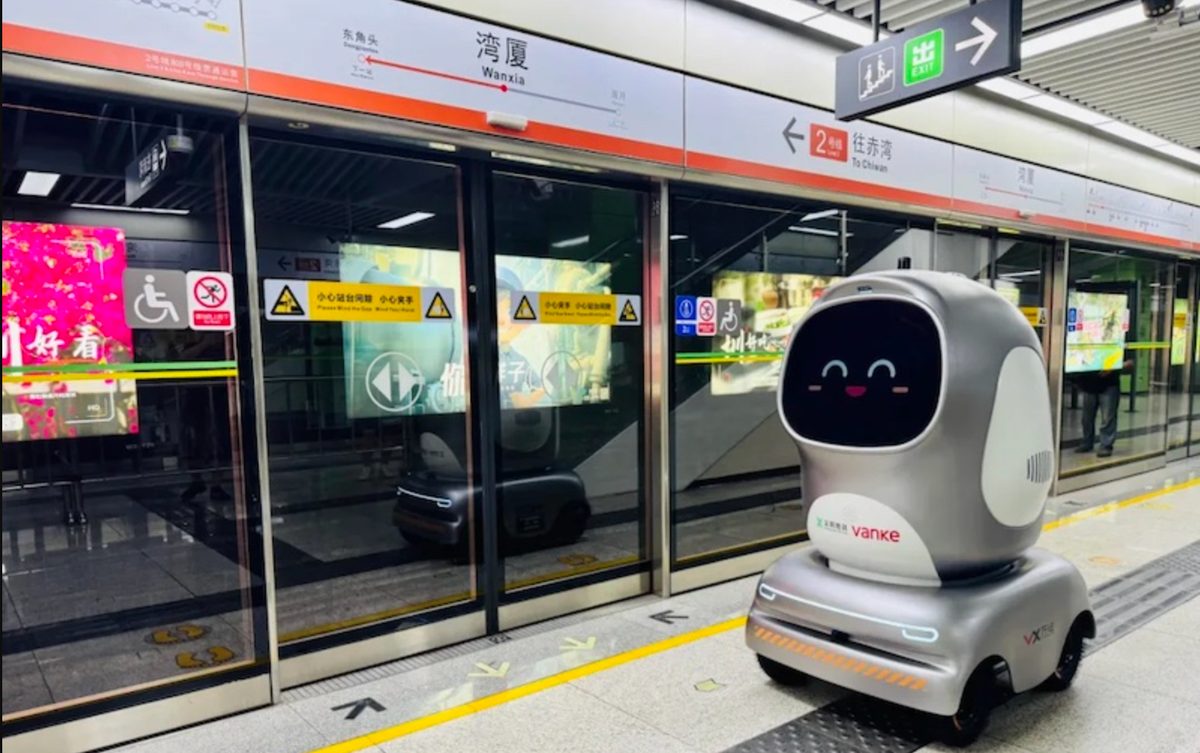
- Robots measure roughly three feet tall and feature LED display faces showing cartoonish eyes and smiles to enhance human-robot interaction.
- The system reduces reliance on ground vehicles, which face parking and traffic congestion delays impacting delivery schedules.
- The test occurred during off-peak hours and is planned to scale up to serve approximately 100 7-Eleven stores across Shenzhen’s extensive subway network.
Background
The test is part of Shenzhen's “Embodied Intelligent Robot Action Plan,” which targets widespread adoption of robotics across industries by 2027. Shenzhen’s metro system, consisting of over 300 stations, provides ample opportunity for innovative logistics solutions given its dense commercial footprint, including numerous convenience stores requiring frequent restocking.
Delivery logistics in urban centers often struggle with traffic bottlenecks and limited parking near retail locations. Traditionally, restocking goods for stores inside subway stations involved ground transportation followed by manual freight transfer onto the platforms, a time-consuming and labor-intensive process exacerbated during rush hours.
Vanke, a major real estate and technology company, leverages advances in AI, robotics, and lidar—technology originally popularized in autonomous vehicles—to enable these robots to perceive their environment and make autonomous decisions. Their specially engineered chassis allows robots to maneuver tight spaces such as subway doors and elevators, which are remotely controlled to assist robot movement.
Impact Analysis
This pilot project promises to revolutionize urban delivery logistics by significantly reducing delivery time and labor costs. The AI-driven scheduling system considers variables such as cargo type, subway capacity, and delivery urgency to plan optimal routes, ensuring efficiency. By offloading deliveries from surface traffic to underground transit, the initiative bypasses congestion and parking limitations, which are key sources of delay in urban deliveries.
Furthermore, the robots’ friendly LED faces may help increase public acceptance by humanizing machines that share crowded public spaces. This design choice reflects an understanding of the social challenges surrounding autonomous machines operating alongside humans, fostering trust and reducing apprehension.
"In the past, store goods could only be delivered to subway stations via ground transportation. Not only was it difficult to park on the ground, but the process of transporting goods from the ground to the store often encountered the subway’s morning rush hour, resulting in high delivery time and labor costs," said a convenience store manager involved in the trial.
Broader Context
China’s enthusiasm for integrating robotics into everyday life is evident in several recent high-profile events. These include a humanoid robot half-marathon in which robots raced alongside humans, and a humanoid robot boxing match livestreamed by a prominent Chinese robotics company. These events, while highlighting technological prowess, also underscore ongoing challenges as many robots struggled to complete the marathon or function flawlessly.
Globally, robot deployment in public spaces has met mixed reactions. In the U.S., for example, the New York Police Department retired its autonomous security robots in subways following public backlash related to privacy and functionality. Similarly, food delivery robots on various U.S. university campuses have faced operational difficulties like losing their way or encountering physical obstacles.
The resilience of public acceptance and infrastructure adaptation remains uncertain, particularly for humanoid or large autonomous robots sharing pedestrian spaces. Incidents such as the destruction of hitchBOT, a Canadian hitchhiking robot vandalized in Philadelphia, reflect societal ambivalence and the need for gradual integration strategies.
Future Outlook
Shenzhen’s subway delivery robot initiative could serve as a blueprint for other megacities seeking to modernize urban logistics through automation. Scaling this pilot to 100 stores would represent a significant operational challenge but also offer valuable data on long-term sustainability, safety, and public engagement with autonomous delivery systems.
Technological improvements in AI navigation, robotic chassis design, and human-robot interaction will be crucial to advancing these efforts. Furthermore, regulatory frameworks and public acceptance will shape how quickly and broadly such robotics systems can be deployed.
As delivery demands grow alongside urban populations, integrating autonomous robots into existing public transit infrastructure offers a promising avenue to reduce traffic congestion, lower carbon emissions from delivery vehicles, and improve overall urban efficiency.
Conclusion
The deployment of 41 AI-powered delivery robots riding the Shenzhen subway to restock 7-Eleven stores marks a pioneering step in urban logistics innovation. By leveraging advanced robotics and AI, Shenzhen is addressing the perennial challenges of last-mile delivery in crowded city environments. The project not only promises operational benefits but also offers critical insights into human-robot coexistence in public spaces, a key frontier as automation becomes increasingly intertwined with daily life worldwide.