2,000-Year-Old Javanese Gold Mask: An Ancient Tool to Pacify the Dead
Introduction
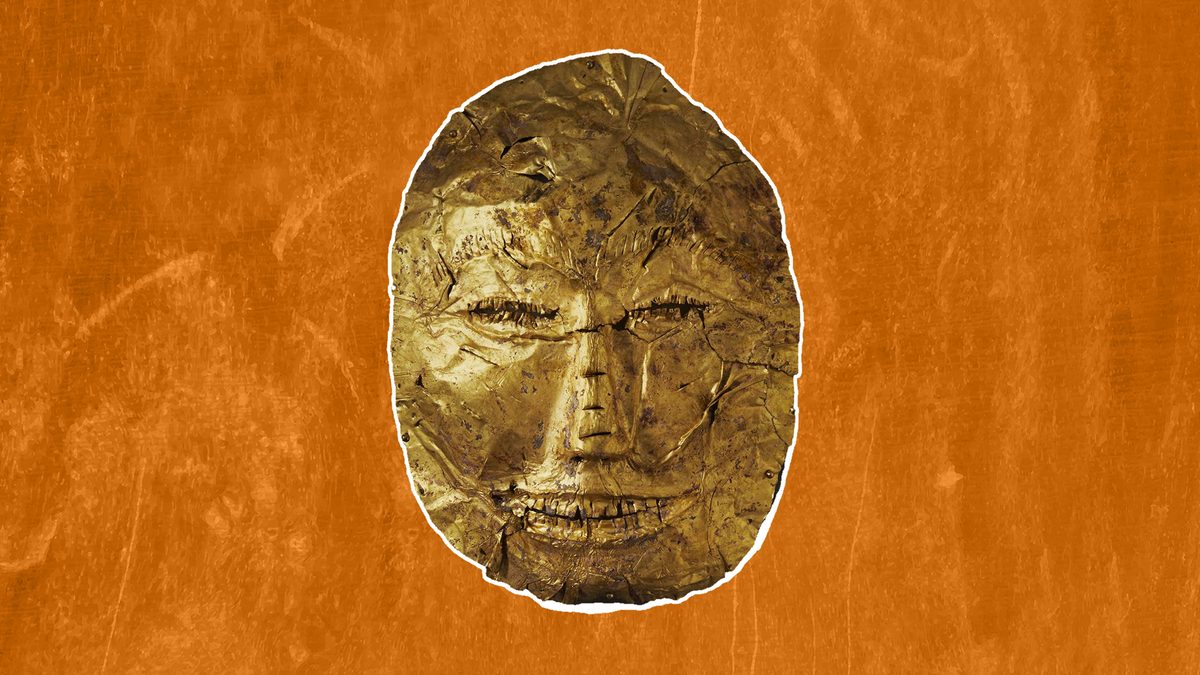
A remarkable artifact, a gold funeral mask dating back approximately 2,000 years, has emerged from prehistoric Java, Indonesia. This exquisite piece of ancient artistry, now housed at the Yale University Art Gallery, offers a tangible link to the complex funerary rituals and spiritual beliefs of a long-vanished civilization. More than just a beautiful object, the mask is believed to have served a specific, potentially ritualistic purpose: to “confuse” the spirit of the deceased, thereby preventing it from returning to torment the living.
Key Details
- Name: Funeral mask
- Material: Gold
- Origin: Java, Indonesia
- Date: Circa 500 B.C. – A.D. 200 (Preclassic Period)
- Dimensions: Approximately 8.9 x 6.7 inches (22.6 x 17 cm)
- Weight: Approximately 2.1 ounces (60.9 grams)
- Features: Openings for eyes, mouth, and nostrils; incised details for eyebrows, eyelashes, and teeth; small holes around the edge for attachment.
- Collection: Yale University Art Gallery, part of the Hunter and Valerie Thompson donation (2007).
Background
Crafted from high-purity gold, likely sourced from the neighboring islands of Sumatra or Borneo, this mask represents a significant achievement in ancient metallurgy. The artisan would have meticulously hammered a thin sheet of gold into a human facial form before employing a chisel to create the intricate details – the slits for eyes, the openings for the mouth and nostrils, and the delicate lines suggesting eyebrows, eyelashes, and teeth. The presence of numerous small holes punched around the mask's perimeter strongly indicates it was once affixed to a corpse or possibly a funerary effigy, serving as a direct covering for the face of the departed.
Archaeologist John Miksic, in his book “Old Javanese Gold,” places the mask within Java's Preclassic period, a time when inhumantion, or burial, was the prevailing funerary practice before the eventual shift to cremation. This context suggests the gold face covering was an integral part of a burial tradition that predates the widespread adoption of cremation in the region.
Impact Analysis
The primary function proposed for this mask is deeply rooted in ancient spiritual beliefs. According to Miksic, drawing on ethnographic parallels from eastern Indonesian islands, there was a prevalent fear of hostile spirits of the dead. To mitigate this threat, various practices were employed, such as physically turning the corpse during funeral processions or placing the head in a pot. The intention behind these actions was to disorient the spirit, making it unable to find its way back to the living world. The gold mask, by covering the face, could have served a similar purpose, acting as a barrier or a means of disguise to prevent the spirit from recognizing its former body or its path back home.
“The ancient Javanese had high regard for the spirits of their ancestors, so they may have used precious gold as the most suitable material for honoring those departed ancestors.”
Beyond the protective function, the use of gold also points to significant social stratification. Gold, being a precious and rare commodity, was likely reserved for individuals of high status. Thus, the mask could have served as a marker of elite identity, distinguishing the deceased in both the earthly realm and the afterlife. This aligns with the broader archaeological understanding of ancient societies where elaborate burial goods often signified power and social standing.
Broader Context
The practice of using gold face coverings for the deceased is not unique to Java. Similar customs have been documented in prehistoric India, China, and other parts of Southeast Asia, often coinciding with inhumantion periods preceding the rise of cremation. This geographical and temporal overlap raises questions about cultural diffusion versus independent invention. However, the tradition of gold death masks extends even further back in time and across different cultures, notably the famous 3,500-year-old Mask of Agamemnon from Bronze Age Greece, demonstrating a recurring human impulse to adorn and protect the dead with precious materials.
Scholarly debate also exists regarding the aesthetic intent of these masks. While some, like archaeologist Wahyono Martowikrido, have noted the Javanese mask's unusual naturalism, suggesting it aimed for a realistic portrayal of the deceased, others might interpret it as an idealized representation. The specific features – the openings for senses, the incised details – could be seen as both functional for the spirit and symbolic of the person it once belonged to.
Future Outlook
While this specific mask is a singular artifact, it represents a broader trend in understanding ancient Javanese society. Continued research into similar artifacts, coupled with advancements in archaeological dating techniques and comparative analysis with other cultures, may shed further light on the precise meaning and function of these gold adornments. The ongoing study of burial sites and associated grave goods will be crucial in piecing together a more comprehensive picture of the religious, social, and economic structures of prehistoric Java. The mask serves as a compelling reminder of the ingenuity and complex worldview of ancient peoples.
Conclusion
The 2,000-year-old Javanese gold funeral mask is a testament to the rich cultural heritage of ancient Indonesia. It embodies a fascinating intersection of artistry, ritual, and belief, likely serving a dual purpose: to safeguard the living from potentially malevolent spirits and to honor esteemed ancestors. Its discovery and preservation provide invaluable insights into the funerary practices and spiritual cosmology of a civilization that flourished millennia ago, underscoring the universal human concern with death, the afterlife, and the enduring legacy of the departed.
Source: livescience.com