Humpback Whale Mother Displays Apparent Grief Over Dead Calf, Scientists Report
Introduction
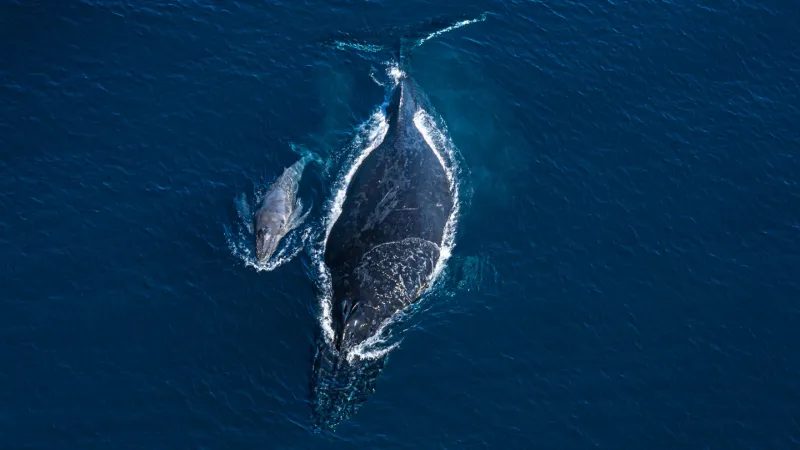
In a poignant and scientifically significant observation, researchers have documented a humpback whale mother exhibiting behavior strongly indicative of mourning over her stillborn calf. The rare encounter, occurring off the coast of Queensland, Australia, provides compelling evidence that complex emotional responses, such as grief, may be present in baleen whales, a group where such displays have been seldom observed and poorly understood.
Key Details
- A female humpback whale was observed repeatedly diving to the seafloor to interact with her dead newborn calf.
- The mother whale was seen placing her pectoral fin over the calf and resting beside it.
- Two adult whales, presumed to be the mother and a male escort, remained in the vicinity for two additional days, exhibiting altered behavior.
- The sighting occurred in July 2025 near Palm Beach, Queensland, Australia.
- Researchers noted the presence of amniotic membrane tissue floating on the surface, suggesting a recent birth.
- The deceased calf was estimated to be less than four meters long, consistent with a newborn.
Background
While instances of apparent grief have been documented in toothed whales, such as orcas, who have been observed carrying their dead calves for extended periods, similar behaviors in baleen whales are far less common. Marine biologists Olaf Meynecke and rescue boat captain Andrew Mulville, in their report published in Discover Animals, highlight a potential reason for this disparity. Newborn baleen whales lack the substantial fat stores that would cause their carcasses to float. Consequently, if a mother whale were to stay with a deceased calf on the seafloor, such interactions would likely go unseen by human observers. This new documentation is believed to be the first detailed account of a humpback whale attending to its deceased calf in this manner.
Impact Analysis
The observation challenges previous assumptions about the emotional lives of baleen whales. The prolonged presence of the mother and potential escort, coupled with the specific interactions with the calf's body, suggests a behavioral response that goes beyond simple biological necessity. Meynecke posits that this prolonged change in behavior is highly suggestive of mourning or a form of grieving. This finding could prompt a re-evaluation of cetacean social and emotional complexity, potentially expanding our understanding of animal sentience.
“It was pretty emotional to observe,” says Meynecke, but he warns against anthropomorphizing and drawing parallels to humans. Remember that “the whale is experiencing their world in a completely different form and shape,” he says. “They have different ways of understanding their environment.”
Broader Context
This sighting occurs within a broader scientific interest in animal cognition and emotion. Understanding the inner lives of marine mammals is crucial for conservation efforts, as it informs how we perceive and protect these intelligent creatures. The study also touches upon the challenges of observing deep-sea behaviors and the reliance on chance encounters for gathering critical data. The fact that this observation was made by a rescue boat captain, Andrew Mulville, who works with the Sea World Foundation, underscores the valuable role citizen science and observational data play in advancing marine biology.
Future Outlook
Further research is needed to confirm whether such mourning behaviors are widespread among humpback whales and other baleen whale species. Scientists hope that future studies, perhaps utilizing advanced underwater monitoring technology, might capture more instances of these sensitive interactions. This could lead to a deeper understanding of whale social structures, parental bonds, and their capacity for complex emotional experiences. The findings may also influence conservation strategies, emphasizing the importance of minimizing human disturbance in areas where whales might be experiencing loss.
Conclusion
The remarkable sighting of a humpback whale mother seemingly grieving her dead calf offers a rare glimpse into the emotional depth of these magnificent marine animals. While cautioning against direct human comparisons, the researchers suggest that the observed behaviors are strong indicators of mourning. This discovery enriches our understanding of baleen whale behavior and highlights the ongoing need for observation and research into the complex lives of ocean inhabitants.
Source: sciencenews.org