‘The Gilded Age’ Stars Discuss Intriguing Role Reversal in Larry’s Marriage Proposal
Introduction
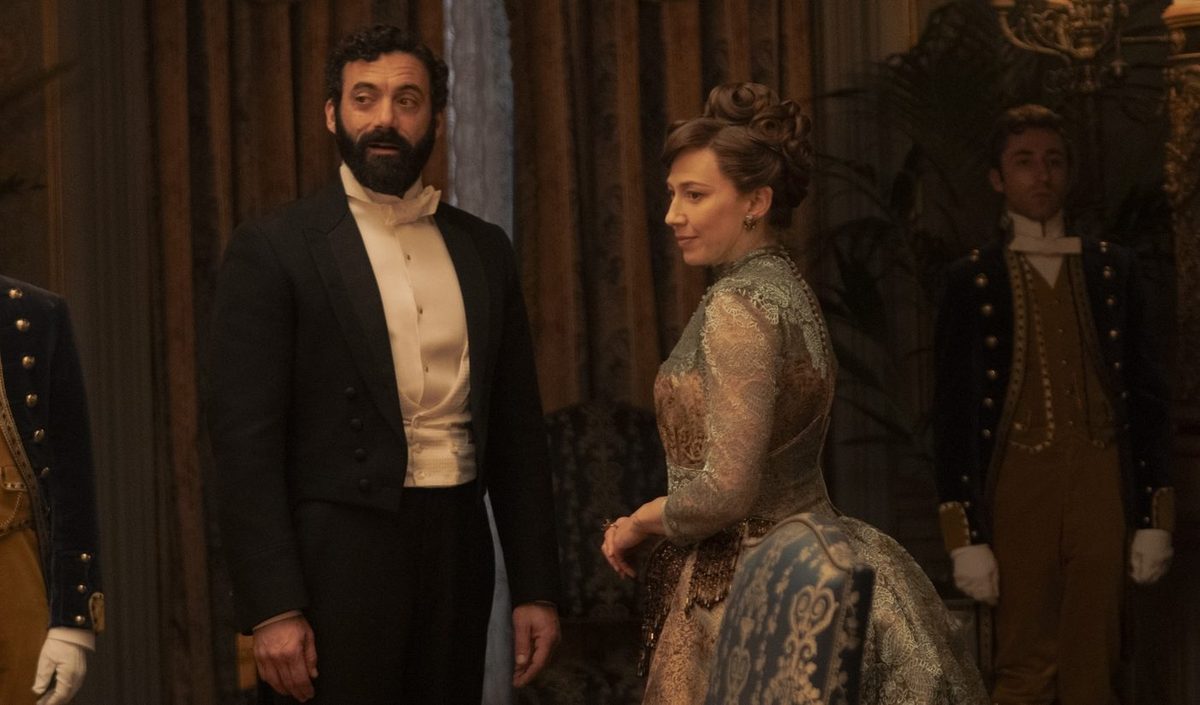
‘The Gilded Age’, the acclaimed historical drama set in late 19th-century New York, continues to captivate audiences with its intricate portrayal of wealth, power, and social change. In the latest Episode 5 of Season 3, viewers witness a striking role reversal surrounding Larry Russell’s marriage proposal, drawing attention from both fans and critics alike. Morgan Spector and Carrie Coon, who portray key characters in the series, recently discussed this development, describing it as a ‘revenge plot’ embedded within the show’s complex narrative.
Key Details
- The episode centers on Larry Russell (Harry Richardson) taking significant steps towards independence, including a surprising marriage proposal.
- Gladys Russell (Taissa Farmiga), Larry’s sister, is settling into her new life after an arranged marriage to the Duke of Buckingham abroad.
- Morgan Spector and Carrie Coon provide insight into the emotional and strategic motivations behind Larry’s proposal, highlighting a role reversal in traditional gender and family dynamics.
- The term ‘revenge plot’ refers to Larry’s subtle attempt to reclaim agency and challenge family expectations.
Background
The Gilded Age explores a transformative period in American history marked by rapid industrialization, social stratification, and the emergence of new money families vying for status. The Russell family, featured prominently in the series, embodies the tensions between old wealth traditions and the evolving ambitions of younger generations. Traditionally, marriage and social alliances were tools to secure influence, often orchestrated by family elders. Gladys’s arranged marriage to British nobility exemplifies this practice, reinforcing class ties and international stature.
Larry’s character arc reflects a growing desire for personal freedom and self-definition outside the constraints of these expectations. His proposal in Episode 5 is not simply a romantic gesture but a calculated move within the family's shifting power dynamics.
Analysis
The ‘revenge plot’ described by Spector and Coon offers a nuanced interpretation of Larry’s actions. Rather than passively accepting his role, Larry actively reclaims control by flipping traditional gender roles—he proposes marriage, a step usually expected of women in this narrative context, particularly given his family's patriarchal values.
This subversion serves multiple purposes: it challenges the established hierarchy, asserts Larry’s autonomy, and indirectly responds to his sister’s arranged marriage, which symbolizes the older generation’s influence. The proposal thus becomes an act of defiance and empowerment, reflecting broader themes of societal change in the Gilded Age era.
Moreover, this plot point enriches the series’ exploration of family loyalty, ambition, and the costs of social mobility. It raises questions about the limits of tradition when confronted with personal desires and emerging modern values.
Conclusion
Episode 5 of Season 3 of The Gilded Age pushes the boundaries of its storytelling by embedding complex emotional and social conflicts within seemingly straightforward plot developments like a marriage proposal. According to Morgan Spector and Carrie Coon, Larry’s surprising move is far from impulsive—it is a calculated response that encapsulates the show's ongoing examination of power, gender roles, and the evolving fabric of American society during a pivotal historical moment.
As the series progresses, audiences can anticipate further exploration of these tensions, ensuring that The Gilded Age remains a compelling portrait of ambition, resistance, and transformation.