Q1 Cord-Cutters Embrace Ad-Free Streaming, Paramount+ Leads Surge
Introduction
The landscape of television consumption continues to shift dramatically, with traditional pay-TV subscribers increasingly embracing streaming alternatives. New data from market research firm Antenna indicates a notable trend in the first quarter: a substantial portion of individuals who recently canceled their cable or satellite subscriptions immediately turned to new streaming services. More strikingly, the preference among these newly minted cord-cutters leaned heavily towards ad-free tiers, signaling a potential turning point in how consumers value their viewing experience.
Key Details
- Approximately 31% of traditional cord-cutters signed up for a new streaming service within a month of canceling their pay TV subscriptions in Q1. This rate is five times higher than the typical sign-up rate.
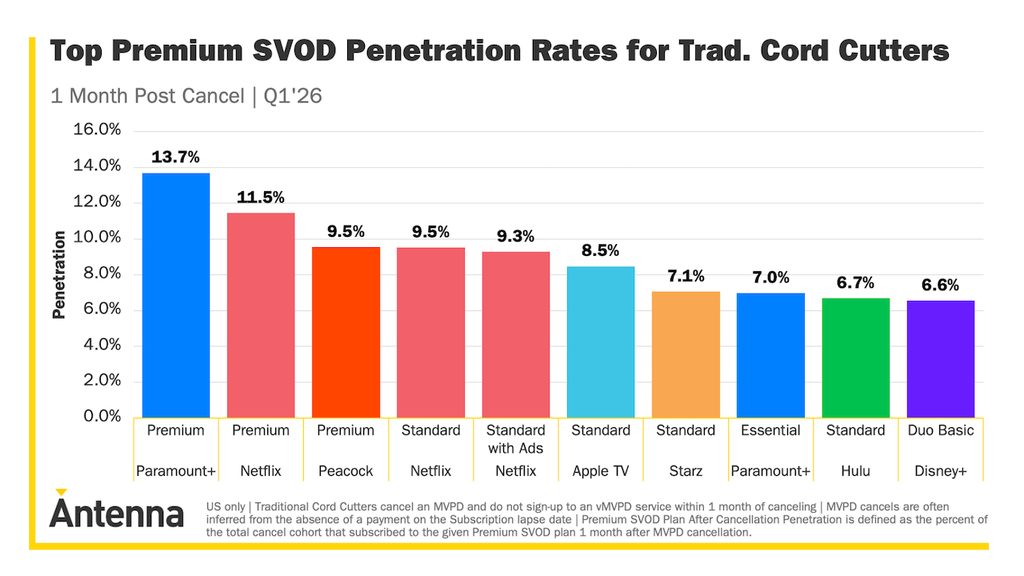
- Of the top 10 streaming plans chosen by these new cord-cutters, six were ad-free options.
- Paramount+ Premium emerged as the most popular choice, accounting for 13.7% of new subscriptions.
- Following closely were Netflix Premium (11.5%) and Peacock Premium (9.5%), both ad-free tiers.
- Other popular ad-free plans included Netflix Standard (9.5%) and Apple TV Standard (8.5%).
- Even Netflix Standard With Ads (9.3%) made the top 10, indicating a mixed appetite for ad-supported content.
- Prior to cutting the cord, 72% of traditional cord-cutters already subscribed to at least one premium SVOD service. This figure rose to 84% for digital cord-cutters who canceled virtual pay TV services like YouTube TV or Sling TV.
Background
The phenomenon of cord-cutting, the act of canceling traditional cable or satellite television subscriptions in favor of streaming services, has been a long-standing trend. However, the first quarter of the year saw an accelerated pace, with a significant influx of consumers making the switch. Antenna's research provides granular insights into the immediate aftermath of these cancellations, revealing not just the propensity to subscribe to new services but also the specific types of services that are gaining traction. The data suggests that the decision to cut the cord is often accompanied by a desire for a more curated and potentially higher-quality viewing experience, which often translates to ad-free tiers.
Impact Analysis
The strong preference for ad-free plans among new cord-cutters has significant implications for streaming service providers. It underscores the perceived value of uninterrupted viewing and suggests that consumers are willing to pay a premium for it. Paramount+, with its Premium tier leading the pack, has capitalized effectively on this trend. Netflix and Peacock also saw substantial uptake of their ad-free offerings, reinforcing the idea that for many, the cost of a premium subscription is justified by the absence of commercials. This could put pressure on services that heavily rely on ad-supported tiers to find a balance between revenue generation and subscriber satisfaction. The data also indicates that a significant portion of cord-cutters were already engaged with the streaming ecosystem, suggesting that cord-cutting is less about abandoning digital content and more about optimizing subscription bundles and eliminating redundant or less-valued services.
Broader Context
The findings arrive amidst a period of intense competition and evolving business models within the streaming industry. Major players are grappling with subscriber growth, profitability, and the optimal content mix. The resurgence of interest in ad-free tiers might signal a saturation point for ad-supported models, or at least a clear segmentation of the market where a substantial segment prioritizes an ad-free experience. The data on household income, showing a relatively even distribution across income brackets among cord-cutters, suggests that this trend is not solely driven by economic necessity but also by a desire for flexibility and choice. The average churn rate for major streaming services hovering around 4% in July, with Netflix and Disney+ showing lower rates, further contextualizes the competitive landscape. Paramount+, Starz, and Peacock, however, exhibited higher churn rates, making the Q1 surge in new subscriptions particularly vital for their subscriber retention strategies.
“The data clearly indicates that when consumers cut the cord, their immediate next step is often to seek out premium, ad-free streaming experiences. This isn’t just about saving money; it’s about enhancing the viewing quality.”
Future Outlook
The strong performance of ad-free plans in Q1 suggests that this preference may persist. Streaming services will likely continue to refine their tiered offerings, potentially introducing more premium ad-free options or adjusting pricing strategies to cater to this demand. The challenge for platforms will be to maintain subscriber loyalty in a market characterized by high churn rates. For services like Paramount+, Netflix, and Peacock, retaining these newly acquired customers will be crucial. The success of ad-free tiers could also influence content acquisition and production strategies, with a focus on delivering exclusive, high-value content that justifies the premium price point. Conversely, services heavily reliant on advertising may need to innovate their ad formats or content offerings to remain competitive.
Conclusion
The first quarter of the year witnessed a significant migration of cord-cutters towards streaming services, with a pronounced preference for ad-free plans. Paramount+ Premium, Netflix Premium, and Peacock Premium emerged as the frontrunners, underscoring the consumer's willingness to pay for an uninterrupted viewing experience. This trend has profound implications for the streaming industry, influencing subscription strategies, content development, and the overall market dynamic. As consumers continue to re-evaluate their entertainment choices, the demand for premium, ad-free content is likely to remain a dominant force, shaping the future of television consumption.
Source: thewrap.com